The Pérez Galdós Theatre is the principal stage of Las Palmas de Gran Canaria and the permanent home of the Alfredo Kraus Opera Festival. It stands at the south-eastern edge of Triana, near the sea, at the mouth of the Guiniguada ravine. Designed by Francisco Jareño, it opened in 1890 with La Traviata and took the name of the city-born writer Benito Pérez Galdós after his play Electra was staged there in 1902. Fire gutted it in 1918; it reopened in 1928, and a full rebuild of the stage block was completed in 2007.
Perez Galdos Theatre
Local name: Teatro Pérez Galdós
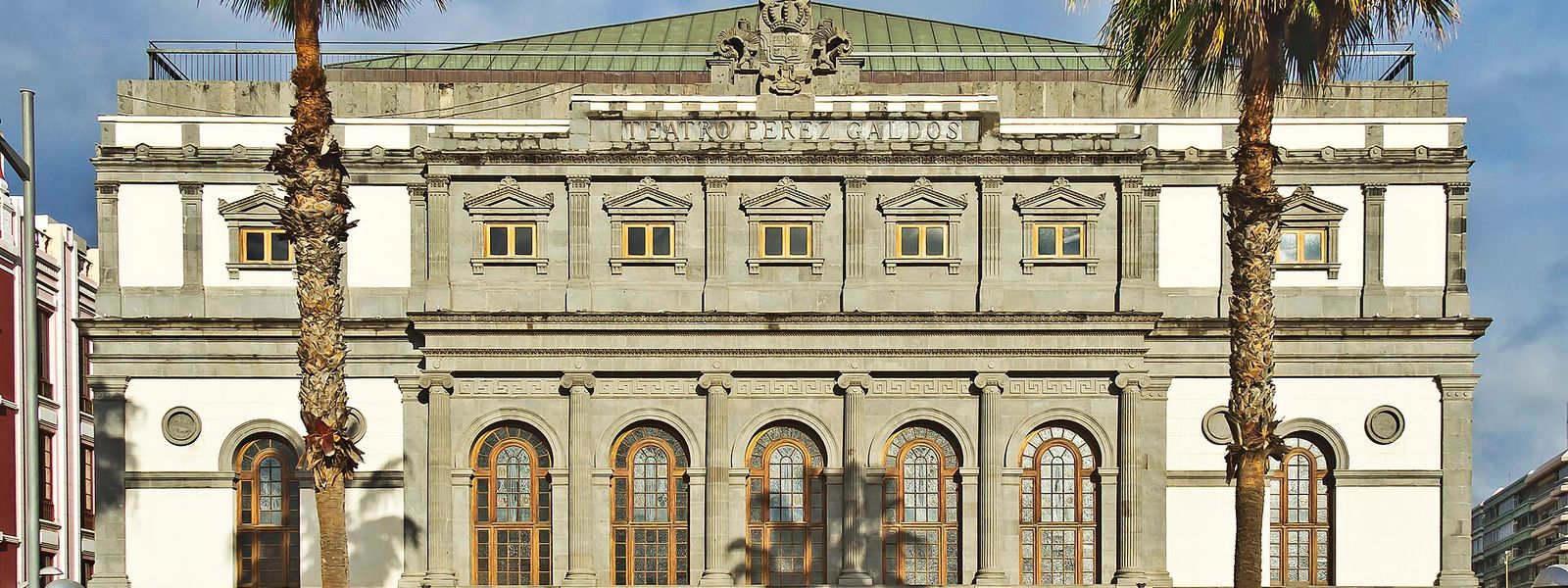
Horseshoe-shaped opera theatre of 1,085 seats, with a painted ceiling and stained glass by Néstor.
- Entrance
- Entry is with a ticket to a performance; some upper-tier seats are sold as restricted view.
- Accessibility
- Wheelchair-accessible entrance by ramps at the sides of the building, lifts and an accessible toilet. The stalls have 24 removable seats for people with reduced mobility, reached by a side entrance on Calle Francisco Jareño.
- Parking
- Paid public car park at the Mercado de Vegueta, about 150 m away. The car park about 90 m away is private.
- Difficulty
- None: the theatre stands on a paved city square, with the bus stop about 40 m away.
- Transport
- Bus to the Teatro stop, about 40 m from the theatre.
- Hours
- Monday to Friday 19:30–22:30; closed Saturday and Sunday.
- Address
- Plaza de Stagno, 35002 Las Palmas de Gran Canaria, Las Palmas, Spain
What makes it special
Look up from the stalls and the ceiling is painted canvas: Néstor Martín Fernández de la Torre's Apollo and the Muses above the stage, with Song and Dance facing each other at the sides. Néstor also designed the stained glass in the lantern and the silk-and-velvet curtain, embroidered with an allegory of the city's arms. It measures 14 m by 10 m, about the height of a three-storey building. The hall itself is a horseshoe, with boxes stacked on three levels beside the stage.
At the interval, climb the honour staircase to the Saint-Saëns Hall (Salón Saint-Saëns). The floor is geometric marble in several colours, the walls are American mahogany, partly stuccoed with sand from Las Canteras beach (Playa de Las Canteras), and the windows carry more of Néstor's stained glass. The room is named for the composer, who first came to the island incognito in 1889, passing himself off as a wine salesman.
Good to know
- Some seats on the upper tiers are sold as restricted view; screens on both sides of the stage show what cannot be seen from there.
- Opera surtitles are in Spanish. Every seat in the stalls has its own subtitle screen.
- Dress in the audience runs from casual to smart, and beach clothes stand out.
- An upstairs bar serves drinks and sandwiches at the interval and takes cards; prices are not always posted.
- The upper levels open onto a roof terrace with views, worth a look during the interval.
Getting there
The theatre faces a broad stone-paved square at the southern end of Triana, close to the sea where the Guiniguada ravine (Barranco Guiniguada) meets the coast. The Teatro bus stop is about 40 m from the building, and Calle Mayor de Triana passes about 70 m away, so arriving on foot from the old town takes you straight onto the square.
Drivers should head for the paid public car park at the Mercado de Vegueta, about 150 m away; the car park closer to the theatre is private. The main façade is protected, so the wheelchair ramps sit at the sides of the building, and the stalls entrance for people with reduced mobility opens onto Calle Francisco Jareño.
Best time to visit
Best: an opera night. The house was rebuilt in 2004–2007 as an opera theatre, it is the permanent home of the Alfredo Kraus Opera Festival, and the interval is when you get to walk the Saint-Saëns Hall.
Avoid: a daytime visit. The theatre keeps evening hours only, so there is nothing to see inside before then.
Things to do nearby
All tours in Las Palmas de Gran Canaria on GetYourGuide
Paid links: booking through them supports YowJourney.
Sun & daylight
Nearby Places
Similar Places

Your whole travel map in one place
Get inspired by new places around the world and find the ones worth the journey
Frequently asked questions
What language are the opera surtitles in at the Pérez Galdós Theatre?
Spanish. Every seat in the stalls has its own individual subtitle screen.Can you see the stage from the upper tiers?
Not from every seat. Some upper-tier seats are sold as restricted view, and screens on both sides of the stage show the action that cannot be seen from them. Looking down from the top tier is hard on the neck over a full opera.Is the theatre wheelchair accessible?
Yes. Ramps at the sides of the building lead in, lifts serve the floors, and there is an accessible toilet. The stalls have 24 removable seats for people with reduced mobility, reached by a side entrance on Calle Francisco Jareño.What do people wear to a performance?
The audience mixes casual and smart dress. Beach clothes stand out, though staff treat everyone the same.Why is the theatre named after Pérez Galdós?
It opened in 1890 as the Teatro Tirso de Molina. After Benito Pérez Galdós's play Electra was staged there with great success in 1902, the theatre of his home city took his name.