Calle Mayor de Triana is the main street of the Triana district in Las Palmas de Gran Canaria and one of the city's chief shopping areas. It begins at the Guiniguada ravine, opposite Vegueta, and runs parallel to the coast to Parque de San Telmo. Trains and trams used it until 1937; it has been pedestrianised since the 1980s. It is known for its modernista facades, built by wealthy families in the early 20th century.
Triana Street
Local name: Calle Mayor de Triana
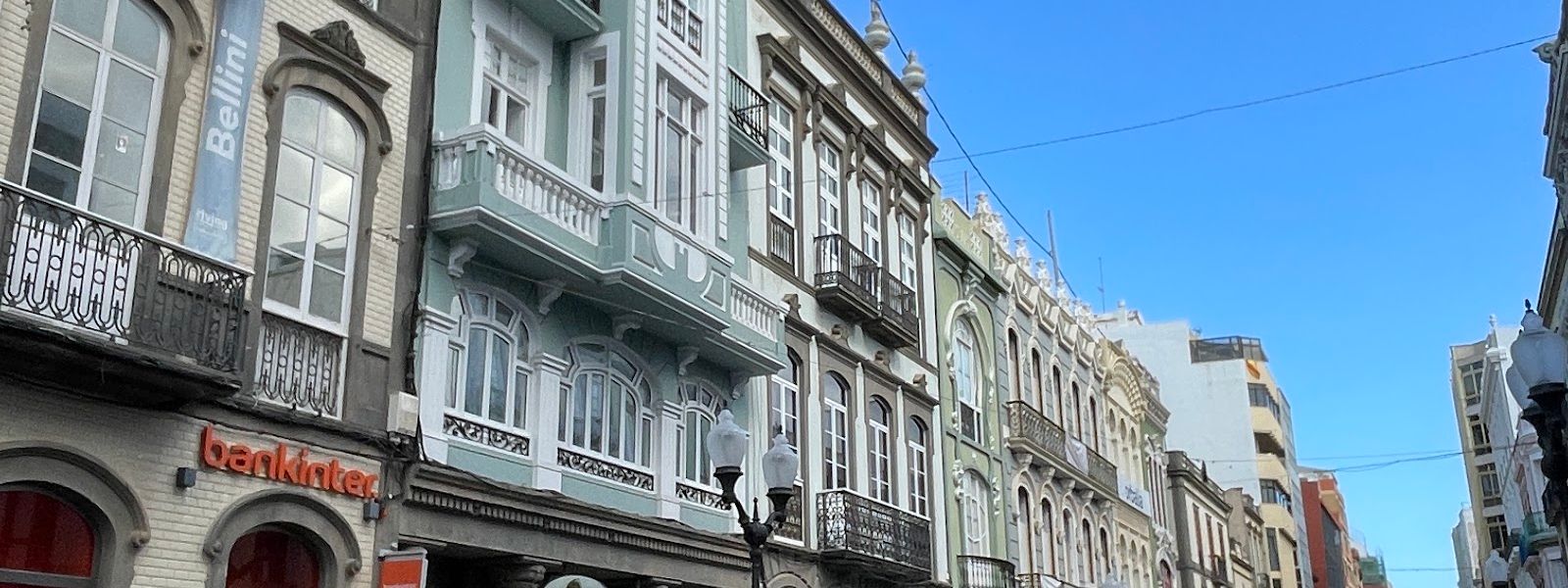
Pedestrianised shopping street of modernista facades, running from the Guiniguada ravine to Parque de San Telmo
- Entrance
- Free — it is a public street.
- Accessibility
- Pedestrianised street with wheelchair access.
- Parking
- The two car parks closest to the street, about 105 m and 112 m away, are private.
- Difficulty
- None — a pedestrian street in the city centre, walked at your own pace.
- Transport
- Bus stops Triana (Parque San Telmo), about 85 m away, and Francisco Gourié, 103, about 70 m away.
- Advance booking
- Not needed.
- Hours
- Open at any time.
- Address
- Calle Triana, 116, 35002 Las Palmas de Gran Canaria, Las Palmas, Spain
What makes it special
Look above the shop signs. In the early 20th century the well-off families of Triana rebuilt their houses as a mark of standing, and the decorated modernista facades they left still run along Calle Mayor de Triana and into the streets that cross it. At street level it is shops, cafés and restaurants, and with no traffic you can stop wherever a balcony catches your eye.
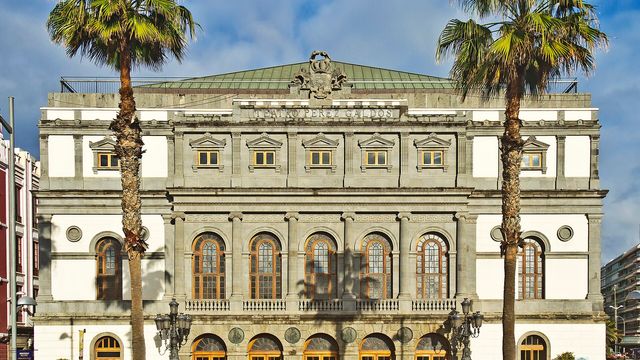
The street is older than its fronts. Settlers from Seville named the district in the 15th century: the Guiniguada ravine split the new town the way the Guadalquivir splits theirs, and this side became Triana. Each end has its landmark. The Teatro Pérez Galdós and the Military Government building (Gobierno Militar) went up in the late 19th century, and the San Telmo chapel (Ermita de San Telmo) by the northern end is the last trace of Triana's seafaring past. Benito Pérez Galdós and the poet Tomás Morales both lived in the district.
Good to know
- The modernista facades carry on into the side streets, so turn off Calle Mayor de Triana now and then.
- Two tourist information offices are close by; the Central Tourist office is about 40 m away.
- The nearest free public toilet is about 160 m away; a paid one stands at about 150 m.
- The car parks closest to the street are private. Come by bus or on foot.
Getting there
The street is walked end to end, and there are two ways in. From Vegueta, the old town, you reach the southern end at the Guiniguada ravine, now covered by the GC-110 road, where the wooden Puente de Palo once linked the two districts. From the north you arrive at Parque de San Telmo, where Calle Mayor de Triana meets Calle Bravo Murillo and Calle León y Castillo, the long avenue that continues towards Parque Santa Catalina.
Buses stop by Parque de San Telmo: the Triana (Parque San Telmo) stop is about 85 m away. The two car parks nearest the street are private, so the bus or your feet are the simpler way in.
Best time to visit
Best: early morning, before the shops open, or the evening, when the cafés fill. The facades read best on an empty street, and the street is at its liveliest once the day's walking and shopping turn to eating out.
Avoid: the middle of a busy shopping day if you came for the architecture. The crowd at shop level pulls the eye down and away from the fronts above.
Sun & daylight
Nearby Places
Similar Places

Your whole travel map in one place
Get inspired by new places around the world and find the ones worth the journey
Frequently asked questions
Is Calle Mayor de Triana closed to traffic?
Yes. It has been a pedestrian street since the 1980s. Before that it was the city's main north–south route, with trains and trams running along it until 1937.Does it cost anything, and when can I visit?
It is a public street: there is no ticket, and it is open at any time.Why is it called Triana?
Many of the conquerors came from Seville. The Guiniguada ravine divided the new town as the Guadalquivir divides Seville, so the district across it took the name of Seville's Triana, and its main street with it.Are there public toilets nearby?
Yes. A free public toilet is about 160 m away, and a paid one about 150 m away.Is the street suitable for a wheelchair?
Yes. It is pedestrianised and has wheelchair access.