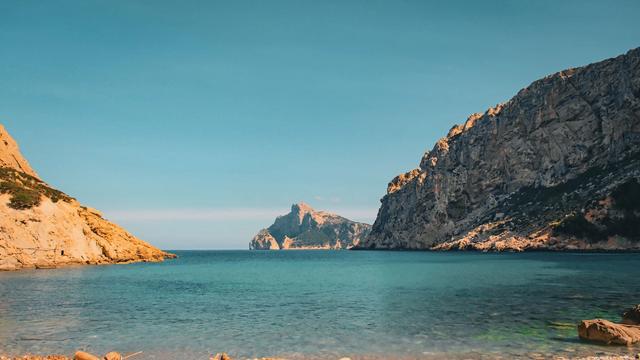
A small rocky cove on Ibiza's north shore, tucked into a bay where a steep single-track road winds down from the main coast road. The beach is pebbles and small rocks, not sand. The water is clear enough for snorkeling near the rocks; schools of small fish dart between the boulders. A bar and restaurant on the beach serve fresh fish and paella. On the left side, a low rock scramble leads to a more sheltered basin with natural pools and a rope swing at Sa Punta Negra, ten minutes' scramble away. Summer brings crowds; parking fills by mid-morning in July and August. An autumn visit or early-morning arrival in season offers solitude.
Cala Xarraca
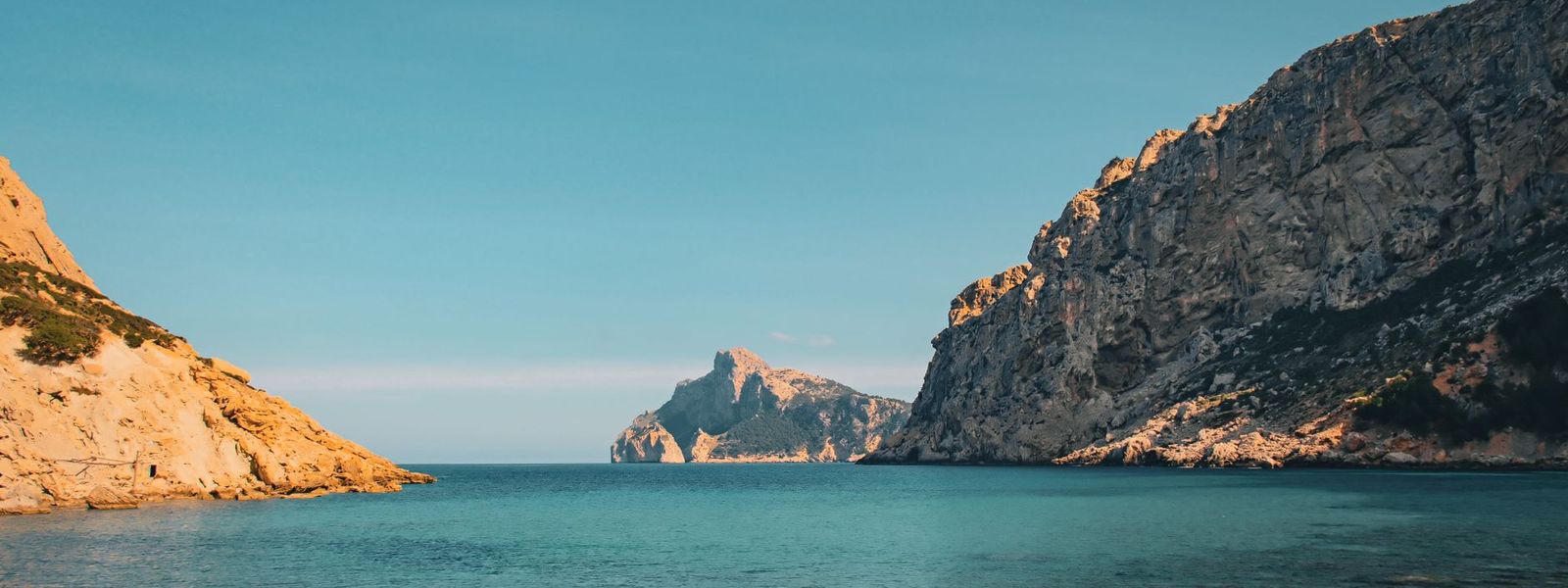
A hidden rope swing at Sa Punta Negra, a 10-minute scramble from the main beach, lets you dangle over the Mediterranean.
- Parking
- Free car park on site, small (20–30 spaces); fills quickly in July and August. Also free street parking and paid lot nearby.
- Difficulty
- Steep single-track descent by car from main road; rocky scramble from car park to beach; low rock scramble on left side for access to sheltered cove. Approximately 30 metres from car park to sand line. No formal trail.
- Hours
- Open 24 hours.
What makes it special
A small pebble and rock beach tucked into a rocky cove. The water is clear enough for snorkeling, with schools of small fish weaving between the boulders. The left side of the beach opens onto a scramble across low rocks into a more sheltered basin, where you can find natural mud pools in summer and a rope swing at Sa Punta Negra, a 10-minute walk from the main beach. A bar and restaurant sit at the water's edge. The whole bay fills quickly in high summer; come early to secure parking and find space on the beach.
Good to know
- The car park is small and free, but fills to capacity in July and August. Arrive by 10 a.m. to guarantee a space.
- The beach is pebbles and rocks, not sand. Bring water shoes or old trainers; the stones are sharp underfoot.
- The drive down from the main road is steep and winding. In high season, a queue of reversing cars backs onto the main road.
- Seaweed accumulates at the water's edge in summer. Wade in from the sides where entry is clearer.
- The beach empties after 3 p.m., but you'll still find seats at the restaurant for sunset drinks.
Getting there
From the main road, a steep single-track descent winds down to a small free car park. In season, the queue to reverse back up the hill backs onto the main road. From the car park, a 30-metre scramble down rocks and loose stone leads to the beach. A wooden stair at one end offers an easier route down.
Best time to visit
Better: June and September, when the car park rarely fills and you can find solitude before 11 a.m. Late afternoon—from 4 p.m. onward—brings calmer water and softer light, and the restaurant empties by 5 p.m. Autumn mornings are quietest.
Avoid: July and August. Peak summer turns the car park into a puzzle and buries the beach. The mud pools on the left side dry out entirely by midsummer. Midday (noon to 3 p.m.) concentrates crowds.
Sun & daylight
Nearby Places
Similar Places
Your whole travel map in one place
Get inspired by new places around the world and find the ones worth the journey
Frequently asked questions
Is the beach sandy?
No. The beach is pebbles and rocks entirely. Bring water shoes or old trainers; the stones are sharp underfoot.Can I snorkel here?
Yes. The water is clear and shallow enough for snorkeling, with small fish darting between the rocks. Seaweed is heavy at the water's edge in summer.What are the mud pools everyone mentions?
Natural basins on the left side of the cove fill with tidal water and have a thin layer of soft mud. Locals claim skincare benefits, but they dry up entirely by mid-August.Is there food at the beach?
Yes. A bar and restaurant sit right at the water's edge, serving fresh fish and paella.When is parking guaranteed?
Arrive before 10 a.m. in summer, or visit in June, September, or autumn, when the car park rarely fills.