García Sanabria Park is a public park in the centre of Santa Cruz de Tenerife, opened in 1926 and named after the mayor who approved its construction. At 67,230 square metres it is the largest urban park in the Canary Islands, laid out as gardens with fountains and architectural groups, and the Government of the Canary Islands lists it as a site of cultural interest. It is best known for its flower clock, a 1958 gift from the Consul of Denmark, and for sculptures from an international exhibition held here in 1973.
Garcia Sanabria Park
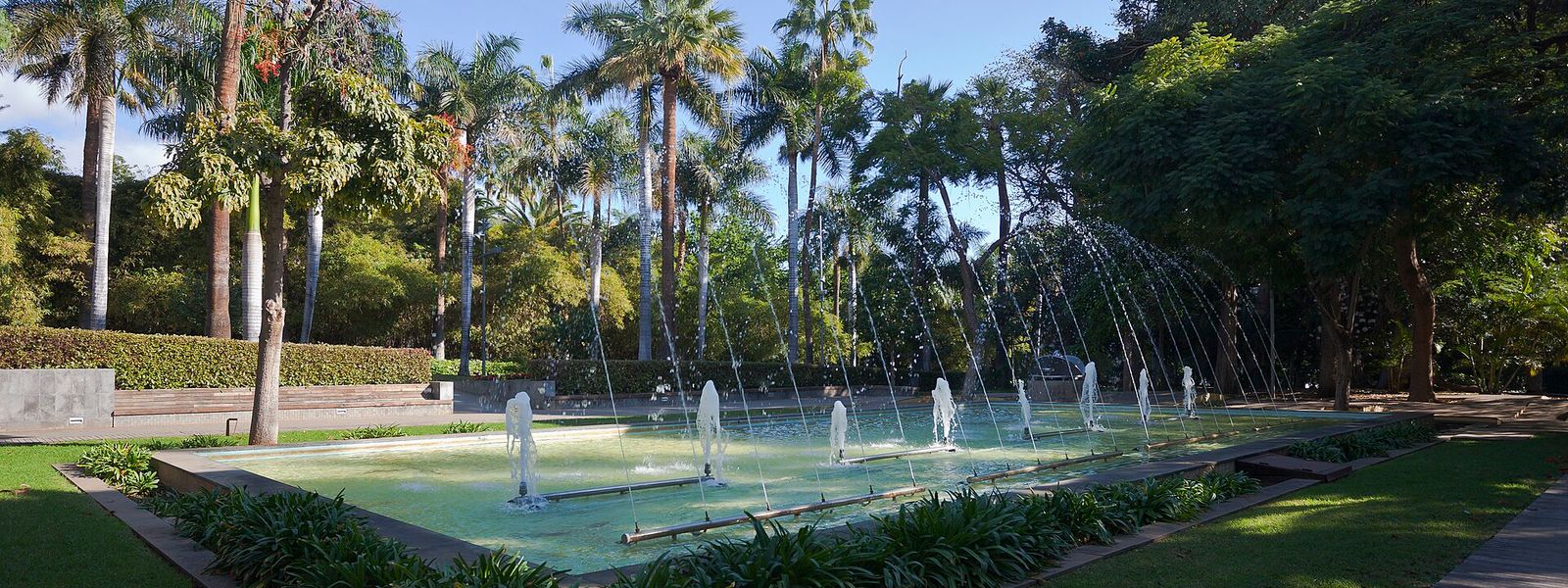
City park of 1926 with a Swiss-made flower clock, fountains, ponds and sculpture-lined walks
- Entrance
- Free; it is a public park.
- Accessibility
- Entrances on all sides, paved paths and ramps where the level changes. None of the toilets (two regular, one portable) is wheelchair-accessible.
- Parking
- Street parking near the park is very hard to find. Parking Santa Rosalía, a paid car park, is about 125 m away; another car park is about 200 m away.
- Difficulty
- None: paved paths through a city park, with ramps at the changes in level.
- Transport
- Bus stop Parque García Sanabria, about 100 m away.
- Advance booking
- Not needed.
- Address
- Rbla. de Sta. Cruz, 38004 Santa Cruz de Tenerife, Spain
What makes it special
The flower clock is the picture everyone takes: a clock face set into a bed of flowers that is replanted all year round, a staircase on either side and the central fountain behind. It was made in Switzerland by Favag and given to the island by the Consul of Denmark in 1958.
Past the clock the park opens into walks under mature trees, with exotic plants, ponds, two fountains and something always in bloom. Sculptures from the 1973 international exhibition, thirteen or so, stand at the corners and along the paths. The grounds cover 67,230 square metres, roughly nine football pitches, and the side paths lead to benches in deep shade where the city goes quiet.
Right next to the park is Plaza Fernando Pessoa, a zodiac square whose fountain and decoration map the sky at the founding of Lisbon.
Good to know
- Street parking around the park is very hard to find; come by bus or head straight for a car park.
- There are two playgrounds, and dogs are allowed.
- The toilets are two regular restrooms and one portable unit, and none of them is wheelchair-accessible.
- The paths are paved, with ramps where the level changes, and the park is lit in the evening.
Getting there
The park sits in the centre of Santa Cruz de Tenerife and has entrances on all sides, so you can walk in from whichever street you arrive on. The bus stop named Parque García Sanabria is about 100 m away.
Driving is the harder option: spaces on the streets around the park are very difficult to find. Parking Santa Rosalía, a paid car park, lies about 125 m away, and there is another car park about 200 m away. Once inside, the paths are paved and ramps take you over the changes in level.
Best time to visit
Best: any month, ideally late in the afternoon.
Avoid: a rainy day.
The flower clock is replanted throughout the year and mature trees shade the walks through the heat of the day, while on a wet day this open-air garden has little to offer.
Sun & daylight
Nearby Places
Similar Places

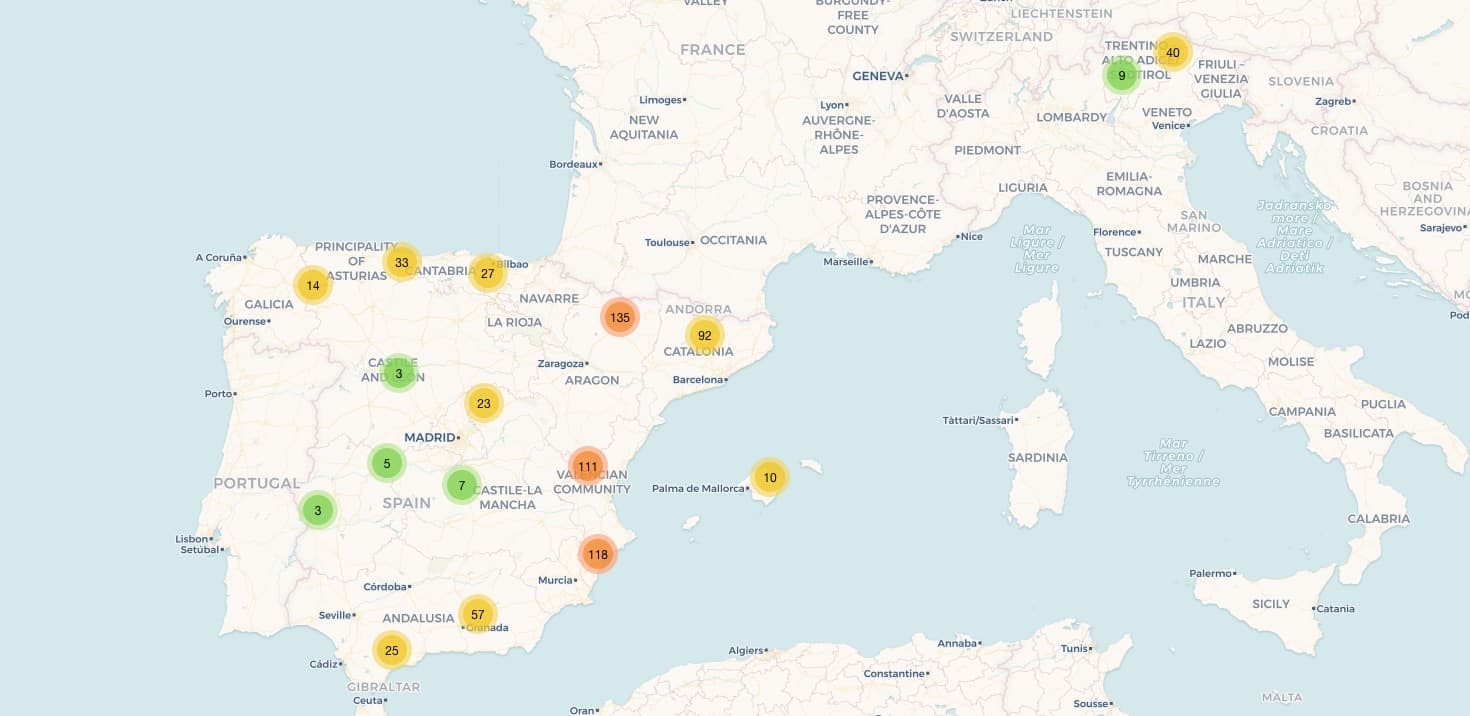
Your whole travel map in one place
Get inspired by new places around the world and find the ones worth the journey
Frequently asked questions
Where does the flower clock come from?
It was made in Switzerland by Favag and given to Tenerife by the Consul of Denmark in 1958. The bed around it is planted with flowers all year.Can I get around the park in a wheelchair?
Yes. There are entrances on all sides, the paths are paved and ramps cover the changes in level. None of the toilets is wheelchair-accessible.Is it a good place to bring children or a dog?
The park has two playgrounds, and dogs are allowed.Where can I park?
Street parking nearby is very hard to find. Parking Santa Rosalía, a paid car park, is about 125 m away.What is Plaza Fernando Pessoa?
A zodiac square next to the park. Its fountain shows the positions of the planets and its decoration the sky at the founding of Lisbon, with the signs of the zodiac behind.