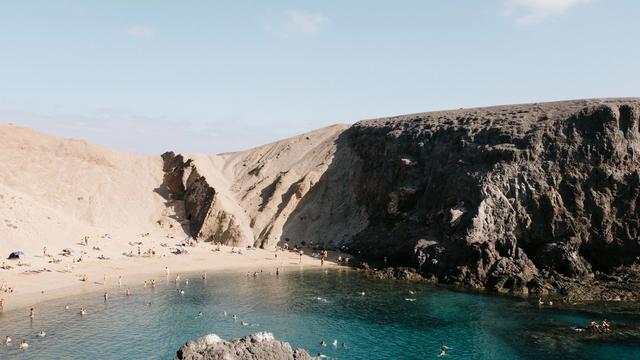
Janubio Salt Flats are salt pans in the municipality of Yaiza on Lanzarote, about 9 km north of Playa Blanca. Lava from the 1730 eruptions formed the walls of a natural lagoon here, and the pans were built beside it in 1895. Lagoon water is evaporated to yield salt, pumped in by wind power at first and by electric pumps today. The salt has been used to preserve fish and, dyed, for decorations at the annual Corpus Christi festival. The site is a Natura 2000 protected area visited by migratory birds.
Janubio Salt Flats
Local name: Salinas de Janubio
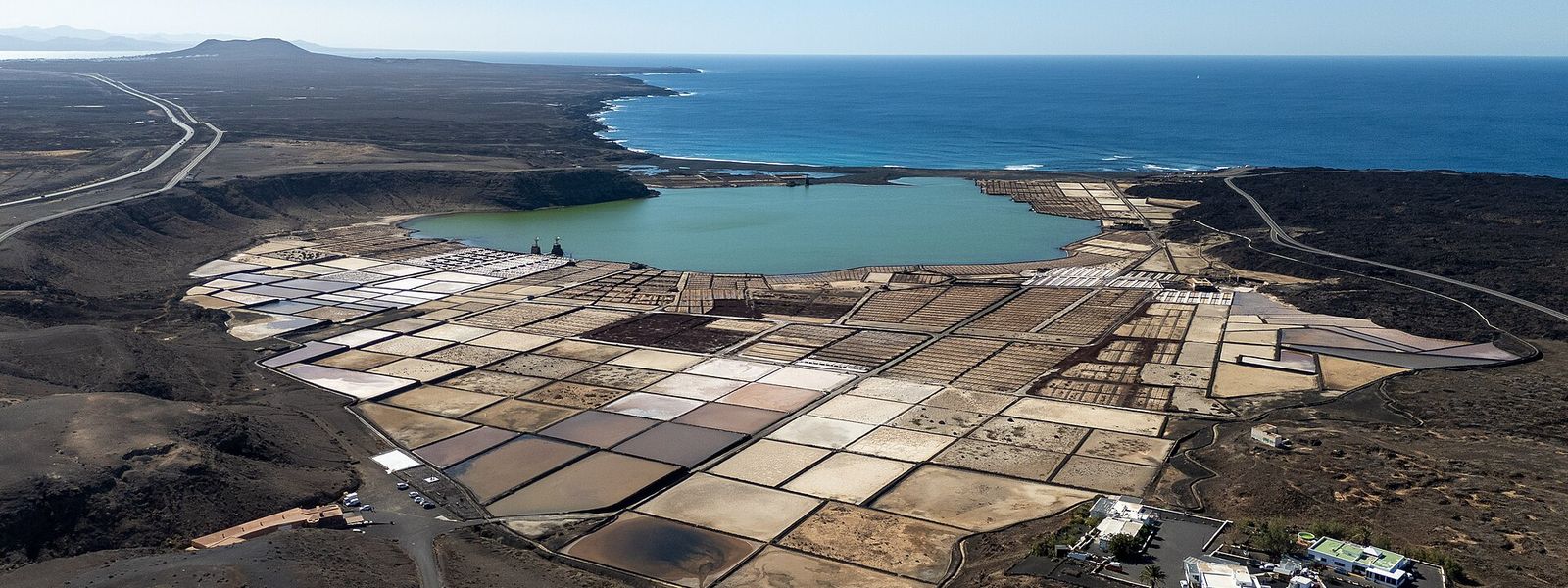
Working salt pans beside a lava-walled lagoon on Lanzarote's west coast, with tasting tours from a visitor centre
- Entrance
- The guided tour with tasting is paid; the shop and terrace café can be visited without it.
- Accessibility
- Wheelchair-accessible parking, entrance and toilet at the visitor centre.
- Parking
- Free gravel car park about 80 m from the visitor centre; free street parking as well.
- Difficulty
- None to speak of: park about 80 m from the visitor centre and walk over to the terrace.
- Transport
- Rotonda La Hoya bus stop, about 370 m away.
- Hours
- Visitor centre daily 10:00–18:00; guided tours start every two hours from 10:00.
- Address
- Calle los Hervideros, S/N, 35570 Yaiza, Las Palmas, Spain
What makes it special
From the road, the pans spread below the lagoon in a grid of shallow squares laid out like a chessboard, each a slightly different shade of white, cream or pink, with black lava and the Atlantic behind them.
The lagoon is itself a piece of volcanic history: lava from the 1730 eruptions built its walls, and salt has been made beside it since 1895. The guided tour gets you far better angles on the pans than the roadside viewpoint does. It ends at a table where Janubio salt goes onto local tomatoes, served with cheese and local wine. Migratory birds use the lagoon and the pans, so binoculars earn their place in the bag.
Good to know
- Tasting: the tour ends with Janubio salt on local tomatoes, cheese and local wine, plus a small gift. If you are driving, skip the wine.
- Shop and terrace without the tour: the salt is sold in several packs, including gift sets, and the terrace serves coffee and ice cream over the pans.
- Payment: cards and contactless are accepted, and there are toilets at the visitor centre.
- No shade: the pans are bare, open ground and the white salt throws back the sun. Bring a hat and sunglasses.
Getting there
Janubio Salt Flats lie on Lanzarote's west coast, about 9 km north of Playa Blanca. Do not navigate to the visitor centre pin in Google Maps: it leads to Janubio beach (Playa de Janubio). Take the Salinas de Janubio entrance instead. Flags mark the turn, and it leaves the road earlier than the map shows.
The free gravel car park sits about 80 m from the visitor centre, and from there you walk over to the terrace. By bus, the nearest stop is Rotonda La Hoya, about 370 m away. For an overview without the tour, the roadside viewpoint looks straight down over the pans.
Best time to visit
Best: morning or late afternoon, when the sun is low; spring and autumn if you are coming for migrating birds.
Avoid: the middle of a summer day.
Low light brings out the colours and the grid of the pans, while at midday the white salt throws back the glare and nothing shades the open ground.
Things to do nearby
All tours in Yaiza on GetYourGuide
Paid links: booking through them supports YowJourney.
Sun & daylight
Nearby Places

Similar Places
Featured in our guides

Your whole travel map in one place
Get inspired by new places around the world and find the ones worth the journey
Frequently asked questions
How long does the Janubio Salt Flats tour take?
The guided tour takes an hour and a half to two hours and ends with a tasting of Janubio salt on local tomatoes, with cheese and local wine.Can I visit without taking the tour?
Yes. The shop sells the salt in several packs, the terrace serves coffee and ice cream with a view over the pans, and the roadside viewpoint gives an overview from above.Where do I park?
There is a free gravel car park about 80 m from the visitor centre. Use the Salinas de Janubio entrance, marked by flags: the visitor centre pin in Google Maps leads to Janubio beach instead.Is the visitor centre wheelchair accessible?
The parking, the entrance and the toilet at the visitor centre are wheelchair accessible.How did the salt flats come about?
Lava from the 1730 eruptions formed the walls of a natural lagoon, and the salt pans were built beside it in 1895. Lagoon water was first pumped in by wind power; electric pumps do the job today.