Las Grietas, Spanish for "the cracks", is a group of fissures opened in volcanic rock beside the LZ-35 road near Montaña Blanca, in central Lanzarote. Narrow passages run between tall walls whose textures and shapes draw photographers. Above the main cracks lies an upper level with smaller ravines. The site is reached by car from a parking area by the road, and the ground throughout is loose gravel.
Las Grietas Volcanic Fissure
Local name: Las Grietas
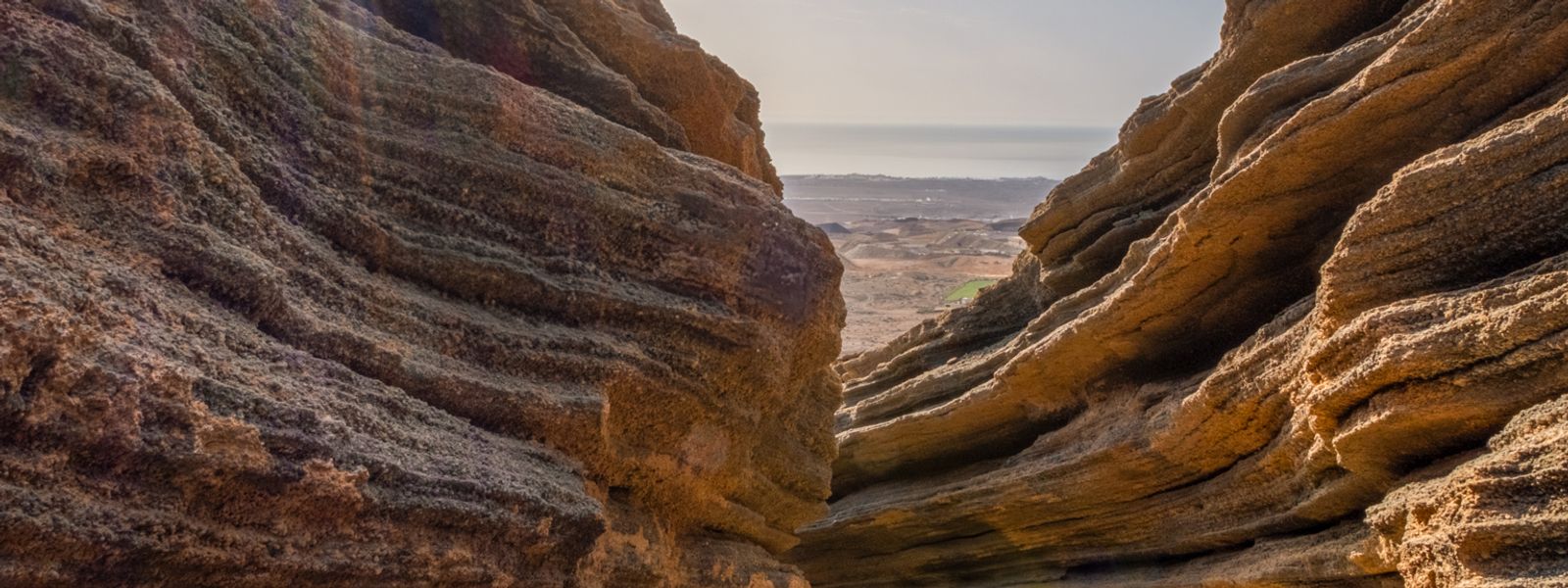
Narrow volcanic fissures between tall rock walls, with smaller ravines to climb on the level above
- Entrance
- Free; no ticket needed.
- Accessibility
- Not wheelchair accessible: the car park is rough and unpaved, the ground is loose gravel, and the climb to the upper level is steep and narrow.
- Parking
- Free unpaved car park by the road, about 40 m away; rough, uneven surface.
- Difficulty
- Easy along the bottom on loose, slippery gravel; the climb up the first main ravine to the upper level is steep and narrow in places.
- Transport
- Nearest bus stop: Cruce Montaña Blanca, about 1.2 km away in a straight line.
- Advance booking
- No booking needed; there is no ticket.
- Address
- LZ-35, 35572 Tías, Las Palmas, Spain
What makes it special
You step off the gravel by the road and straight into the rock: narrow passages between tall walls of volcanic stone, their faces carved into folds and ridges that change as you walk. Along the bottom it is easy going.
The better part is above. Past the two roped-off sections the ground climbs to an upper level, where smaller ravines branch off. The first main ravine is the one to go up. It is steep and narrow in places, with gravel shifting underfoot, and it is the stretch that makes the visit.
The rock is what photographers come for. In a narrow slot the light moves with the sun, and the walls warm in colour when it reaches down into them.
Good to know
- Footwear: the ground is mostly loose gravel and slippery. Wear trainers or hiking shoes with grip, especially if you plan to climb to the top.
- No marked route: walk along the bottom past both roped-off sections, then climb to the upper level.
- The car park: the surface is unpaved, rough and uneven. Drive down slowly and think about it in a low car.
- No facilities: there are no toilets and no drinking water nearby. Bring water with you.
Getting there
Las Grietas is a drive. The parking area sits right by the LZ-35, about 40 m away in a straight line, on rough, unpaved ground; take the way down off the road slowly. From the car it is a short walk over loose gravel into the cracks.
The nearest bus stop, Cruce Montaña Blanca, lies about 1.2 km away in a straight line. Otherwise the options are a car or a taxi.
Best time to visit
Best: early morning, when the cracks are still empty.
Avoid: peak hours, when the parking area by the road gets busy.
The passages are narrow and hold few people at once, so a quiet hour makes the climb easier and keeps other walkers out of your photographs.
Sun & daylight
Nearby Places
Similar Places
Las Grietas Volcanic Fissure on the map
The floor is loose, slippery gravel and the climb up the main ravine is steep and narrow. Wear shoes with grip, keep out of the roped-off sections and watch your footing on the way down.
Get directions

Your whole travel map in one place
Get inspired by new places around the world and find the ones worth the journey
Frequently asked questions
Is there a marked trail at Las Grietas?
No. Walk along the bottom past both roped-off sections, then climb to the upper level. The first main ravine is the best way up; it is steep and narrow in places.What shoes do I need for Las Grietas?
Trainers or hiking shoes. The ground is mostly loose gravel and slippery, and the climb to the top needs grip.Can you get to Las Grietas by bus?
The nearest bus stop, Cruce Montaña Blanca, is about 1.2 km away in a straight line. Otherwise the way in is by car or taxi, with parking right by the road.Are there toilets or water at Las Grietas?
No toilets and no drinking water nearby. Bring water with you.When is Las Grietas quietest?
Early in the morning. The parking area gets busy at peak hours.