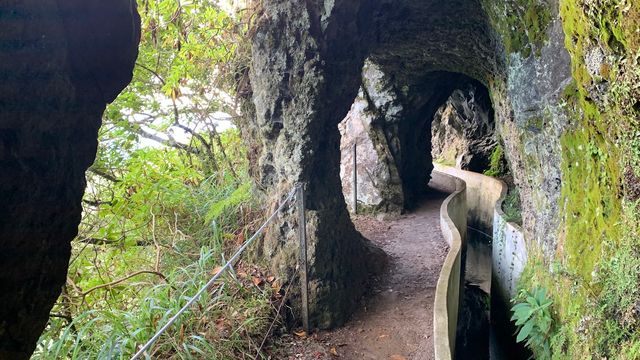
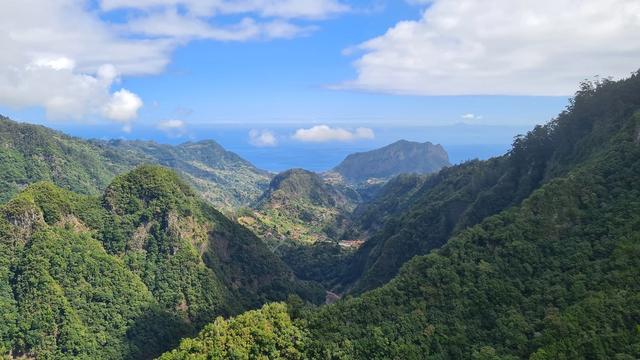
Levada da Silveira is a walking route along an old irrigation channel on Madeira, Portugal. It is one of the oldest levadas on the island and one of the quietest. The path follows the water for about 5 km, past waterfalls that spill across the walkway, a farm growing kiwis and other fruit, and open views over the valley and its forest tracks. Tunnels cut through the rock along the way, and they are completely dark inside.
Levada da Silveira
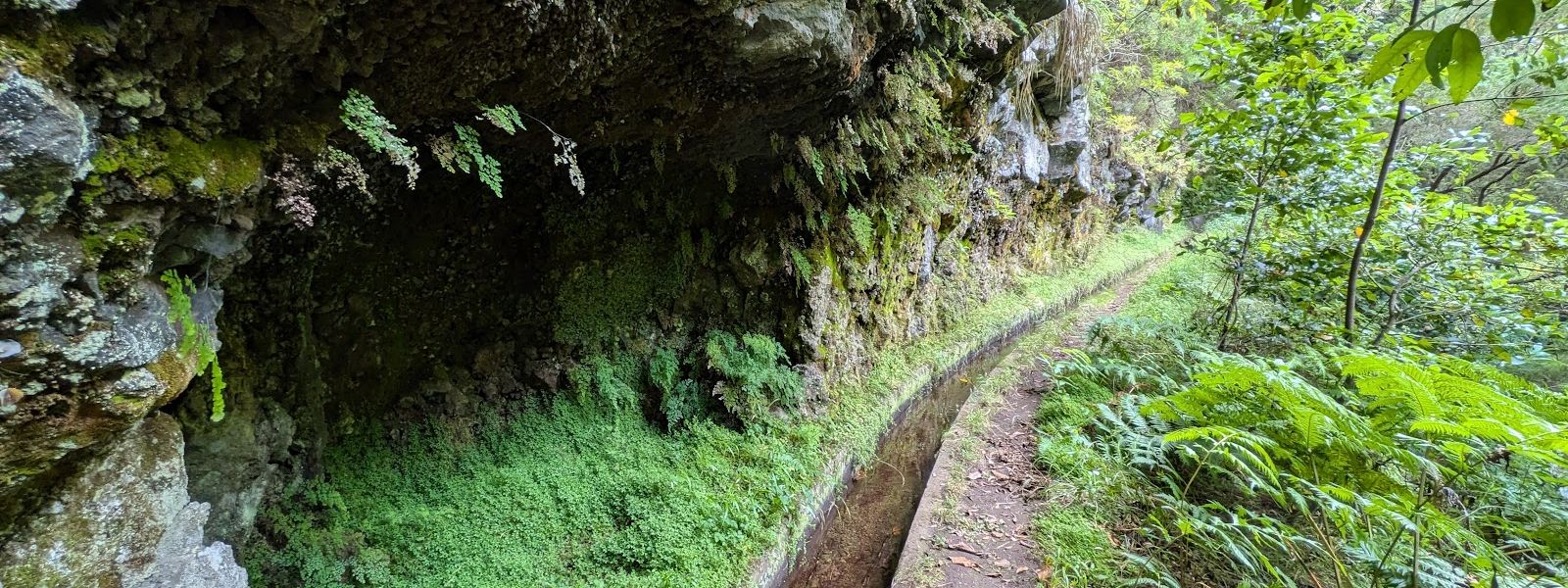
One of the oldest levadas on Madeira, and it is possible to walk ten kilometres of it without meeting another person.
- Entrance
- Free. No ticket required.
- Accessibility
- Not wheelchair accessible: no step-free entrance and no accessible parking.
- Parking
- No car park at the trailhead. Nearest car park about 1.2 km away, free, asphalt surface; otherwise cars are left in the corners of the road.
- Difficulty
- About 5 km along the channel, easy walking, 3.5–4.5 hours there and back. Narrow in places, muddy after rain, with unlit tunnels.
- Transport
- Bus stop CAM da Silveira 5A, about 770 m from the levada.
- Hours
- Open 24 hours, every day.
What makes it special
A goat, some hens and roosters, a few lizards, and not one other hiker in ten kilometres — that is an ordinary day on this levada. It is one of the oldest water channels on Madeira and one of the least walked. The walking is easy. The path follows the channel past waterfalls that spill straight over the walkway, and at some of them you get wet. Partway along there is a farm growing kiwis and other fruit. Beyond it the valley opens out into forest tracks and mountain views. Tunnels cut through the rock; the longer one is broader than the tunnels on most levadas, and completely dark inside.
Good to know
- Bring a torch. The tunnels have no lighting. The longer one is broad enough for a phone torch, but a headlamp keeps your hands free.
- After rain the path is mud. Feet are soaked within the first fifteen minutes, and the narrow sections turn slippery.
- No facilities. There are no toilets, no drinking water and no information point in the area around the levada.
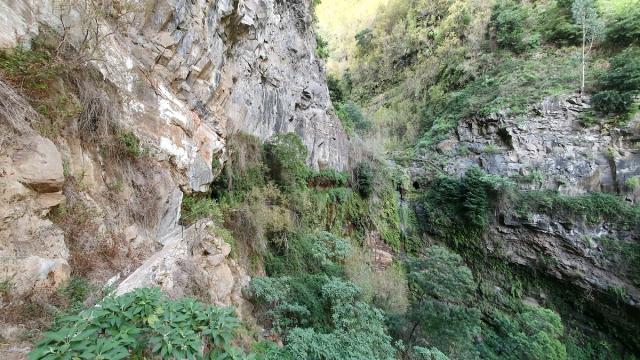
- Waterfalls cross the walkway. At some of them you get wet, and the ledge beside the channel is narrow where the water comes down.
- The path is not maintained to a high standard. Expect broken surfaces and stretches with nothing along the edge.
Getting there
Most people come by car. There is no car park at the levada itself: drivers leave cars in the wide corners of the road, and the nearest proper car park is further back along the asphalt. A bus stop serves the same road, close enough to walk in from. Either way the last stretch is on foot. The start of the levada is the awkward part, and it is easy to walk past. Find the trailhead on a map app before you set off rather than looking for it on the ground.
Best time to visit
Best: dry weather, when the path is firm and the crossings are easy to step over.
Avoid: heavy rain and the mud it leaves behind.
Crowds play no part in the timing here — the levada is often empty of other walkers, and there is no queue to beat at the start. Rain is what changes the walk. Wet ground turns the surface to mud, the waterfalls that cross the path run harder, and you finish soaked.
Sun & daylight
Nearby Places


Similar Places

Levada da Silveira on the map
The path is unprotected. There are no railings on the exposed sections, some spots are genuinely dangerous, and the levada is not suitable for very small children. After rain the narrow ledges are slippery with mud, and the tunnels are unlit.
Get directions
Your whole travel map in one place
Get inspired by new places around the world and find the ones worth the journey
Frequently asked questions
How long does the walk take?
The levada runs about 5 km. There and back takes roughly three and a half to four and a half hours, less if you turn round at the first long tunnel.Is Levada da Silveira busy?
It is one of the quieter levadas on the island. The whole route can be walked without meeting anyone, and it is not on the standard tourist circuit.Is it suitable for young children?
No. Some spots are dangerous, and there is nothing along the edge to stop a fall. The levada is not a route for very small children.What is there to see along the way?
Waterfalls that cross the path, a farm growing kiwis and other fruit, forest tracks, and open views over the valley and the mountains. Tunnels cut through the rock along the route.