The Sa Caleta Phoenician Settlement is an archaeological site on the south coast of Ibiza, in Sant Josep de sa Talaia. Phoenicians settled the headland in the 8th century BC, and Carthaginians later occupied it. The excavated remains show streets, courtyards and the walls of buildings. Since 1999 the site has formed part of the UNESCO World Heritage listing Ibiza, Biodiversity and Culture.
Poblado fenicio de sa Caleta

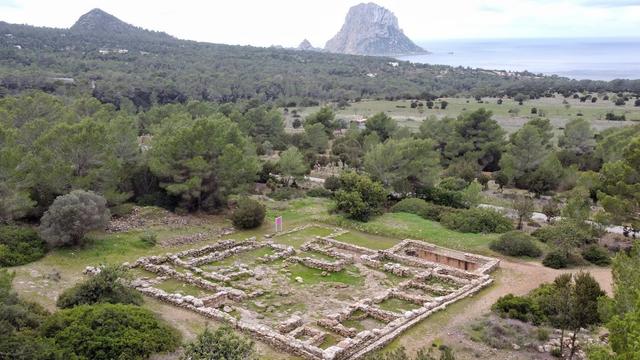
Ruined Phoenician village from the 8th century BC, laid out in low walls on a red-rock headland over the sea
- Accessibility
- Neither the car park nor the entrance is wheelchair accessible; the car park is unpaved.
- Parking
- Unpaved car park about 390 m away in a straight line; a second, gravel car park about 920 m away.
- Difficulty
- Easy: the walk over from the car park, about 390 m away in a straight line, is the whole approach.
- Transport
- Bus to the Sa Caleta stop, about 450 m away in a straight line.
- Hours
- Open at all hours, every day.
- Address
- Diseminado Sa Caleta, 07818 Sant Josep de sa Talaia, Illes Balears, Spain
What makes it special
Lanes run between the outlines of rooms and courtyards right at the edge of the sea, and the whole village reads like a plan drawn on the ground. Phoenicians built it in the 8th century BC, among the earliest settlers on Ibiza, and Carthaginians lived here after them.
The walls stand low and have been consolidated, so the street pattern is easy to follow while very little rises above it. Anyone expecting standing buildings will find it underwhelming. The draw is the age of the place and where it sits: red cliffs, the open sea beyond the walls, and a stretch of coast that has been lived on for close to three thousand years.
Good to know
- The ruins are fenced. You see them from outside the fence and do not walk among the walls.
- There are no toilets and no drinking water at the site or nearby. Bring water, especially in summer.
- The headland is bare and gives no shade, so a hat matters here in the middle of the day.
- Neither the car park nor the entrance is wheelchair accessible.
- The setting is half the visit: come for the coast as much as for the stones.
Getting there
Most visitors come by car. An unpaved car park lies about 390 m from the site in a straight line, and a gravel one sits further out, about 920 m away. The Sa Caleta bus stop is about 450 m away in a straight line. From either, the last stretch is on foot out towards the headland, where the fence around the ruins marks the site.
Best time to visit
Best: early morning, or the last hours before sunset.
Avoid: the middle of a summer day.
The headland has no shade, and low sun throws shadows along the walls that make the street plan far easier to read.
Access & restrictions
The settlement is a protected archaeological site and part of the UNESCO World Heritage listing Ibiza, Biodiversity and Culture. The ruins are fenced: view them from outside, and do not climb the fence or step onto the walls. Leave stones, pottery fragments and anything else you find where it lies; removing material from an archaeological site is against the law in Spain.
Sun & daylight
Nearby Places
Similar Places
Poblado fenicio de sa Caleta on the map
The red cliffs around the headland are soft rock that crumbles at the edge. Keep well back from the drop, and keep children close.
Get directions
Your whole travel map in one place
Get inspired by new places around the world and find the ones worth the journey
Frequently asked questions
Can you walk among the ruins at Sa Caleta?
No. The ruins are fenced, and you see them from outside the fence.How old is the Sa Caleta Phoenician Settlement?
Phoenicians founded the village in the 8th century BC, and Carthaginians occupied it after them.Is there parking near the site?
Yes. An unpaved car park lies about 390 m away in a straight line, and a gravel one about 920 m away.Can you get there by bus?
The Sa Caleta bus stop is about 450 m from the site in a straight line; the rest is on foot.Are there toilets or water at the site?
No. There are no toilets and no drinking water at the site or nearby, so bring water with you.