Raufarholshellir is a lava tube in South Iceland, formed 5,600 years ago in the Leitahraun eruption, whose source lies 10 kilometres uphill. It runs 1,360 metres, at least 10 metres high and up to 30 metres wide. That makes it the fourth-longest lava tube in Iceland. Route 39 crosses over it. The cave was free to enter until 2016, when damage and rubbish forced it to close. It reopened in 2017 with lighting and walking decks, and is now visited only on guided tours.
Raufarholshellir Lava Cave
Local name: Raufarhólshellir
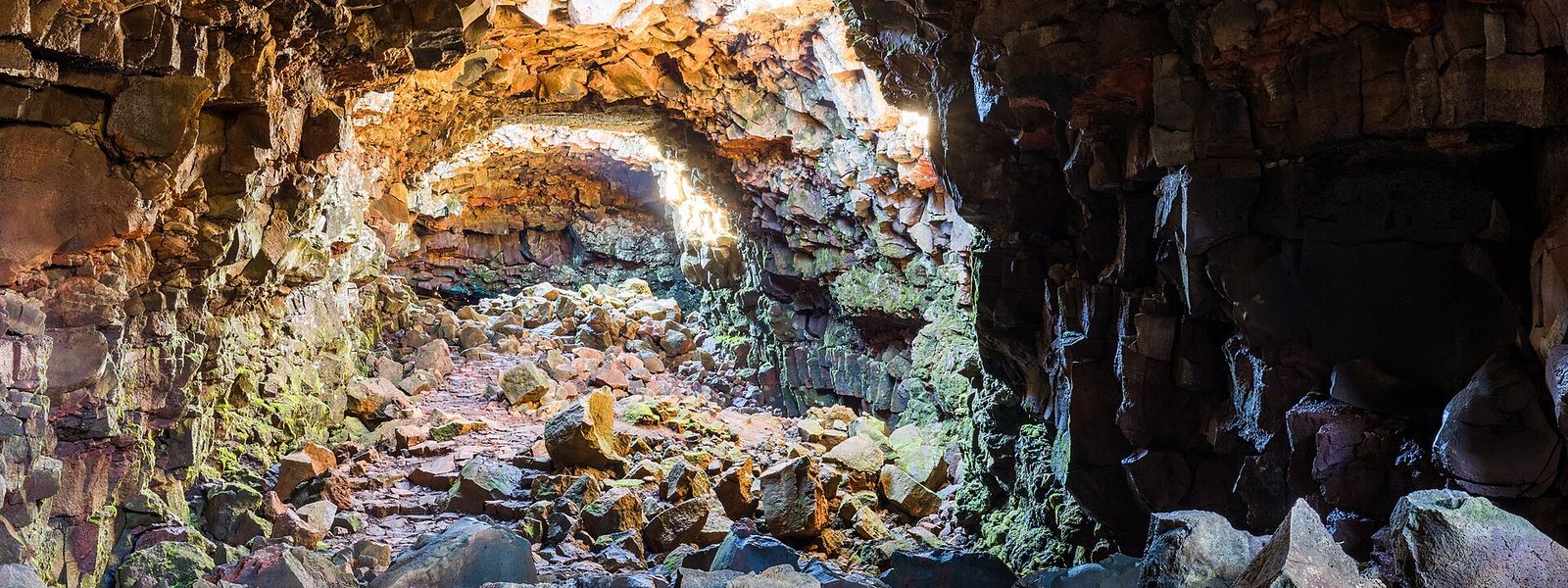
Free access ended in 2016: visitors had broken nearly every fragile lava straw in the cave, and several tonnes of rubbish had to be cleared out before it reopened.
- Entrance
- Paid. Tickets are sold per guided tour; cards accepted.
- Accessibility
- Entrance not wheelchair accessible; stairs and uneven lava rock inside.
- Parking
- Free car park on site.
- Difficulty
- Moderate: stairs and loose lava rock underfoot, helmet and walking stick provided.
- Advance booking
- Book online in advance; tours run in timed slots with limited places.
- Hours
- Daily 9:00–17:00.
What makes it special
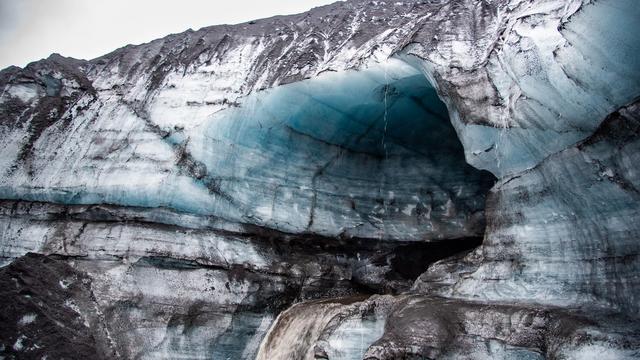
The tube is up to 30 metres wide and at least 10 metres high along most of its length. Daylight drops in through holes in the ceiling, and snow piles up on the floor underneath them. The walls carry red and ochre bands where the lava last ran, 5,600 years ago. Ice formations and lava stalactites build up inside. Groups walk in on decking, then over broken lava rock, and at one point the guide switches the lights off and the darkness is total. The standard tour covers only the section nearest the entrance; the deeper part of the tube is a separate, longer tour.
Good to know
- Guided tours only. You cannot go in alone. The standard tour covers the first part of the tube; going deeper is a separate tour.
- The floor is broken lava. Helmets with head torches and walking sticks are handed out at the start. Wear sturdy shoes.
- Not step-free. The entrance is not wheelchair accessible, and the route inside includes stairs and rough rock.
- Book before you drive out. Tours run in timed slots with a limited number of places, and walk-in space is not guaranteed.
- Facilities. There are toilets on site, and the tour takes children.
Getting there
Route 39 crosses over the cave, at a point where the tube is about 15 metres across. There is a free car park on site, and everything from there is on foot and with a guide. The walk in starts on decking and lighting installed in the section nearest the opening, then continues over stairs and loose lava rock. Helmets with head torches and walking sticks are issued before you go down.
Best time to visit
Better: wet and windy days. The cave is roofed and lit, so the weather above ground changes nothing about the visit.
Avoid: turning up without a booking. Entry is by timed slot with a limited number of people on each tour.
Inside, the light is artificial apart from the daylight falling through the holes in the ceiling, so no hour of the day is better than another for photographs.
Things to do nearby
All tours in South Iceland on GetYourGuide
Paid links: booking through them supports YowJourney.
Sun & daylight
Nearby Places



Similar Places
Raufarholshellir Lava Cave on the map
The floor is rough, broken lava rock the whole way, and the route includes stairs. Wear the helmet you are given and keep the walking stick.
Get directions

Your whole travel map in one place
Get inspired by new places around the world and find the ones worth the journey
Frequently asked questions
Can you visit Raufarholshellir without a guide?
No. Since it reopened in 2017 the cave can only be entered on a guided tour. Before 2016 it was open to anyone, free of charge.How much of the cave does the tour cover?
The tube runs 1,360 metres. The standard tour covers the section nearest the entrance, where walking decks and lighting were installed. The deeper part is a separate tour.What should you bring?
Warm clothes and sturdy shoes. Helmets with head torches and walking sticks are provided at the start of the tour.Is it suitable for children?
Yes, the tour takes children. The floor is broken lava rock and there are stairs, so younger children need a hand throughout.Why did the cave close in 2016?
Because of rubbish, damage to the cave and the cost of rescuing visitors. Nearly all the fragile lava straws had been destroyed. It reopened in mid-2017 with decking and lighting.