The Royal Stables of Córdoba, known in Spanish as the Caballerizas Reales, are a set of stables in the historic centre of Córdoba, bordering the Guadalquivir. Philip II established them by royal decree on 28 November 1567, the same decree that gave the Spanish horse breed formal standards, and Diego López de Haro y Sotomayor, 1st Marquis of El Carpio, built them on part of the Alcázar site. They housed the best stallions and mares of the royal Andalusian stud and today hold a permanent equestrian display and horse shows.
Royal Stables of Cordoba
Local name: Caballerizas Reales

Vaulted 16th-century royal stables beside the Alcázar, founded in 1567 for Andalusian horses, with an equestrian show
- Entrance
- The equestrian show is ticketed, with premium and standard seating. Cards and contactless payments are accepted.
- Accessibility
- Wheelchair-accessible entrance and toilets; no wheelchair-accessible parking. Most standard show seats have no backrest.
- Parking
- Paid public car park, Parking la Mezquita, about 190 m away in a straight line. No wheelchair-accessible parking at the stables.
- Difficulty
- None to speak of: the stables stand in the historic centre, about 135 m from the nearest bus stop and 190 m from a paid car park.
- Transport
- Bus stop Mártires, about 135 m away in a straight line.
- Advance booking
- Seating for the equestrian show is limited, so book ahead.
- Hours
- Wednesday to Saturday 10:00–13:30 and 15:30–20:00; closed Sunday, Monday and Tuesday.
- Address
- C. Caballerizas Reales, 1, Centro, 14004 Córdoba, Spain
What makes it special
The horses carry the evening. Andalusian horses change gait, jump and dance alongside a flamenco dancer, and the riders hold each movement with precision. The show combines music, traditional Spanish horsemanship and flamenco, and it is staged in the stables where the breed was given formal standards in 1567. The first horses of that breed carried the stables' brand: an R for Real inside a C for Córdoba, with a crown on top.
The building has a distinct military style, in keeping with the Alcázar next door. Its main hall runs under cross vaults carried on sandstone columns and is divided into small stalls. A permanent equestrian display is housed in the building.
Good to know
- Premium seats sit in the centre, behind glass. From their front row you look through double glass with reflections and past poles.
- Most standard seats have no backrest.
- The show uses bright white lights flashed towards the audience, which matters for anyone with epilepsy or prone to migraines.
- Cards and contactless payments are accepted, and there are toilets on site.
Getting there
The stables stand in Córdoba's historic centre, on the river side of the old town where it meets the Guadalquivir, right by the Alcázar. The nearest bus stop, Mártires, is about 135 m away in a straight line. Drivers have a paid car park, Parking la Mezquita, about 190 m away. The stables have no wheelchair-accessible parking of their own.
Best time to visit
Best: a show evening, Wednesday to Saturday.
Avoid: Sunday to Tuesday, when the stables are closed.
An evening show catches the sky over the arena changing colour as the light drops, and on open days the stables close for a break in the middle of the day, so a daytime visit needs timing around it.
Things to do nearby
All tours in Córdoba on GetYourGuide
Paid links: booking through them supports YowJourney.
Sun & daylight
Nearby Places
Similar Places
Royal Stables of Cordoba on the map
Get directions
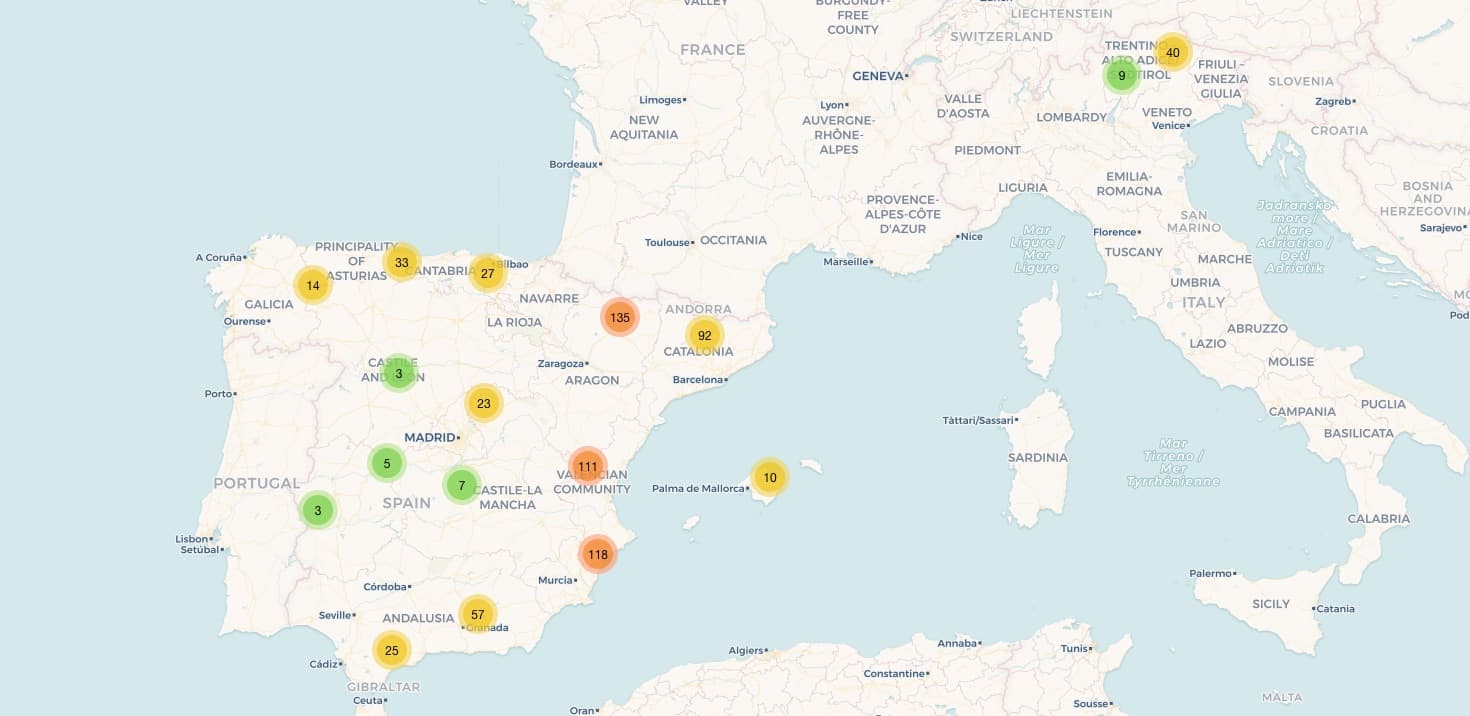
Your whole travel map in one place
Get inspired by new places around the world and find the ones worth the journey
Frequently asked questions
When were the Royal Stables of Córdoba founded?
Philip II established them by royal decree on 28 November 1567, the decree that also gave the Spanish horse breed formal standards. Diego López de Haro y Sotomayor, 1st Marquis of El Carpio, built them on part of the Alcázar site.Are the premium seats worth it?
Premium seats sit in the centre of the stand, behind glass. In their front row the view passes through double glass, which reflects, and past poles.What is there to see apart from the show?
The stable hall itself, with cross vaults on sandstone columns over a row of small stalls, and a permanent equestrian display.Is the show suitable for children?
Yes, it suits children. Bright white lights are flashed towards the audience during the show, which matters for anyone with epilepsy or prone to migraines.Can wheelchair users visit?
The entrance and the toilets are wheelchair accessible. There is no wheelchair-accessible parking.