Seville Cathedral, formally the Cathedral of Saint Mary of the See, stands in the old town of Seville in Andalusia and is the largest Gothic cathedral. Work began in 1402 on the site of the Almohad great mosque and was completed in 1506–7. The mosque's minaret became the Giralda, 104.5 m high, and its ablutions courtyard survives as the Patio de los Naranjos. The cathedral holds the tomb of Christopher Columbus and the Royal Chapel of Ferdinand III, Alfonso X and Peter the Cruel. UNESCO listed it in 1987, together with the Alcázar and the General Archive of the Indies.
Seville Cathedral
Local name: Catedral de Sevilla

Vast Gothic cathedral built over an Almohad mosque, with the Giralda bell tower and the tomb of Columbus.
- Entrance
- Paid, with a timed ticket. A standard ticket costs €38 for two people.
- Accessibility
- Wheelchair-accessible entrance and toilets. The Giralda is climbed on ramps, with steps for the last stretch; the rooftop tour uses stairs in very tight spaces.
- Parking
- Car parks about 260 m and 350 m away in a straight line.
- Difficulty
- Getting in is a walk in from the street. The effort is the Giralda: ramps all the way up, then steps for the final stretch into the top.
- Transport
- Bus stops Paseo Colón (Dos de Mayo), stop 775, and Torre de Oro, both about 450 m away.
- Advance booking
- Yes. Tickets are for a time slot and sell out days ahead in high season, October included; book weeks ahead, directly with the cathedral.
- Hours
- Monday–Saturday 11:00–18:00; Sunday 14:30–19:00. Special masses can close the interior to visitors.
- Address
- Av. de la Constitución, s/n, Casco Antiguo, 41004 Sevilla, Spain
What makes it special
You climb the Giralda on ramps, with steps only for the last stretch into the top, and from there the old town spreads out below the bells. The tower began as the minaret of the Almohad mosque, finished in 1198; the belfry and the Giraldillo statue on its tip were added in the 16th century. The Gothic body below runs 126 m long, longer than a football pitch. The eye goes first to the boxlike choir filling the middle of the nave and to the vast retable carved with scenes from the life of Christ. Columbus lies here, and Ferdinand III, Alfonso X and Peter the Cruel rest in the Royal Chapel. The small things reward a slow pace: a stuffed crocodile hanging at the Door of the Lizard (Puerta del Lagarto), the mosque's horseshoe arch at the Door of Forgiveness (Puerta del Perdón), and Murillo's Vision of St Anthony, whose saint thieves cut out in 1874 and which came back from New York in 1875.
Good to know
- Tickets are for a set time slot, and in high season they sell out days ahead. October counts as high season in Seville.
- The visitor entrance is right beside the Giralda. There is no set route inside unless you join a guided tour.
- At the top of the Giralda, bars and bird mesh cover the openings, and you queue for a turn at the view.
- The guided rooftop tour also runs along the upper interior balconies, past the stained glass; some of its stairs are in very tight spaces.
- Toilets and the gift shop are in the courtyard. Free drinking water is about 60 m away.
Getting there
The cathedral fills a whole block of the Casco Antiguo, Seville's old town, and the last stretch is on foot through its streets. The nearest bus stops, Paseo Colón (Dos de Mayo) and Torre de Oro, are both about 450 m away in a straight line, on the river side of the cathedral. Car parks lie about 260 m and 350 m away. The visitor entrance is next to the Giralda, so the tower is the landmark to walk towards. A provincial tourist office stands about 140 m away.
Best time to visit
Best: a late-afternoon slot, booked weeks ahead.
Avoid: turning up without a ticket in high season, which in Seville runs into October.
The cathedral is crowded at every hour but a little calmer late in the day, and because the summer months are so hot, autumn fills up the way summer does elsewhere.
Access & restrictions
Seville Cathedral is a working church, and worship comes first: special masses can close the interior to visitors, even to people who have just come off a rooftop tour. Tickets are tied to a time slot. The Door of the Conception (Puerta de la Concepción), which opens onto the Patio de los Naranjos, stays shut except on feast days, and the Door of Saint Michael serves the Holy Week processions. Keep your voice down in the chapels, where services are held.
Things to do nearby
All tours in Seville on GetYourGuide
Paid links: booking through them supports YowJourney.
Sun & daylight
Nearby Places
Similar Places
Seville Cathedral on the map
Get directions
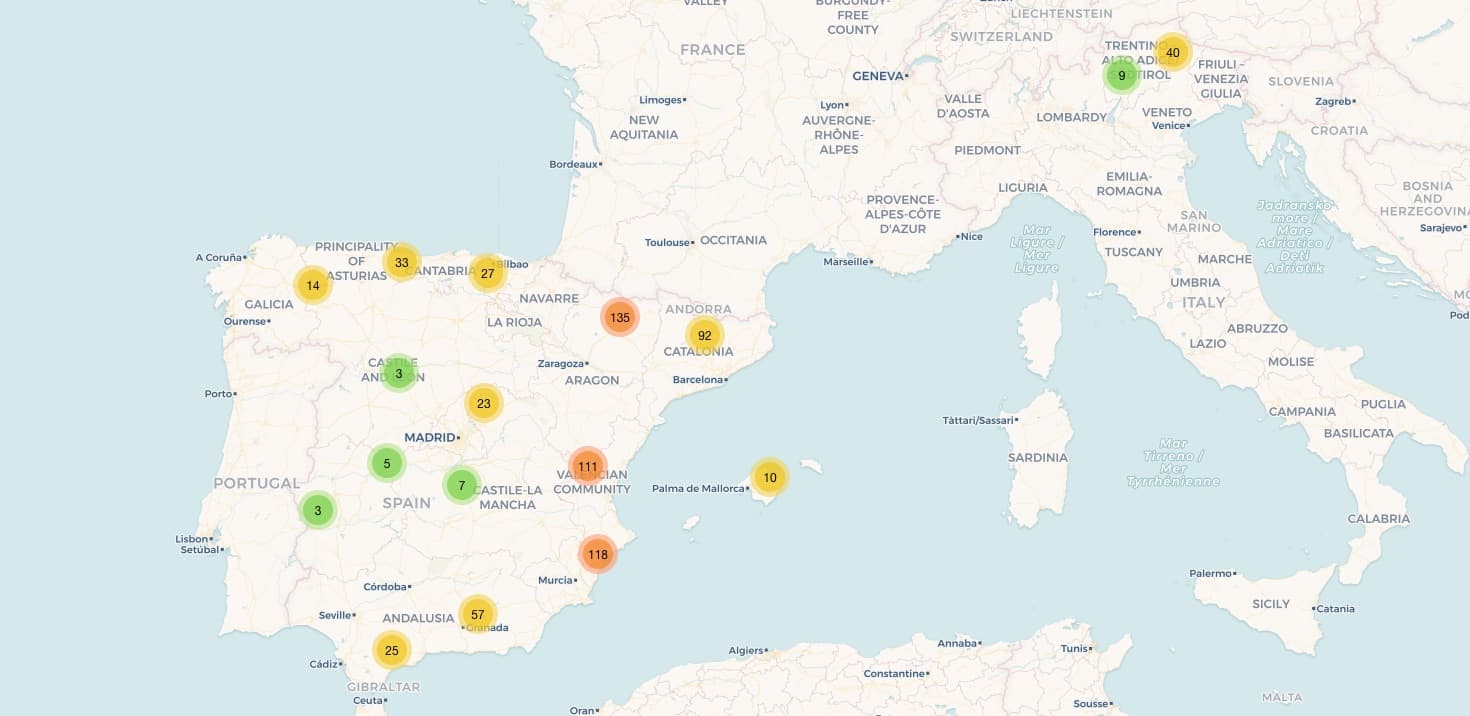
Your whole travel map in one place
Get inspired by new places around the world and find the ones worth the journey
Frequently asked questions
Can you climb the Giralda?
Yes. The climb goes up ramps, with steps only for the final stretch into the top. The visitor entrance is right beside the tower, so many people go up first. Bars and bird mesh cover the openings at the top.Is Christopher Columbus buried in Seville Cathedral?
Yes. Columbus is buried in the cathedral, as are his sons Diego and Ferdinand. The Royal Chapel holds Ferdinand III, Alfonso X and Peter the Cruel.Do I need to book tickets in advance?
Yes. Tickets are for a time slot, and in high season, October included, they sell out days ahead. Book directly with the cathedral.What is left of the mosque?
The Giralda was its minaret, the Patio de los Naranjos with its fountain and orange trees was its ablutions courtyard, and the Door of Forgiveness keeps the mosque's horseshoe arch.Is Seville Cathedral wheelchair accessible?
The entrance and the toilets are wheelchair accessible. The Giralda is climbed on ramps, but the last stretch into the top is steps.