The Viera y Clavijo Canary Botanical Garden covers about 10 hectares of a steep slope of the Guiniguada ravine (Barranco de Guiniguada) in Tafira Alta, roughly 7 km south-west of Las Palmas de Gran Canaria. Laid out from 1952 by the Swedish-Spanish botanist Erik Ragnar Svensson and opened in 1959, it grows around 500 plant species endemic to the Canary Islands and keeps a seed bank, a herbarium and research laboratories. Its name honours the 18th-century cleric and scholar José Viera y Clavijo.
Viera y Clavijo Canary Botanical Garden
Local name: Jardín Botánico Canario Viera y Clavijo
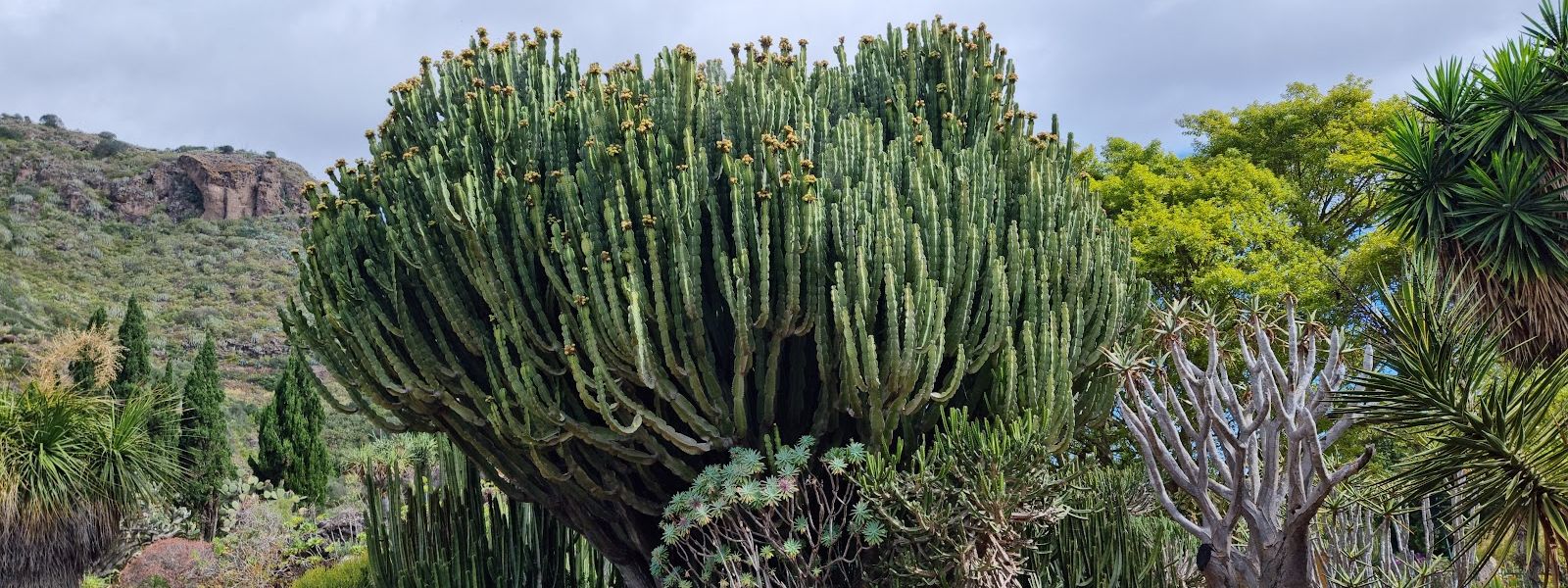
Botanical garden on a steep ravine side in Tafira Alta, growing some 500 plant species native to the Canaries.
- Entrance
- Free.
- Accessibility
- Wheelchair-accessible entrance, parking and toilets. The lower walks suit limited mobility; paths climbing the steep ravine slope are harder going.
- Parking
- Free car park at the lower entrance, a second free car park about 280 m away, and free street parking. Wheelchair-accessible spaces.
- Difficulty
- Easy from the lower car park. Inside, paths climb a steep ravine slope. Arriving by bus means a walk of 12 to over 20 minutes, partly along a road with narrow verges.
- Transport
- Buses from Las Palmas; nearest stop Casa del Gallo, about 340 m away in a straight line.
- Hours
- Monday to Friday 7:30–19:00; Saturday and Sunday 10:00–18:00. Open all year.
- Address
- Carr. del Dragonal, Km. 7, GC-310, 35017, Las Palmas, Spain
What makes it special
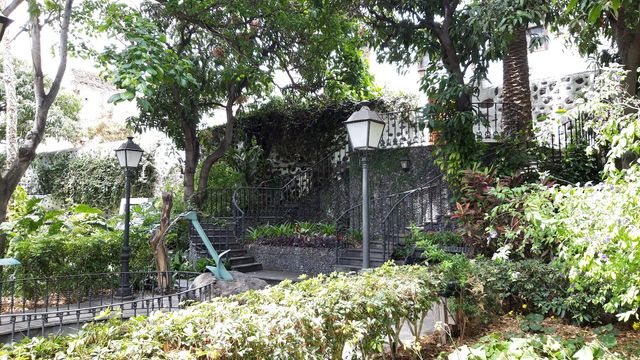
Paths work their way across the wall of the Guiniguada ravine, a slope with a waterfall and shallow caves in the cliff face, and almost everything growing beside them comes from the Canary Islands.
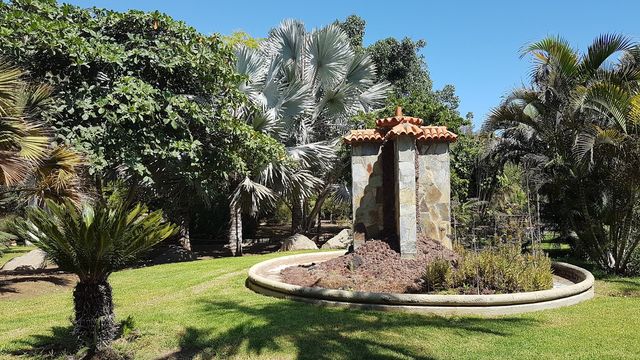
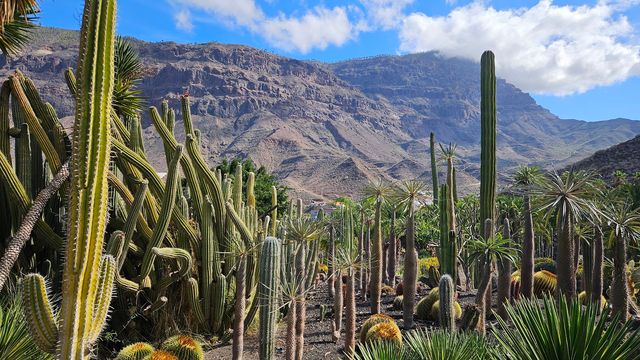
The laurel forest (Bosque de Laurisilva) shows the dense, damp woodland that covered much of Macaronesia before Spanish settlement. Out on open ground, the cactus and succulent garden holds around 10,000 cultivars. Between them lie the Garden of the Islands, a pine grove, the Hidden Garden (El Jardín Escondido) with its greenhouse, and the Fountain of the Wisemen (Fuente de los Sabios), dedicated to the botanists who described the islands' flora.
It is a quiet place. Water runs through it, and butterflies are everywhere: Canary Red Admiral, Monarch and Southern Speckled Wood among them.
Good to know
- There is no café inside the garden. A bar further along the road serves food and drinks; bring water and something to eat.
- Parts of the upper garden, including the upper entrance, can be closed for works or after rain, so not every path may be open.
- The garden spreads over a steep ravine side. Wear proper walking shoes for the paths that climb the slope.
- Free toilets are inside the garden, in a block towards the aqueduct end.
Getting there
By car, head for the lower entrance on the Dragonal road. It has its own free car park, a second one lies about 280 m away, and there is free parking along the street.
Buses run out from Las Palmas. The nearest stop, Casa del Gallo, is about 340 m away in a straight line, but on foot the approach follows the road. One line leaves you about 12 minutes' walk from the garden; from the others it is more than 20 minutes. Much of that walk is on a road with little room for pedestrians and blind bends, so walk single file and keep your attention on the traffic.
Best time to visit
Best: a weekday morning, soon after the early opening. Avoid: the day after heavy rain, and the middle of a hot day in the cactus garden. The paths up the slope can be closed after rain, and the succulent garden is open ground with little shade when the sun is high.
Things to do nearby
All tours in Las Palmas de Gran Canaria on GetYourGuide
Paid links: booking through them supports YowJourney.
Sun & daylight
Nearby Places
Similar Places
Viera y Clavijo Canary Botanical Garden on the map
Walking in from the bus stops means following a road with little room for pedestrians and blind bends. Keep to single file, stay well in to the side and make yourself visible to drivers.
Get directions

Your whole travel map in one place
Get inspired by new places around the world and find the ones worth the journey
Frequently asked questions
Can I get to the Viera y Clavijo Canary Botanical Garden by bus from Las Palmas?
Yes. Buses from Las Palmas stop nearby, the closest at Casa del Gallo. Depending on the line, the walk from the stop takes about 12 minutes or more than 20, partly along a road with narrow verges and blind bends.Is there anywhere to eat in the garden?
There is no café inside. A bar further along the road serves food and drinks, but bring water and food for the visit itself.Is the garden suitable for wheelchairs or limited mobility?
The entrance, parking and toilets are wheelchair accessible, and the lower walks are manageable with limited mobility. The garden lies on a steep ravine slope, and the paths that climb it are harder going.Is the whole garden always open?
Not always. Parts of the upper garden, including the upper entrance, can be closed for works or after rain.What grows in the garden?
Around 500 plant species endemic to the Canary Islands across about 10 hectares, including laurel forest, a pine grove and a cactus and succulent garden with some 10,000 cultivars.