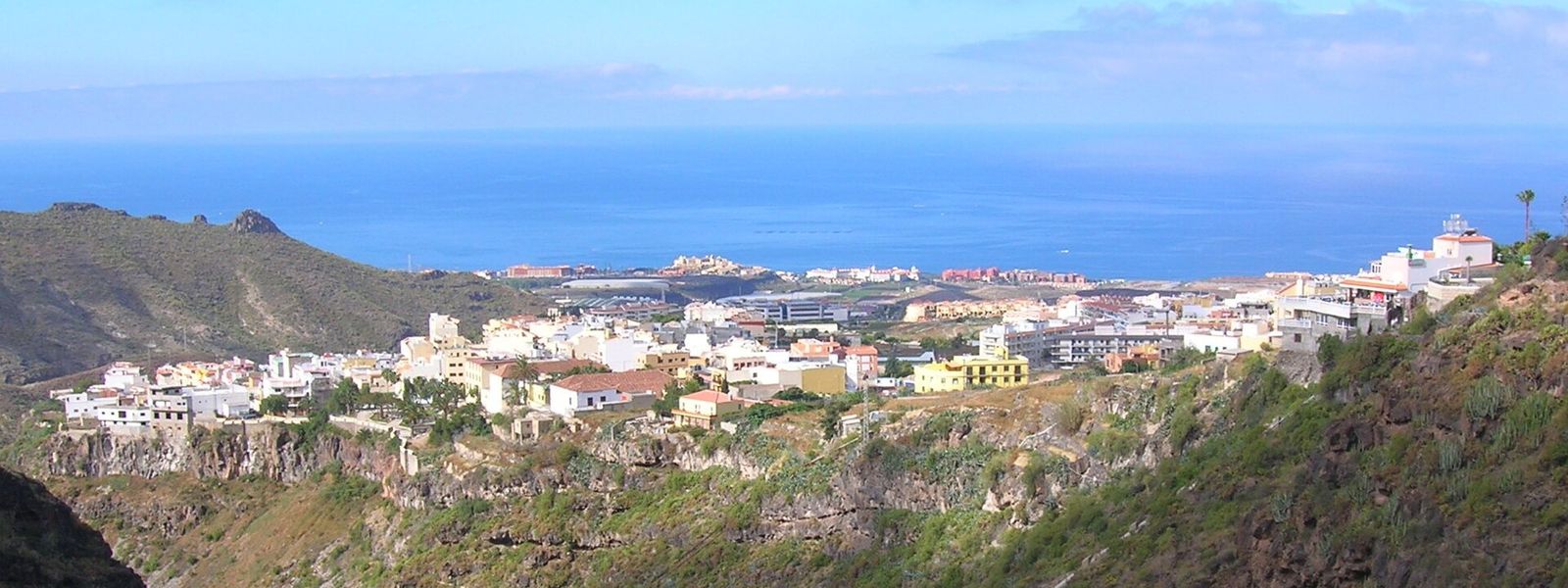
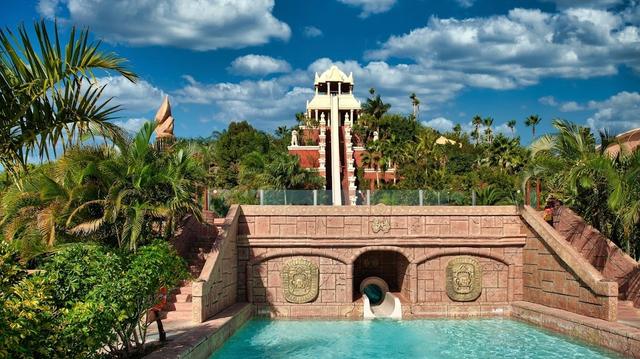
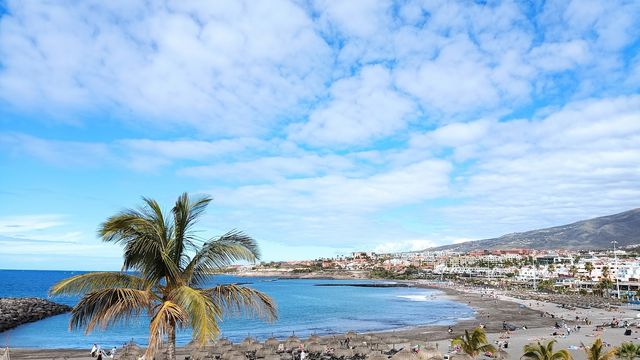
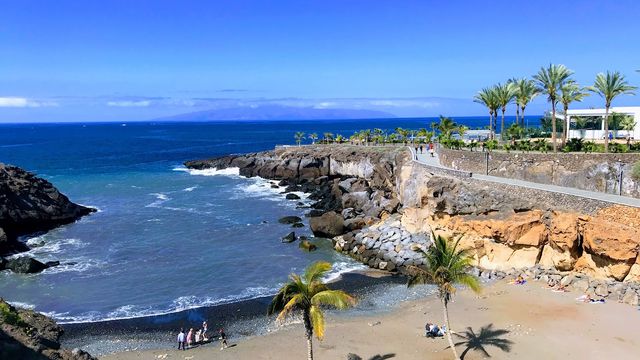
Adeje climbs from a shore of hotels and beaches to an old town 4 km inland, with the Barranco del Infierno gorge cutting into the hills behind it. Before the Spanish conquest it was the seat of the Menceyato of Adeje, one of the Guanche kingdoms of Tenerife. Its seaside communities, Costa Adeje, La Caleta, Playa Paraíso and Callao Salvaje among them, hold Europe's highest concentration of five-star hotels and the Siam Park water park. People come for dry sun, beaches and a base for the rest of the island.
Adeje
- Currency
- Euro (EUR, €). ATM withdrawals often incur charges of €1–8; bringing some cash (€50–100) can help avoid fees. Credit and debit cards are widely accepted in cities and tourist areas. Bizum (a Spanish payment app) is popular with locals and some businesses but requires a Spanish bank account. The islands are outside the EU's standard VAT area.
- Language
- Spanish (specifically Canarian Spanish dialect) is the native language. English is widely spoken in hotels, restaurants and tourist attractions, but understanding outside these areas is very limited. In smaller towns and rural areas, English proficiency is minimal. Hotel and restaurant staff generally know basic English.
- Power plug
- Europlug (Type C) and Schuko (Type F) sockets; 230 V, 50 Hz
- Visa
- Schengen area: EU, EEA and Swiss nationals enter on national ID card or passport. Many non-EU nationalities have 90-day visa-free access. Non-EEA citizens staying longer than 90 days require an advance visa.
- Time zone
- Atlantic/Canary (UTC±00:00 in winter, UTC+01:00 in summer); one hour behind mainland Spain.
- Tap water
- Safe to drink throughout Spain. In some southern regions it has high mineral content and may taste unfamiliar; locals often drink bottled water instead. Bottled water is inexpensive and widely available.
- Tipping
- Not mandatory or customary. In restaurants: not expected for simple meals or basic establishments; 5–10% in mid-range or upscale venues if service was exceptional. Always pay cash to the server, not on card. Taxi drivers and hotel staff may appreciate small tips in upscale settings but it is not expected.
- Emergency
- 112
When to go
High season
Nov – Mar
Winter sun fills the Costa Adeje hotels, and with only 145 mm of rain a year spread over no more than 18 days, these months stay mostly dry.
Shoulder
Apr – Jun
Between the winter crowd and the summer holidays the resorts ease off while the days lengthen over a coast that barely sees rain.
High season
Jul – Aug
Summer holidays fill the beaches from Playa del Duque to Playa de Troya, and the bare seafront gives little shade at midday.
Shoulder
Sep – Oct
The holiday crowds thin before the winter season starts, and the sea has had the whole summer to warm.
How long to stay
Three or four days cover Adeje itself: the old town with the Casa Fuerte and the Iglesia de Santa Úrsula, the Barranco del Infierno gorge, a day at Siam Park and time on the beaches from Playa del Duque to Playa de Troya. Stay a week and it works as a base for the rest of Tenerife, since the TF-1 motorway starts here and Santa Cruz de Tenerife is 60 km along it.
Getting around
Adeje is where the TF-1 motorway ends. From here it runs along the south coast and up the east side of the island to Santa Cruz de Tenerife, 60 km away. Tenerife South Airport lies about 17 km to the south-east, and Los Cristianos 8 km to the south.
The catch is the hill. The old town stands 4 km inland at around 280 metres, above the resort strip of Costa Adeje, Fañabé and La Caleta, so every trip between the town and the sea is a climb one way.
What to see




Destinations in Adeje
Frequently asked questions
Is Adeje the same place as Costa Adeje?
Adeje is the whole municipality, and also the old town 4 km inland. Costa Adeje is one of its seaside communities, alongside Playa Paraíso, La Caleta, Fañabé and Callao Salvaje, where most of the hotels and beaches are.How far is Adeje from Tenerife South Airport?
About 17 km. The airport lies south-east of the town, and the TF-1 motorway links the two.What is there to see in the old town?
The Casa Fuerte de Adeje, the Iglesia de Santa Úrsula and the former Franciscan convent of Nuestra Señora de Guadalupe y San Pablo. The Barranco del Infierno gorge opens in the hills of the municipality, and the historic hamlet of Taucho sits higher up.Does it rain much in Adeje?
Very little. The climate is hot desert, with about 145 mm of rain a year falling on no more than 18 days.Is Siam Park in Adeje?
Yes. The water park is in the municipality, with the two-floor Siam Mall shopping centre next to it.