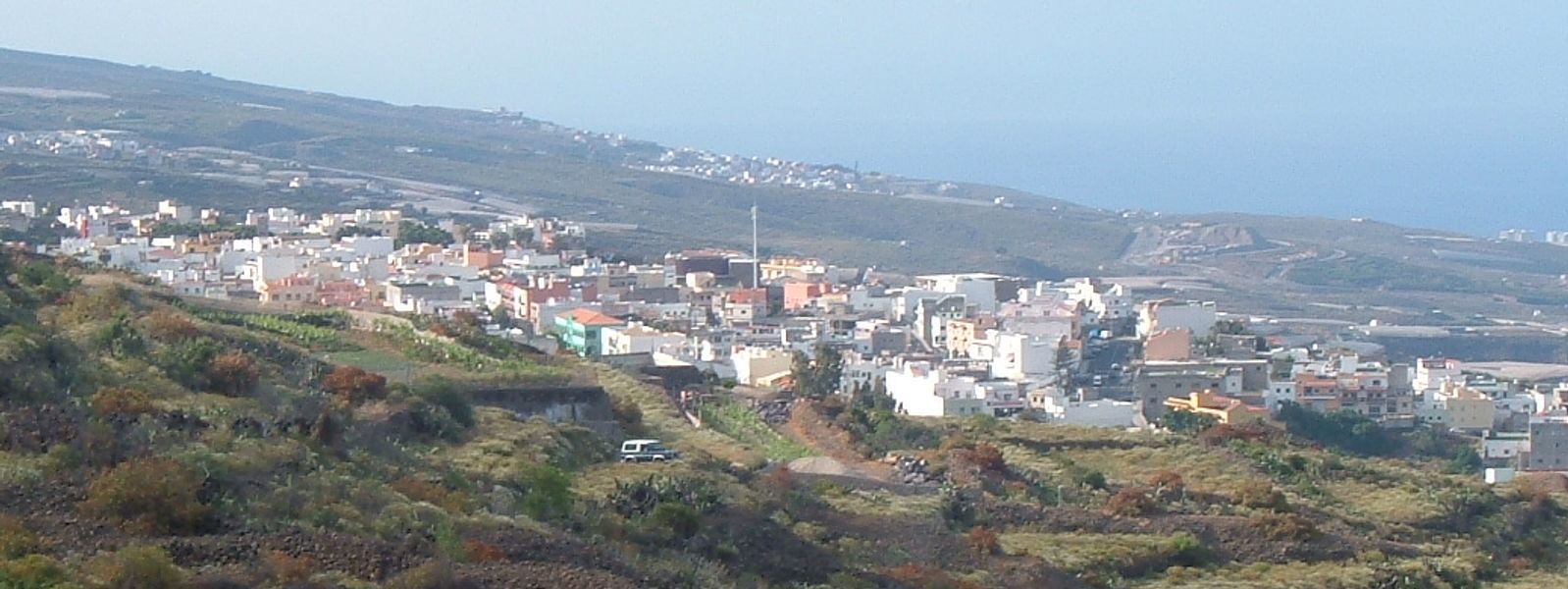
The plastic roofs of greenhouses glint across the farmland of Guía de Isora, a municipality on the western flanks of El Teide. Those roofs cut evaporation in the sunniest, driest part of Tenerife, and the crops beneath them have moved from tomatoes and bananas towards flowers, which make better use of the scarce fresh water. The main town stands 5 km inland around its historic centre. Across the islands it is known for its pastries: egg rings and almond cakes made mainly of almonds and flour.
Guía de Isora
- Currency
- Euro (EUR, €). ATM withdrawals often incur charges of €1–8; bringing some cash (€50–100) can help avoid fees. Credit and debit cards are widely accepted in cities and tourist areas. Bizum (a Spanish payment app) is popular with locals and some businesses but requires a Spanish bank account. The islands are outside the EU's standard VAT area.
- Language
- Spanish (specifically Canarian Spanish dialect) is the native language. English is widely spoken in hotels, restaurants and tourist attractions, but understanding outside these areas is very limited. In smaller towns and rural areas, English proficiency is minimal. Hotel and restaurant staff generally know basic English.
- Power plug
- Europlug (Type C) and Schuko (Type F) sockets; 230 V, 50 Hz
- Visa
- Schengen area: EU, EEA and Swiss nationals enter on national ID card or passport. Many non-EU nationalities have 90-day visa-free access. Non-EEA citizens staying longer than 90 days require an advance visa.
- Time zone
- Atlantic/Canary (UTC±00:00 in winter, UTC+01:00 in summer); one hour behind mainland Spain.
- Tap water
- Safe to drink throughout Spain. In some southern regions it has high mineral content and may taste unfamiliar; locals often drink bottled water instead. Bottled water is inexpensive and widely available.
- Tipping
- Not mandatory or customary. In restaurants: not expected for simple meals or basic establishments; 5–10% in mid-range or upscale venues if service was exceptional. Always pay cash to the server, not on card. Taxi drivers and hotel staff may appreciate small tips in upscale settings but it is not expected.
- Emergency
- 112
When to go
High season
Nov – Mar
Winter sun brings most visitors to the coast below the town, while the south-west of the island stays mild and dry.
Shoulder
Apr – Jun
Long, bright days and a quieter coast before the summer holidays begin.
High season
Jul – Aug
Summer holidays fill the coastal towns, and the open farmland above them offers little shade at midday.
Shoulder
Sep – Oct
The summer crowd thins out and the ground stays dry, as rain is scarce here in any season.
How long to stay
Half a day covers the historic centre of the town and a stop for almond cakes. Beyond that, Guía de Isora works as a base: buses run from the town to Los Gigantes, Costa Adeje and Los Cristianos, so two or three days suit a quieter stay on the west side of the island with the coast a bus ride away.
Getting around
The town lies on the TF-82 and is the first town on the TF-1 heading south from Santiago del Teide, which makes a hire car the simplest way to link it with the rest of the island.
TITSA buses connect the town with outlying villages such as Tejina de Guía, Chiguergue, Chío and Alcalá, and run on to Los Gigantes, Costa Adeje, Los Cristianos and Icod de los Vinos. Taxi ranks stand in the town centre and in the coastal towns.
Routes and timetables change, so check the current TITSA schedule before you plan a day around a connection.
What to see

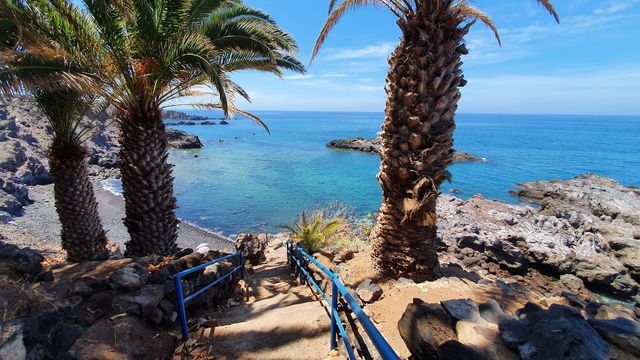
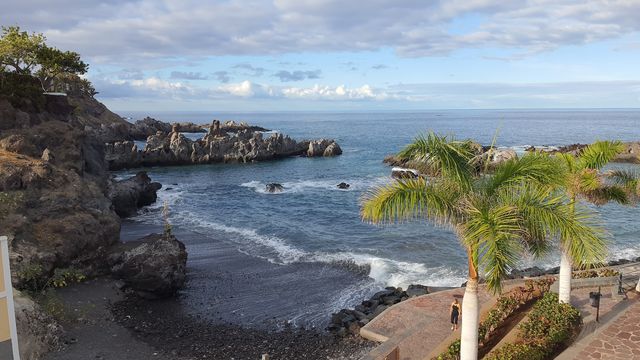
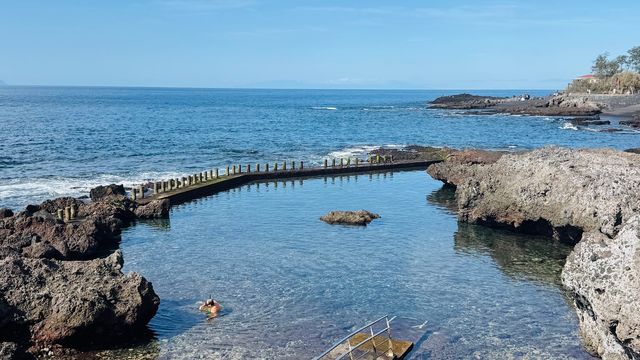

Destinations in Guía de Isora
Frequently asked questions
Where is Guía de Isora?
On the western side of Tenerife, on the flanks of El Teide. Santiago del Teide borders it to the north and Teno Rural Park (Parque Rural de Teno) to the west. The town is 5 km from the coast, 16 km north-west of Arona and 60 km south-west of Santa Cruz de Tenerife.Can I reach Guía de Isora by bus?
Yes. TITSA buses link the town with Los Cristianos via Costa Adeje, with Icod de los Vinos and with Los Gigantes. Check the current timetable before you travel.What food is Guía de Isora known for?
Pastries, above all egg rings and almond cakes made mainly of almonds and flour. Local drinks include red and white wines and a mistela made primarily with coffee.What is the weather like in Guía de Isora?
Mild all year, with little rain and long spells of drought. It lies in the part of Tenerife that gets the most sunshine.Why are there so many greenhouses?
Farming drives the local economy, and plastic-covered roofs cut evaporation in a dry climate. Growers have gradually moved from tomatoes and bananas to flowers, which use the sparse fresh water more economically.