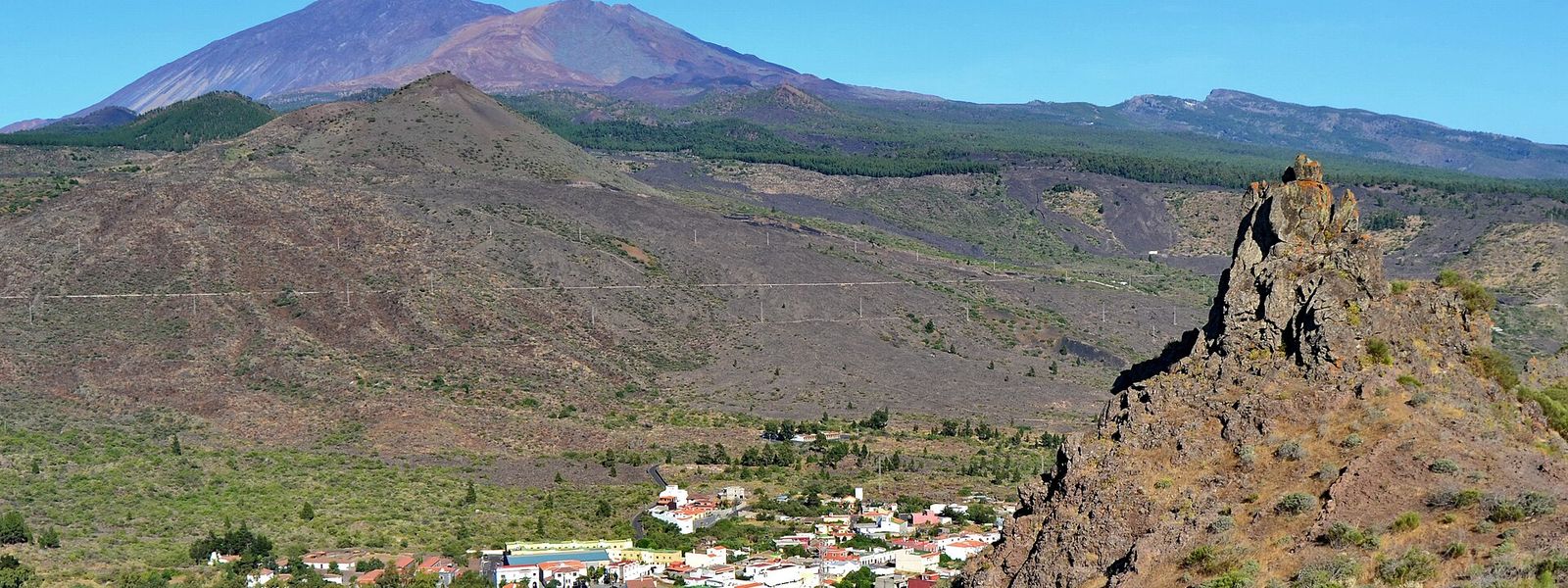
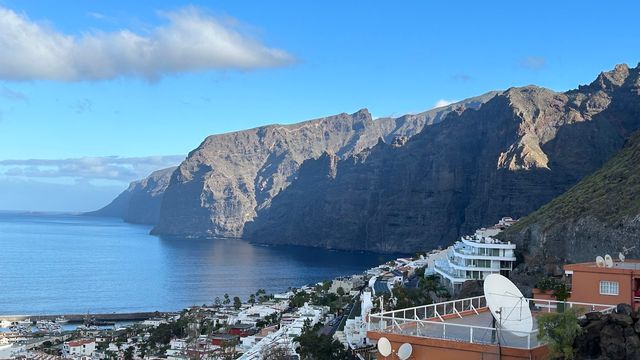
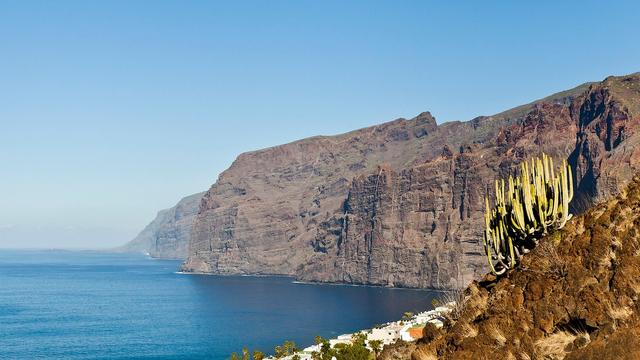
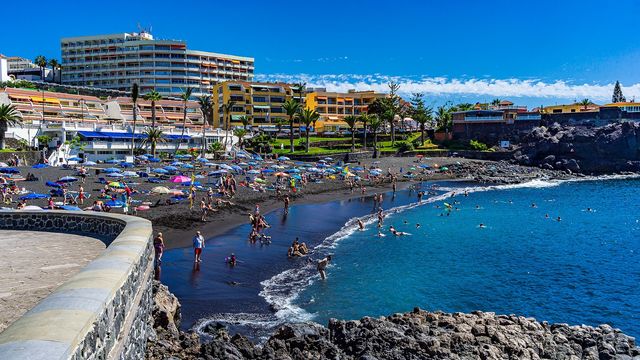
Santiago del Teide is a municipality of about 12,600 people in the western part of Tenerife. The town that gives it its name sits inland at 925 m, surrounded by the area's hiking country. Down on the coast are the resort towns of Los Gigantes, Puerto de Santiago and Playa de la Arena, and the steep sea cliffs of the Los Gigantes cliffs (Acantilados de Los Gigantes). Travellers come for the cliffs, the coast and the walking in the hills.
Santiago del Teide
- Currency
- Euro (EUR, €). ATM withdrawals often incur charges of €1–8; bringing some cash (€50–100) can help avoid fees. Credit and debit cards are widely accepted in cities and tourist areas. Bizum (a Spanish payment app) is popular with locals and some businesses but requires a Spanish bank account. The islands are outside the EU's standard VAT area.
- Language
- Spanish (specifically Canarian Spanish dialect) is the native language. English is widely spoken in hotels, restaurants and tourist attractions, but understanding outside these areas is very limited. In smaller towns and rural areas, English proficiency is minimal. Hotel and restaurant staff generally know basic English.
- Power plug
- Europlug (Type C) and Schuko (Type F) sockets; 230 V, 50 Hz
- Visa
- Schengen area: EU, EEA and Swiss nationals enter on national ID card or passport. Many non-EU nationalities have 90-day visa-free access. Non-EEA citizens staying longer than 90 days require an advance visa.
- Time zone
- Atlantic/Canary (UTC±00:00 in winter, UTC+01:00 in summer); one hour behind mainland Spain.
- Tap water
- Safe to drink throughout Spain. In some southern regions it has high mineral content and may taste unfamiliar; locals often drink bottled water instead. Bottled water is inexpensive and widely available.
- Tipping
- Not mandatory or customary. In restaurants: not expected for simple meals or basic establishments; 5–10% in mid-range or upscale venues if service was exceptional. Always pay cash to the server, not on card. Taxi drivers and hotel staff may appreciate small tips in upscale settings but it is not expected.
- Emergency
- 112
When to go
High season
Nov – Mar
Winter sun fills the resorts on the coast, while up in the town at 925 m the evenings turn cool enough for a jacket.
Shoulder
Apr – Jun
The coast eases off after the winter season, and long, bright days suit the walks in the hills around the town.
High season
Jul – Aug
Summer holidays bring families to Los Gigantes and Playa de la Arena, and the exposed hill paths offer little shade at midday.
Shoulder
Sep – Oct
The summer crowd thins out on the coast, and the sea holds its warmth from the months before.
How long to stay
A day covers the upland town and the drive down to the cliffs at Los Gigantes. Three to four days suits a stay on the coast, with time for the Los Gigantes cliffs, a beach day at Playa de la Arena and a hike or two in the hills around the town. Los Gigantes makes the more convenient base: it has far more places to stay than the town at 925 m.
Getting around
The upland town is easy to cover on foot, and taxis are plentiful if you miss the bus to Masca. Buses tie it to the coast and the villages around it: line 462 runs between Los Gigantes, Tamaimo, Santiago del Teide, Arguayo and Chío, and line 355 climbs to Masca and on to Buenavista del Norte. By car, the TF-454 and TF-82 link Los Gigantes with the town via Tamaimo, and the TF-1 carries you south.
The caveat is the mountains. Any crossing of them means very curvy roads, whether the TF-82 north towards El Tanque or the TF-436 through Masca. Allow more time than the map suggests.
What to see

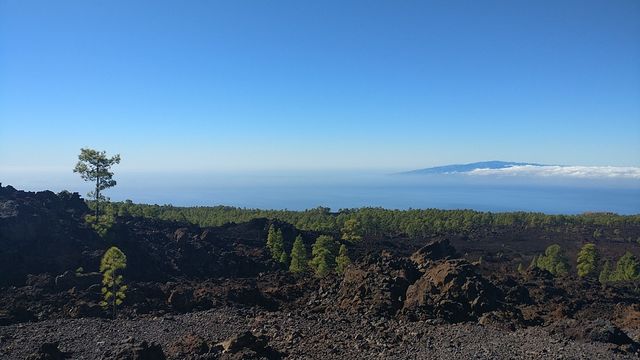
Destinations in Santiago del Teide
Frequently asked questions
Should I stay in Santiago del Teide or on the coast?
Most visitors stay in Los Gigantes, which has far more accommodation and is the more convenient hub. The upland town sits in the middle of the area's hiking and sightseeing, so it works as a stop on the way between them.Does Santiago del Teide have beaches?
The town itself lies inland at 925 m. The municipality's coast holds the resort towns of Los Gigantes, Puerto de Santiago and Playa de la Arena.Where are the Los Gigantes cliffs?
The Los Gigantes cliffs (Acantilados de Los Gigantes) rise steeply from the sea on the municipality's coast, beside the resort town of Los Gigantes.Can I reach Santiago del Teide by bus?
Yes. Line 325 links it with Puerto de la Cruz, Icod de los Vinos and Los Gigantes; line 460 runs from Icod de los Vinos through the town to Guía de Isora and Costa Adeje; line 462 connects it with Los Gigantes and Tamaimo; and line 355 goes to Masca and Buenavista del Norte.What is the drive from the north of the island like?
Crossing the mountains means curvy roads. From Icod de los Vinos the TF-5 runs straight to El Tanque, then the very curvy TF-82 takes you over to the town. The TF-373 is quieter and less winding, but it runs through emptier country before joining the TF-82 a little north of Santiago del Teide.