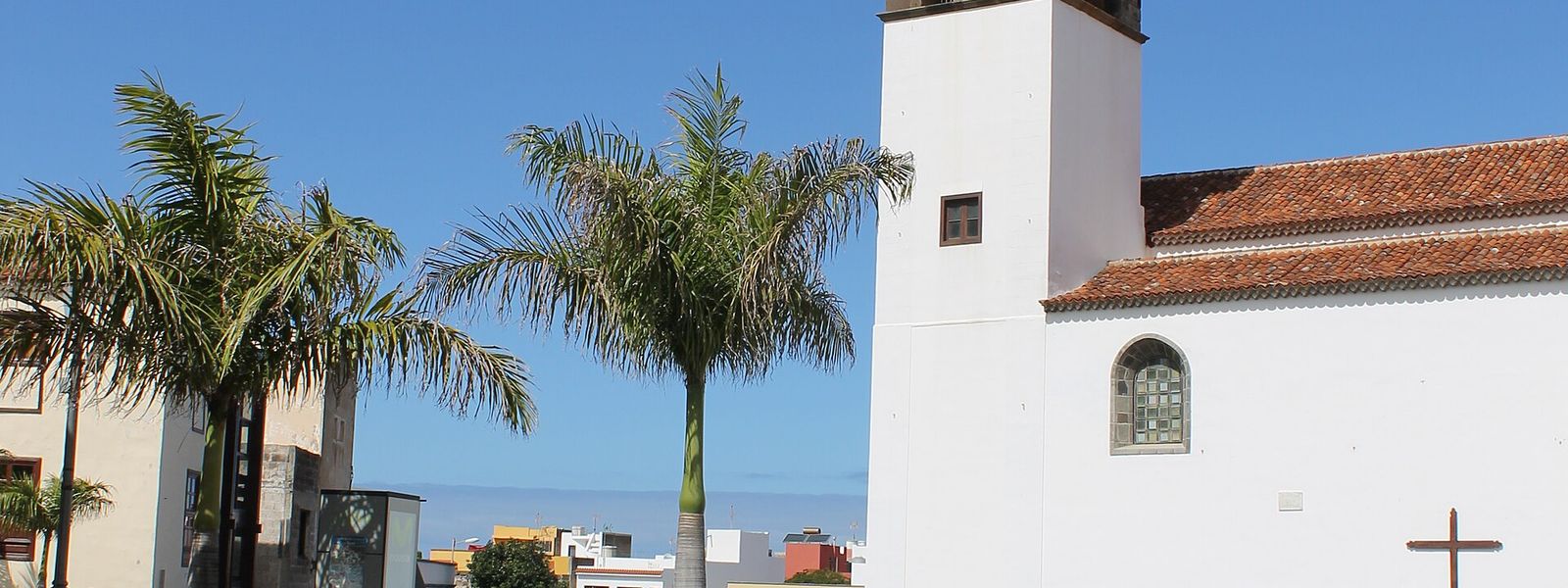
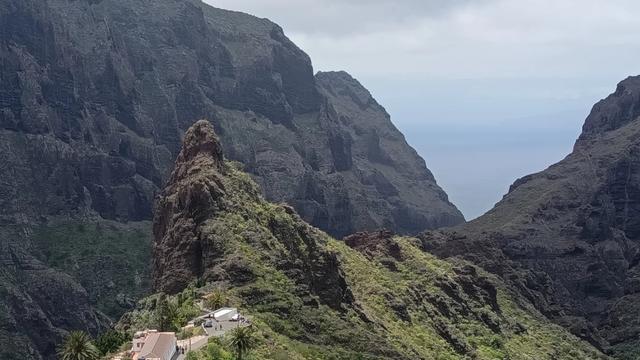
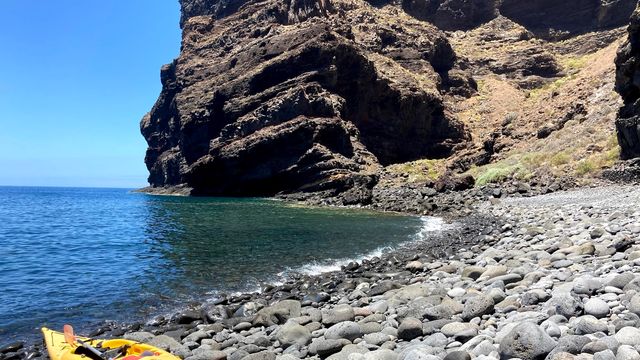
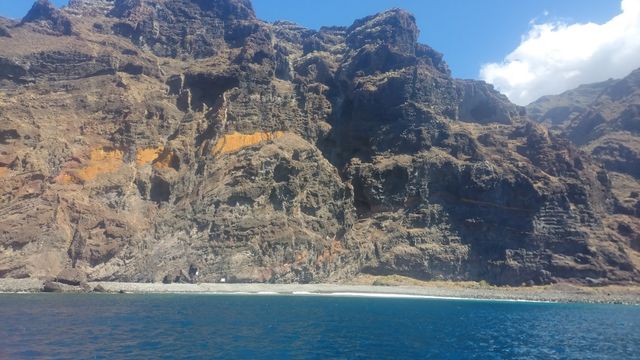
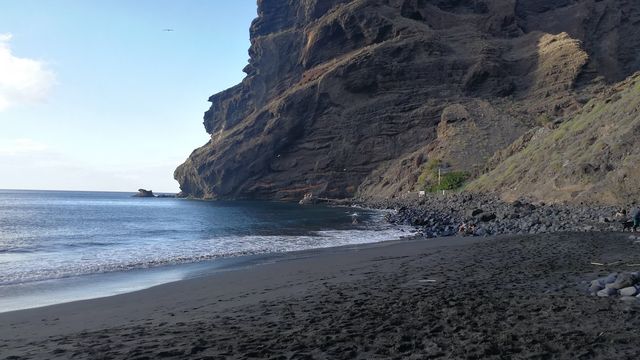
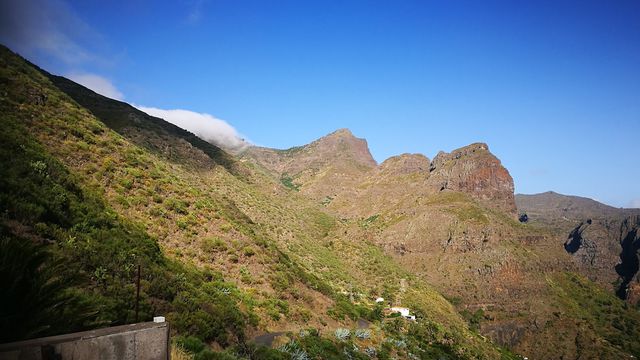
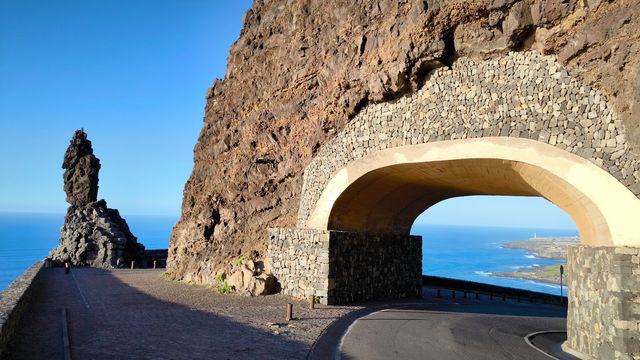
Banana plantations fill the coastal strip below Buenavista del Norte, and behind the town the Teno Massif (Macizo de Teno), volcanic rock more than seven million years old, takes up most of the municipality. The old centre is plain and Andalusian in style. Travellers come for the TF-436, which climbs through the farming villages of El Palmar and Las Portelas towards Masca, and for the scrub-covered basalt coast running out to Punta de Teno.
Buenavista del Norte
- Currency
- Euro (EUR, €). ATM withdrawals often incur charges of €1–8; bringing some cash (€50–100) can help avoid fees. Credit and debit cards are widely accepted in cities and tourist areas. Bizum (a Spanish payment app) is popular with locals and some businesses but requires a Spanish bank account. The islands are outside the EU's standard VAT area.
- Language
- Spanish (specifically Canarian Spanish dialect) is the native language. English is widely spoken in hotels, restaurants and tourist attractions, but understanding outside these areas is very limited. In smaller towns and rural areas, English proficiency is minimal. Hotel and restaurant staff generally know basic English.
- Power plug
- Europlug (Type C) and Schuko (Type F) sockets; 230 V, 50 Hz
- Visa
- Schengen area: EU, EEA and Swiss nationals enter on national ID card or passport. Many non-EU nationalities have 90-day visa-free access. Non-EEA citizens staying longer than 90 days require an advance visa.
- Time zone
- Atlantic/Canary (UTC±00:00 in winter, UTC+01:00 in summer); one hour behind mainland Spain.
- Tap water
- Safe to drink throughout Spain. In some southern regions it has high mineral content and may taste unfamiliar; locals often drink bottled water instead. Bottled water is inexpensive and widely available.
- Tipping
- Not mandatory or customary. In restaurants: not expected for simple meals or basic establishments; 5–10% in mid-range or upscale venues if service was exceptional. Always pay cash to the server, not on card. Taxi drivers and hotel staff may appreciate small tips in upscale settings but it is not expected.
- Emergency
- 112
When to go
Low season
Oct – Mar
Most of the year's rain falls now, and this exposed north-western corner catches more than three times what Santa Cruz gets, though the coastal scrub turns green after the first autumn rains.
Shoulder
Apr – Jun
The rain eases off while the coast is still green, and the drive over the Teno Massif has clearer skies than in winter.
High season
Jul – Sep
The dry season parches the coastal slopes to brown, and the roads into the Teno villages carry their heaviest traffic.
How long to stay
A full day covers the town and a slow drive up the TF-436 through El Palmar and Las Portelas towards Masca, with stops in the hill villages. Two or three nights let you use the town as a base for the Teno Massif and the north-west coast. Both airports are around 65 km away, so a day trip from the south of the island is a long one.
Getting around
A car is the practical way round the municipality. The TF-42 runs east along the coast to Los Silos. The TF-436 heads south, climbing through El Palmar at 300–500 m and Las Portelas at 650 m, then crosses the mountains past Masca to Santiago del Teide.
That mountain road is spectacular and one bend follows another the whole way. Drive it slowly and in daylight, and be ready to pull in for oncoming traffic. In the wet months, October to March, cloud and rain from the north-west settle on the massif and the upper road can lose its views entirely.
What to see


Destinations in Buenavista del Norte
Frequently asked questions
How far is Buenavista del Norte from the airports?
About 65 km from Tenerife North Airport and 66 km from Tenerife South Airport. Santa Cruz de Tenerife is about 75 km to the east, reached along the TF-42.Can you drive from Buenavista del Norte to Masca?
Yes. The TF-436 climbs from the town through El Palmar and Las Portelas and continues past Masca to Santiago del Teide. It is a mountain road with bend after bend, so allow time and drive it in daylight.Does it rain a lot in Buenavista del Norte?
More than elsewhere on the island. Most rain falls between October and March, and the town's north-westerly position traps moisture off the mountains, giving it over three times the rainfall of Santa Cruz de Tenerife.What is the Teno Massif?
A volcanic formation that emerged more than seven million years ago and makes up most of the municipality. Its upper villages, among them Masca, Teno Alto, Los Carrizales, El Palmar and Las Portelas, still keep the old Canarian farming traditions, while bananas dominate the coast below.