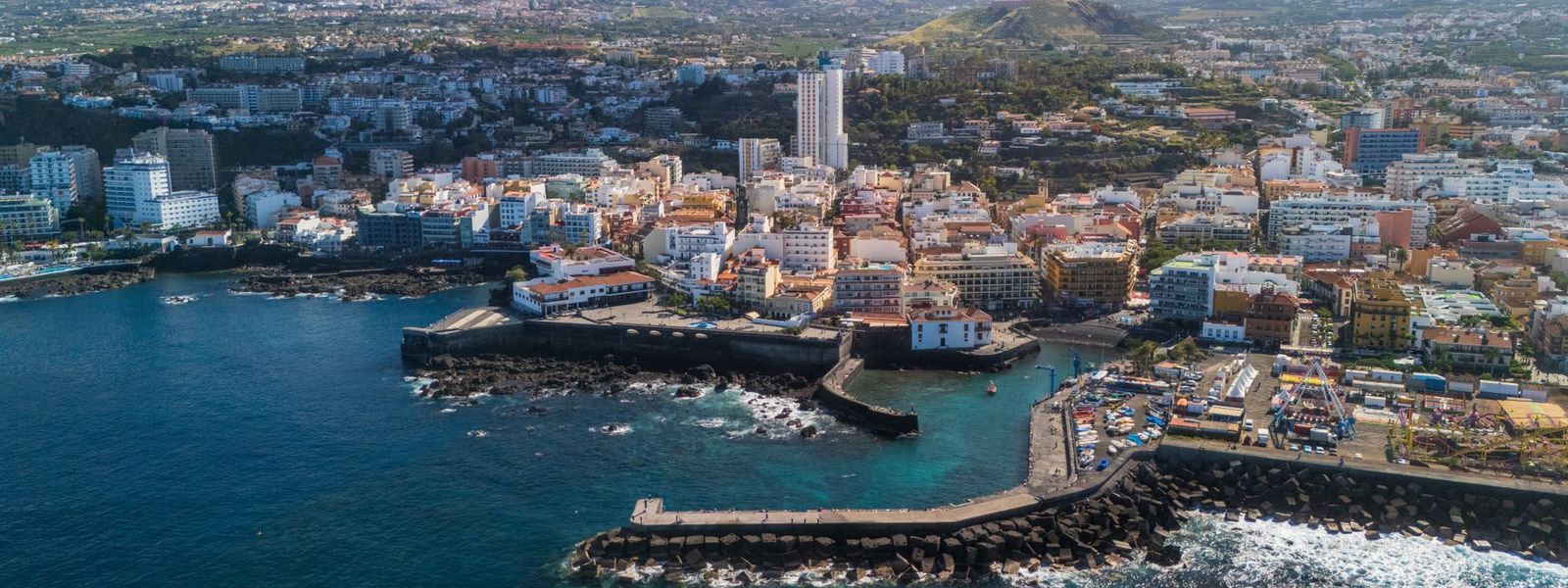
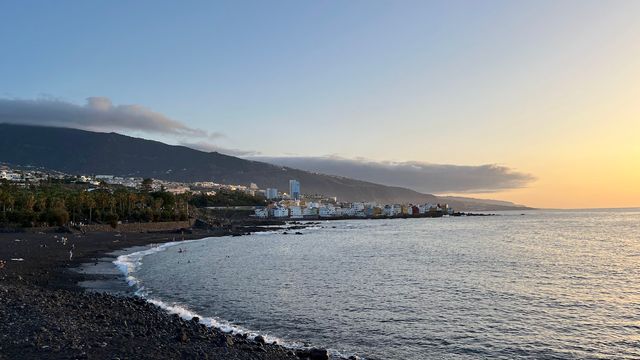
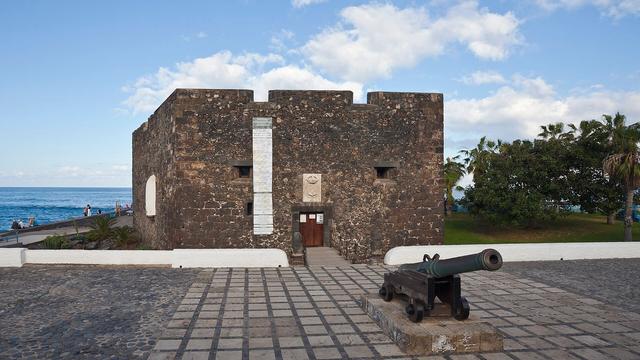
Puerto de la Cruz began as a fishing village and grew into the main port of Tenerife's north coast, shipping sugar and then wine from the Orotava Valley. In the early 19th century it drew European scientists and writers, Alexander von Humboldt among them, and mass tourism arrived in the 1950s. The old quarter around Plaza del Charco and the fishing harbour keeps its narrow cobbled streets. Along the shore lie Playa Jardín and the Martiánez pools (Lago Martiánez) designed by César Manrique, with Loro Parque on the outskirts.
Puerto de la Cruz
- Currency
- Euro (EUR, €). ATM withdrawals often incur charges of €1–8; bringing some cash (€50–100) can help avoid fees. Credit and debit cards are widely accepted in cities and tourist areas. Bizum (a Spanish payment app) is popular with locals and some businesses but requires a Spanish bank account. The islands are outside the EU's standard VAT area.
- Language
- Spanish (specifically Canarian Spanish dialect) is the native language. English is widely spoken in hotels, restaurants and tourist attractions, but understanding outside these areas is very limited. In smaller towns and rural areas, English proficiency is minimal. Hotel and restaurant staff generally know basic English.
- Power plug
- Europlug (Type C) and Schuko (Type F) sockets; 230 V, 50 Hz
- Visa
- Schengen area: EU, EEA and Swiss nationals enter on national ID card or passport. Many non-EU nationalities have 90-day visa-free access. Non-EEA citizens staying longer than 90 days require an advance visa.
- Time zone
- Atlantic/Canary (UTC±00:00 in winter, UTC+01:00 in summer); one hour behind mainland Spain.
- Tap water
- Safe to drink throughout Spain. In some southern regions it has high mineral content and may taste unfamiliar; locals often drink bottled water instead. Bottled water is inexpensive and widely available.
- Tipping
- Not mandatory or customary. In restaurants: not expected for simple meals or basic establishments; 5–10% in mid-range or upscale venues if service was exceptional. Always pay cash to the server, not on card. Taxi drivers and hotel staff may appreciate small tips in upscale settings but it is not expected.
- Emergency
- 112
When to go
High season
Nov – Mar
Winter is the main season, when northern Europeans come for the mild weather; Christmas and New Year are the busiest weeks, and Carnival fills the streets in February or March.
Shoulder
Apr – Jun
Spring falls between the winter visitors and the Spanish summer crowds, a calmer stretch with afternoons often hazy on the north coast.
High season
Jul – Aug
Summer brings Spanish holidaymakers escaping the mainland heat, most of all in August, and on 16 July the harbour hosts the Virgen del Carmen fiesta, with water thrown through the crowds.
Shoulder
Sep – Oct
Early autumn stays warm and dry as the August crowds thin out before the winter season returns.
How long to stay
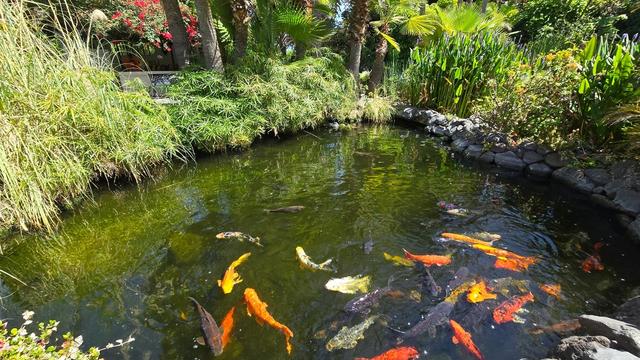
Two or three days cover the old quarter and the harbour, the Martiánez pools, the botanical garden opened in 1788 and a full day at Loro Parque. As a base for the north of Tenerife, with the TF-21 climbing from town towards Teide, a week is easily filled.
Getting around
The centre is walkable, but once you leave the main shopping streets the ground rises all the way, steeply in places. There are no town buses: Titsa lines to neighbouring towns pass through parts of the city, and the main bus station has the current timetables. Loro Parque runs its own little yellow road train, the Loro Parque Express, from Plaza de los Reyes Católicos to the park entrance.
Cars can be hired in town as well as at the airports. The old centre is a knot of narrow one-way streets, and satnav map data may be out of date, so do not follow it blindly. The most reliable place to park is the large car park by the harbour, entered from the western end of Paseo Luis Lavaggi; there is no way in from the east along Calle San Felipe. Some printed maps still mark it as the future Parque Marítimo.
Local rules
- Leave nothing in a parked car, least of all overnight: hire cars get their windows broken by thieves looking for valuables.
- The haze does not stop the sun. Afternoons here are often hazy and cooler, and the UV still burns; wear sunscreen on grey days too.
- Respect the Atlantic. The north coast takes heavy swell and breaking waves. On the open shore, never turn your back on the sea.
- Plan around midday. Many shops shut for a few hours from midday.
What to see


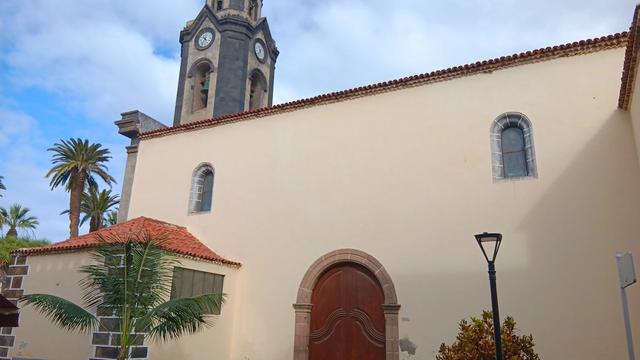
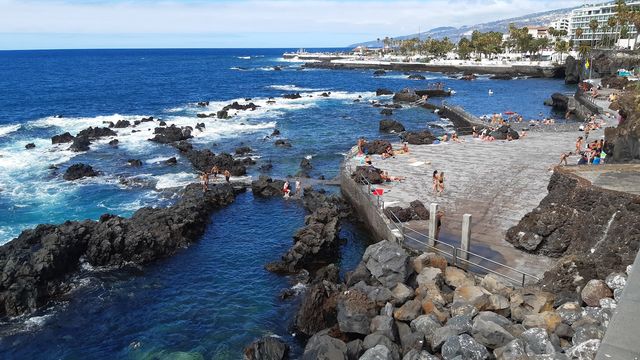


Destinations in Puerto de la Cruz
Frequently asked questions
How do I get to Puerto de la Cruz from the airports?
Titsa's express bus 343 runs from both Tenerife South and Tenerife North airports, but it is infrequent, so check the timetable before you land. The alternatives are a taxi from the south airport or a bus via the Santa Cruz bus station. Tenerife North (Los Rodeos) is the nearer airport, but its flights come mostly from mainland Spain.Can I get to Santa Cruz de Tenerife by bus?
Yes. Line 103 runs direct by motorway and takes about 45 minutes; line 102 makes more stops and takes about an hour.How do I drive up to Teide?
Follow the TF-21 uphill from town. Stay on it while you are still in the built-up area, even when the satnav offers a shortcut: the narrow side lanes (caminos) are no faster and can end in a dead end.What is the quickest way to the south of the island by car?
For Costa Adeje, take the motorway via Santa Cruz, which takes about an hour. The mountain road to Los Gigantes takes over an hour the first time and winds high over the mountains; nervous drivers should avoid it.What is the Burial of the Sardine?
A Carnival event. A few days before the main procession, a papier-mâché sardine is wheeled through the streets to the waterfront, 'blessed' by a man dressed as a bishop, set alight and followed by fireworks. It rarely starts on time and always draws crowds, so arrive early at the harbour.