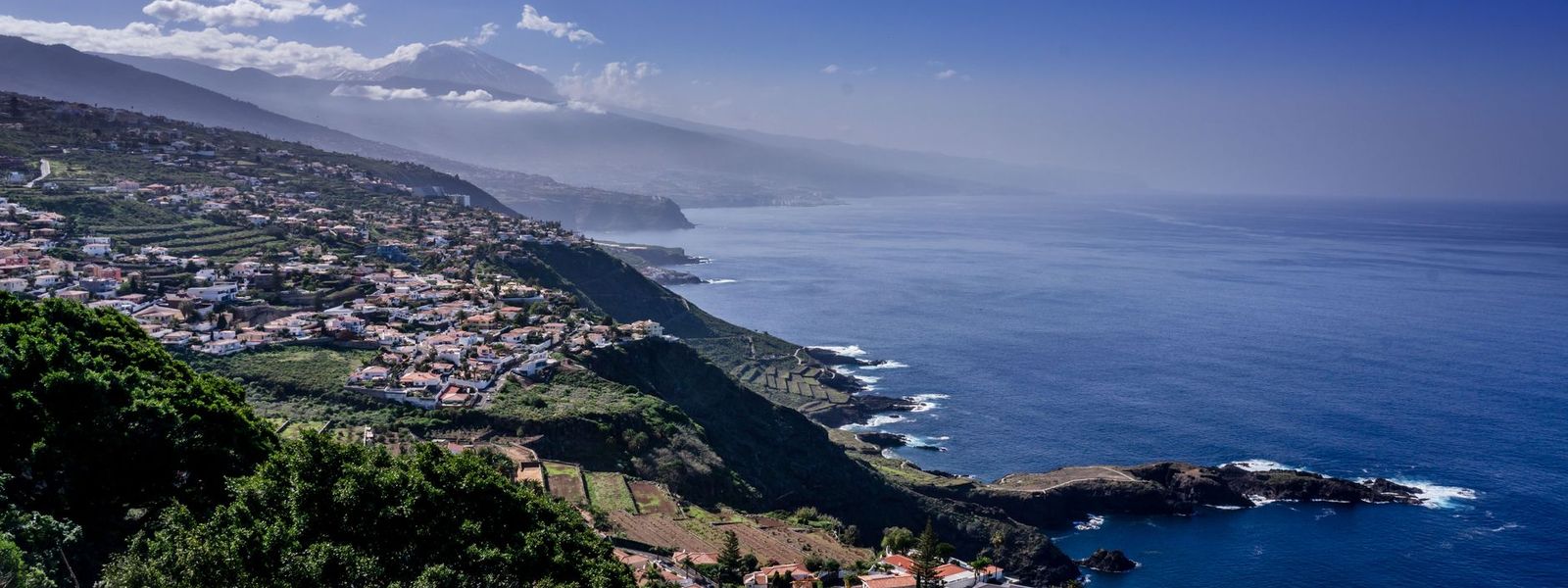
Vineyards run down the slopes of El Sauzal, a town of just over 9,000 people in the north-east of Tenerife, with La Laguna 12 km to the east and La Orotava 13 km to the south-west. The TF-5 motorway cuts it in two. Ravelo climbs above the road towards the island's central summit; El Casco, the old centre, lies between the road and the sea. The Casa del Vino, a museum of Tenerife wine, stands in the municipality, and the mystic nun Mary of Jesus de León y Delgado was born here in 1643.
El Sauzal
- Currency
- Euro (EUR, €). ATM withdrawals often incur charges of €1–8; bringing some cash (€50–100) can help avoid fees. Credit and debit cards are widely accepted in cities and tourist areas. Bizum (a Spanish payment app) is popular with locals and some businesses but requires a Spanish bank account. The islands are outside the EU's standard VAT area.
- Language
- Spanish (specifically Canarian Spanish dialect) is the native language. English is widely spoken in hotels, restaurants and tourist attractions, but understanding outside these areas is very limited. In smaller towns and rural areas, English proficiency is minimal. Hotel and restaurant staff generally know basic English.
- Power plug
- Europlug (Type C) and Schuko (Type F) sockets; 230 V, 50 Hz
- Visa
- Schengen area: EU, EEA and Swiss nationals enter on national ID card or passport. Many non-EU nationalities have 90-day visa-free access. Non-EEA citizens staying longer than 90 days require an advance visa.
- Time zone
- Atlantic/Canary (UTC±00:00 in winter, UTC+01:00 in summer); one hour behind mainland Spain.
- Tap water
- Safe to drink throughout Spain. In some southern regions it has high mineral content and may taste unfamiliar; locals often drink bottled water instead. Bottled water is inexpensive and widely available.
- Tipping
- Not mandatory or customary. In restaurants: not expected for simple meals or basic establishments; 5–10% in mid-range or upscale venues if service was exceptional. Always pay cash to the server, not on card. Taxi drivers and hotel staff may appreciate small tips in upscale settings but it is not expected.
- Emergency
- 112
How long to stay
Half a day covers El Sauzal: El Casco, the old centre between the motorway and the sea, and Ravelo on the slopes above. With La Laguna 12 km away and La Orotava 13 km, the town fits best as a stop on a day spent along the north coast.
Getting around
The TF-5 motorway runs straight through the municipality, with Ravelo on the uphill side and El Casco on the seaward side.
Buses, known locally as guaguas, are run by TITSA:
- 011 and 012 link La Laguna with El Sauzal, the first via Calle El Calvario in Tacoronte, the second through the centre of Tacoronte.
- 054 runs from La Laguna to Ravelo via Agua García.
- 062 runs from La Laguna to La Orotava through the Acentejo area.
- 101 runs from Santa Cruz de Tenerife to Puerto de la Cruz along the old main road; 102 is the express on the same route via Tenerife North Airport; 107 (to Buenavista) and 108 (to Icod de los Vinos) also run from Santa Cruz de Tenerife via the airport.
The two halves of town are served by different lines, so check whether a bus is heading for Ravelo or El Casco before you board. Taxi ranks stand in both the old town and Ravelo.
What to see
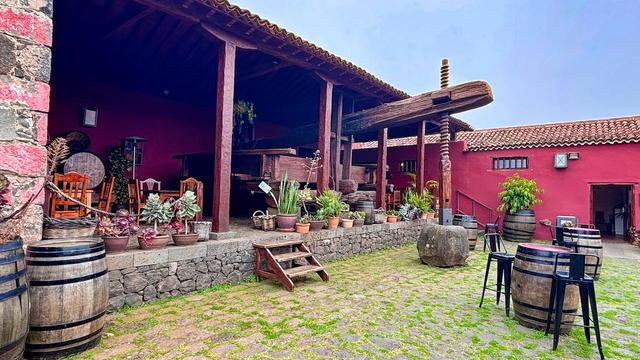

Destinations in El Sauzal
Frequently asked questions
Where is El Sauzal?
In the north-east of Tenerife, on the north coast: 18 km west of Santa Cruz de Tenerife, 12 km west of La Laguna and 13 km north-east of La Orotava. The TF-5 motorway passes through it.Can I get to El Sauzal by bus?
Yes. TITSA lines 011 and 012 run from La Laguna to El Sauzal, and line 054 from La Laguna to Ravelo. From Santa Cruz de Tenerife, lines 101, 102, 107 and 108 serve the municipality.What are Ravelo and El Casco?
The two halves of El Sauzal on either side of the TF-5 motorway. Ravelo lies between the motorway and the island's central summit; El Casco, the old centre, lies between the motorway and the sea.Who comes from El Sauzal?
Mary of Jesus de León y Delgado (1643–1731), a nun and mystic whose body remains incorrupt, and Paulino Rivero Baute, president of the Government of the Canary Islands in 2007–2010 and 2011–2015.