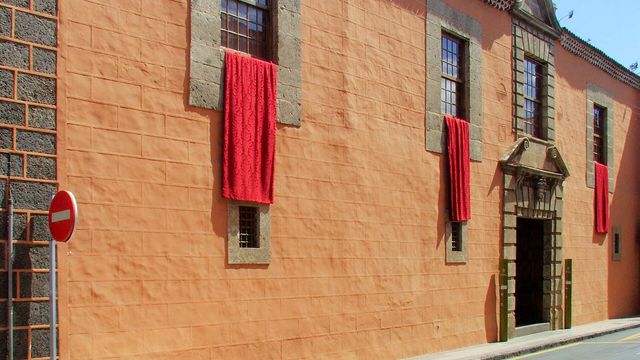
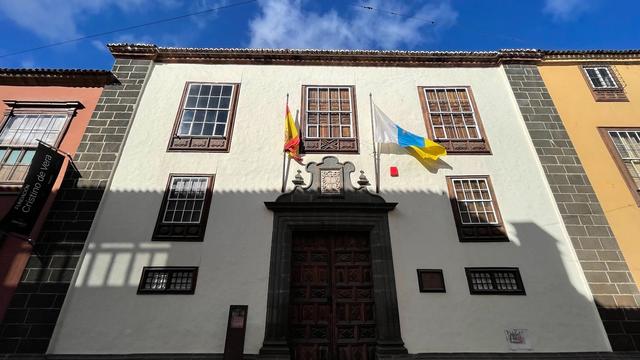
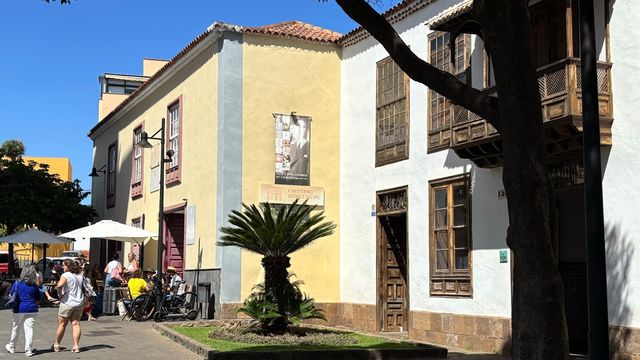
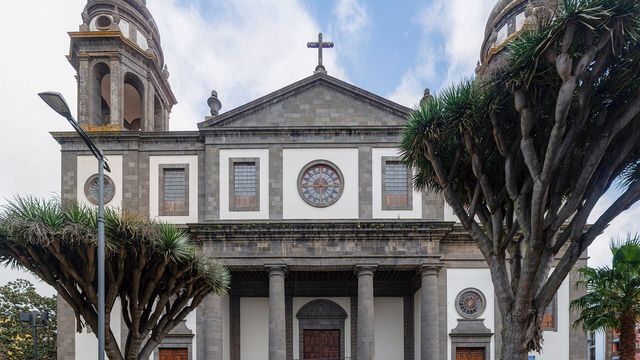
Wooden balconies hang over the streets of the old town, and behind the doors of the colonial houses lie courtyards planted with trees and flowers. San Cristóbal de La Laguna was founded in 1496 and served as capital of the islands until the title moved to Santa Cruz de Tenerife in 1723; its street grid became the model for Spanish colonial cities such as Havana and Lima. Travellers come for the churches and convents, the cathedral, the first university in the Canaries and the largest Holy Week in the archipelago.
San Cristóbal de La Laguna

- Currency
- Euro (EUR)
- Language
- Spanish; English only in tourist areas
- Power plug
- Type C/F, 230 V
- Visa
- Schengen
- Time zone
- UTC+0 / UTC+1 (WET/WEST)
- Tap water
- Safe; mineral taste in the south
- Tipping
- Not expected; 5–10% for great service
- Emergency
- 112
Things to do
All tours in San Cristóbal de La Laguna on GetYourGuide
Paid links: booking through them supports YowJourney.
When to go
Low season
Oct – Feb
Most of La Laguna's rain falls in winter, carried in on the northeasterly winds, and the old town stays cooler and damper than the coast below, though it never freezes.
Shoulder
Mar – Jun
Spring brings Holy Week, the largest in the Canaries, when centuries-old pasos roll through the old town on wheeled floats, escorted by hooded brotherhoods.
High season
Jul – Sep
The altitude keeps summer mild, and the two biggest local feasts fall here: the Romería de San Benito Abad on the second Sunday of July and the Cristo de La Laguna on 14 September.
How long to stay
A full day covers the old town on foot: the cathedral, the Iglesia de la Concepción, Plaza del Adelantado and the Museum of the History of Tenerife in the Palacio Lercaro. Two or three nights turn La Laguna into a base for the north, with the tram down to Santa Cruz de Tenerife and buses to Puerto de la Cruz and La Orotava. If your dates fall on Holy Week, the Romería de San Benito Abad on the second Sunday of July or the feast of the Cristo de La Laguna on 14 September, add a day for the festival.
Getting around
The main streets and squares of the historic centre are closed to motor traffic, and the old town is walked on foot. Line 1 of the MetroTenerife tram ends at the southern edge of the centre and runs to Santa Cruz de Tenerife in about 20 minutes, with trams roughly every 10 minutes. TITSA buses cover longer distances: lines 14 and 15 also go to Santa Cruz de Tenerife, 101, 102 and 103 serve Puerto de la Cruz, and 108 is the most direct bus to La Orotava. Tenerife North Airport (Los Rodeos) sits next to the city, one stop from the central bus station (intercambiador) on lines 102, 107 and 108.
The catch is parking. Drivers leave the car on the outskirts of the old town, and spaces are scarce enough that circling the car park a few times is normal.
Local rules
Leave the car outside the old town. The main streets of the historic centre are closed to motor traffic; park on the outskirts and walk in.
Keep the seats empty. Car parks are unsupervised at night, and windows get smashed where valuables sit in view.
Watch your pockets on the cathedral square and wherever bar and restaurant terraces pack their tables into a crowded space. Both draw pickpockets.
What to see


Destinations in San Cristóbal de La Laguna
Frequently asked questions
Can I drive into the old town of La Laguna?
No. The historic centre is closed to motor traffic, so drivers park on its outskirts. A large public car park stands on the eastern edge of the old city, with another a short distance north, but spaces are scarce: be ready to circle a few times.How do I get from Santa Cruz de Tenerife to La Laguna?
Line 1 of the MetroTenerife tram links the two cities in about 20 minutes, with departures roughly every 10 minutes, and ends at the southern edge of the historic centre. Buses 14 and 15 run the same way about every 10 minutes and take a similar 20 minutes.How far is La Laguna from the airports?
Tenerife North Airport (Los Rodeos) is next door to the city. Buses 102, 107 and 108 leave about every half-hour for the central bus station (intercambiador), a single stop away. Tenerife South Airport (Reina Sofía) lies 70 km to the south-west, with good bus connections to the city.Why is La Laguna cooler and wetter than the rest of Tenerife?
The city sits at 553 metres and catches moisture from the prevailing northeasterly winds. It gets three to five times the rain of the island's southern slopes, about ten per cent less sunshine and higher humidity, while summers stay mild and frost never comes. Most of the rain falls in winter, so pack a warm layer and an umbrella for those months.When are La Laguna's main festivals?
Holy Week, in March or April, is the largest in the Canaries. The Romería de San Benito Abad falls on the second Sunday of July, with ox carts, traditional costume and Canarian folk music through the streets. The feast of the Cristo de La Laguna on 14 September is the city's leading holiday and draws people from across the archipelago.