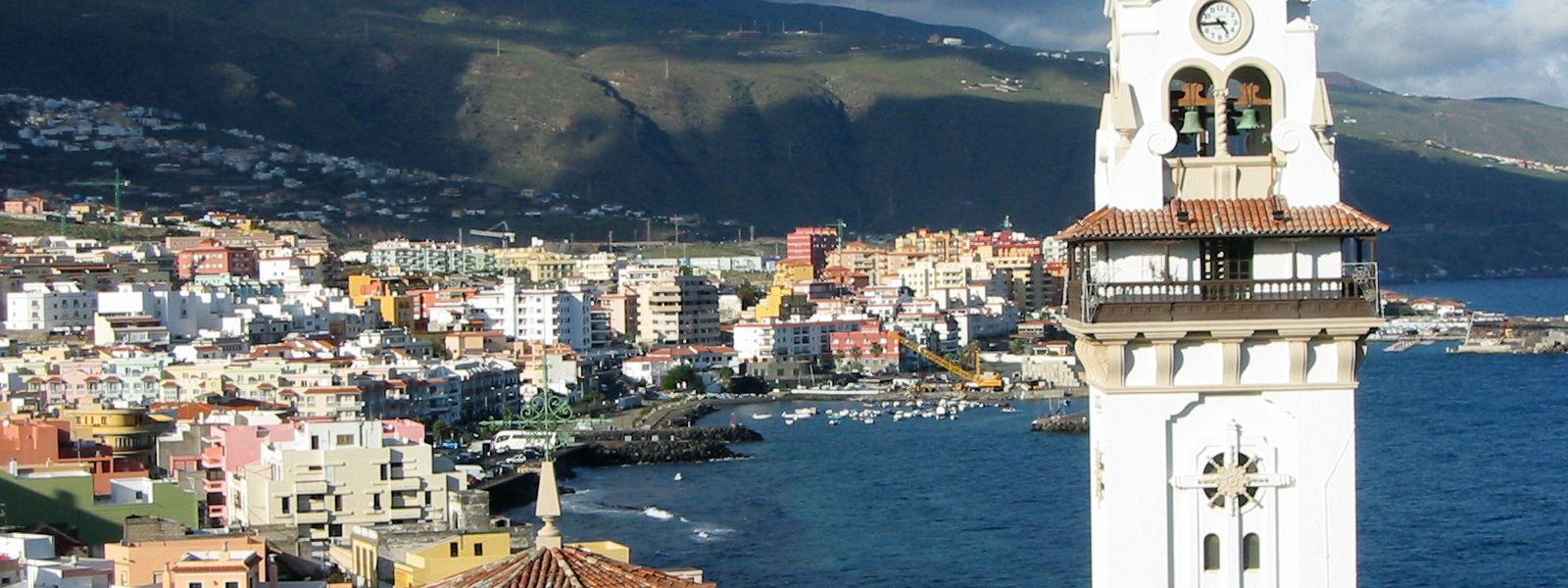
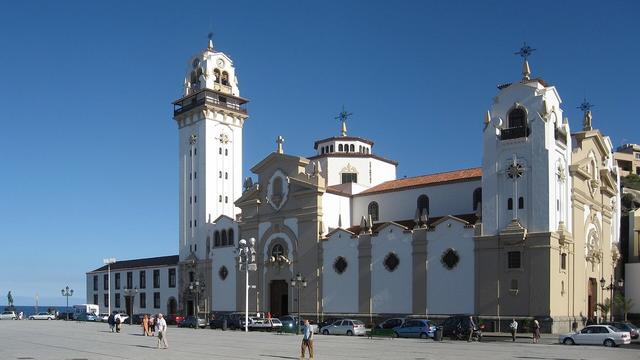
Nine statues of the Guanche kings of Tenerife stand along one side of the Plaza de la Patrona de Canarias, next to the basilica that holds the Virgin of Candelaria, patron of the archipelago. The town on the island's east coast is the main Catholic pilgrimage centre of the Canaries. The figure goes out in procession on 2 February and 15 August, and the August date is the bigger feast. A short way from the square, the Cueva de Achbinico was the first Christian temple in the islands.
Candelaria
- Currency
- Euro (EUR, €). ATM withdrawals often incur charges of €1–8; bringing some cash (€50–100) can help avoid fees. Credit and debit cards are widely accepted in cities and tourist areas. Bizum (a Spanish payment app) is popular with locals and some businesses but requires a Spanish bank account. The islands are outside the EU's standard VAT area.
- Language
- Spanish (specifically Canarian Spanish dialect) is the native language. English is widely spoken in hotels, restaurants and tourist attractions, but understanding outside these areas is very limited. In smaller towns and rural areas, English proficiency is minimal. Hotel and restaurant staff generally know basic English.
- Power plug
- Europlug (Type C) and Schuko (Type F) sockets; 230 V, 50 Hz
- Visa
- Schengen area: EU, EEA and Swiss nationals enter on national ID card or passport. Many non-EU nationalities have 90-day visa-free access. Non-EEA citizens staying longer than 90 days require an advance visa.
- Time zone
- Atlantic/Canary (UTC±00:00 in winter, UTC+01:00 in summer); one hour behind mainland Spain.
- Tap water
- Safe to drink throughout Spain. In some southern regions it has high mineral content and may taste unfamiliar; locals often drink bottled water instead. Bottled water is inexpensive and widely available.
- Tipping
- Not mandatory or customary. In restaurants: not expected for simple meals or basic establishments; 5–10% in mid-range or upscale venues if service was exceptional. Always pay cash to the server, not on card. Taxi drivers and hotel staff may appreciate small tips in upscale settings but it is not expected.
- Emergency
- 112
When to go
Shoulder
Dec – Mar
The liturgical feast of the Virgin on 2 February, Saint Blaise on the 3rd and the pre-Lent carnival with its street bands fill the late-winter calendar.
Low season
Apr – Jun
No major feast falls in these months apart from the India–Canarias intercultural festival on the first Sunday in May.
High season
Jul – Aug
July brings the Festival de la Canción and the feasts of Carmen and Saint Anne, and 14–15 August the main pilgrimage, in the hottest weeks of the arid summer.
Low season
Sep – Nov
After the August feast the festival calendar goes quiet, and pilgrims keep arriving at the basilica outside the feast days.
How long to stay
Half a day covers the basilica, the square with its statues, the Cueva de Achbinico and the souvenir street leading up to the shrine. The historic centre is walkable, and every sight lies within minutes of the others on foot.
An overnight stay makes sense only if you come for the calendar: the feast of 2 February, the Festival de la Canción in July, or the main pilgrimage on 14–15 August.
Getting around
The historic centre is done on foot. The basilica, the Plaza de la Patrona de Canarias, the Cueva de Achbinico and the pedestrian shopping street, Calle Obispo Pérez Cáceres, are all within minutes of each other, and the street runs parallel to the coast and the seafront promenade.
Bus line 111, the island's main north–south route, calls at Candelaria. By car, the TF-1 motorway passes just west of the town.
The climate is arid and summer gets hot on the open square and the promenade: carry water when you walk.
What to see
Destinations in Candelaria
Frequently asked questions
When is the pilgrimage to Candelaria?
Twice a year. The liturgical feast of the Virgin of Candelaria falls on 2 February, and the popular festival centres on 14–15 August. On 2 February and 15 August the figure is carried out in procession; 15 August, the day of the patron of the Canaries, is the more important of the two.What is the Cueva de Achbinico?
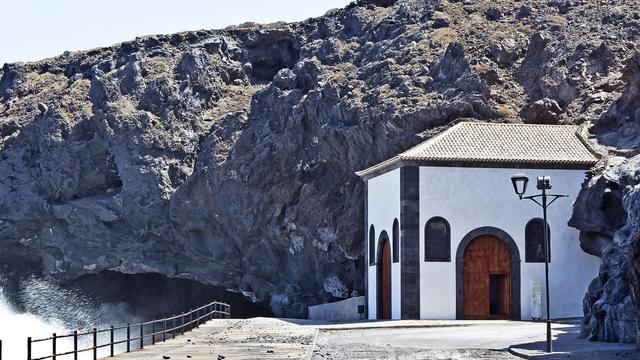
A cave near the centre, also called the Cave of San Blas, where Guanches and Spaniards worshipped the Virgin of Candelaria. It was the first Christian temple in the Canary Islands. Layers of ash left by the island's earlier inhabitants have been carbon-dated to more than 3,000 years.Who are the statues on the square?
The nine menceyes, the kings who ruled the nine Guanche kingdoms of Tenerife before the Spanish conquest. They stand along one side of the Plaza de la Patrona de Canarias, beside the basilica.How old is the basilica?
The present basilica dates from 1959. It stands on the site of an older hermitage and reuses some of its materials; the first large sanctuary to the Virgin went up in 1668. The building holds 5,000 people and is decorated with murals, and a Dominican convent stands next to it.Can you reach Candelaria without a car?
Yes. Bus line 111, the main north–south connection on Tenerife, stops in Candelaria, 17 km southwest of Santa Cruz de Tenerife. Once in town, everything is within walking distance.