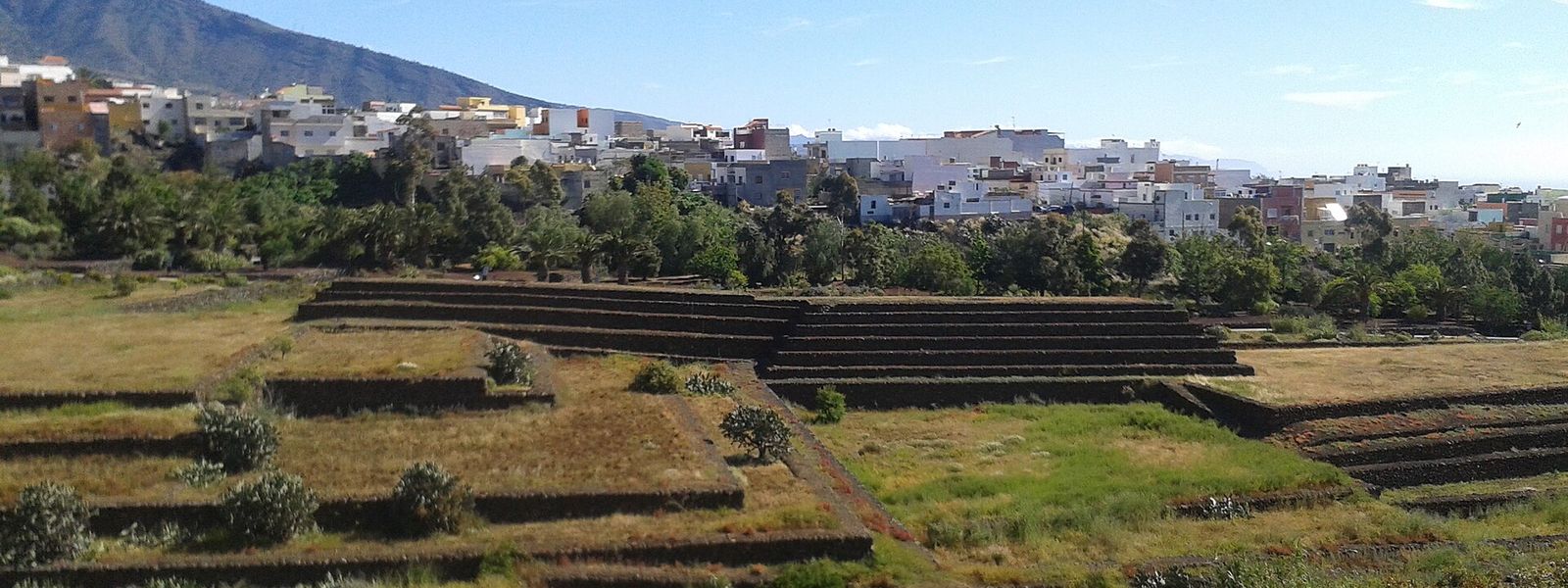
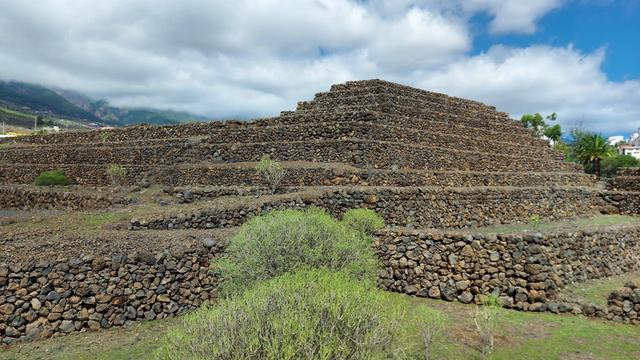
Güímar is best known for its six stepped pyramids, and around them lies a municipality of 102.9 km² running from the mountains to the sea. On the coast, the Malpaís de Güímar nature reserve protects a field of dark volcanic rock topped by Montaña Grande, and the harbour district of Puertito de Güímar lines its seafront with restaurants facing the ocean. Inland, the Barranco de Badajoz cuts into the valley. The town grew around a sugar mill in the 16th century; today it is known for aloe vera.
Güímar
- Currency
- Euro (EUR, €). ATM withdrawals often incur charges of €1–8; bringing some cash (€50–100) can help avoid fees. Credit and debit cards are widely accepted in cities and tourist areas. Bizum (a Spanish payment app) is popular with locals and some businesses but requires a Spanish bank account. The islands are outside the EU's standard VAT area.
- Language
- Spanish (specifically Canarian Spanish dialect) is the native language. English is widely spoken in hotels, restaurants and tourist attractions, but understanding outside these areas is very limited. In smaller towns and rural areas, English proficiency is minimal. Hotel and restaurant staff generally know basic English.
- Power plug
- Europlug (Type C) and Schuko (Type F) sockets; 230 V, 50 Hz
- Visa
- Schengen area: EU, EEA and Swiss nationals enter on national ID card or passport. Many non-EU nationalities have 90-day visa-free access. Non-EEA citizens staying longer than 90 days require an advance visa.
- Time zone
- Atlantic/Canary (UTC±00:00 in winter, UTC+01:00 in summer); one hour behind mainland Spain.
- Tap water
- Safe to drink throughout Spain. In some southern regions it has high mineral content and may taste unfamiliar; locals often drink bottled water instead. Bottled water is inexpensive and widely available.
- Tipping
- Not mandatory or customary. In restaurants: not expected for simple meals or basic establishments; 5–10% in mid-range or upscale venues if service was exceptional. Always pay cash to the server, not on card. Taxi drivers and hotel staff may appreciate small tips in upscale settings but it is not expected.
- Emergency
- 112
When to go
High season
Oct – May
The cooler half of the year, with February averaging 17 °C; what little rain Güímar gets falls in these months, and the open lava of the Malpaís is easiest to walk.
Shoulder
Jun – Sep
Dry months with the sun at full strength: August averages 24 °C, the Atlantic wind takes the edge off, and the Malpaís is for early mornings only.
How long to stay
One full day covers Güímar. Go down to the Malpaís de Güímar early, before the sun gets onto the rock, spend the middle of the day at the pyramids, and finish in Puertito de Güímar, where the restaurants keep later hours than those in the old centre. Give the Barranco de Badajoz a second day.
Getting around
The town centre is walkable, and the ethnographic park with the pyramids is about ten minutes uphill on foot. Puertito de Güímar lies 3–4 km below the centre, linked by a regional TITSA bus. Parking in Puertito is hard to find, so the bus is often the easier way down.
The TF-1 motorway runs through the municipality. The one catch: the Línea 111 bus from Santa Cruz, Costa Adeje and the southern airport stops on the motorway, and from there you walk to the Güímar–Puertito road and change to the regional bus. Líneas 035 and 037 run to Granadilla de Abona and Arico.
Local rules
- The Malpaís de Güímar is a protected nature reserve. Leave the rock, plants and anything else you find where it is.
- There is no shade on the lava. The rock is sharp underfoot and holds the heat; carry water and sun cream, and in summer walk it early. A hot wind off the Sahara can push the day past 35 °C.
- Ravine walls shed rock. In the Barranco de Badajoz, keep away from the foot of the cliffs, and stay out after heavy rain, when water runs down the ravine bed.
What to see


Destinations in Güímar
Frequently asked questions
What are the pyramids of Güímar?
Six stepped pyramids, attributed to the Guanches, the island's aboriginal people, and the town's best-known sight. They stand in the ethnographic park, about ten minutes uphill on foot from the centre.Can I get to Güímar by bus?
Yes, with a change. The Línea 111 from Santa Cruz, Costa Adeje and the southern airport stops on the motorway; from there you walk to the road between Güímar and Puertito de Güímar and take the regional bus to the centre, 3–4 km away. Líneas 035 and 037 connect with Granadilla de Abona and Arico.Where can I eat, and when?
The historic centre has a few restaurants with limited hours: on a Sunday evening almost nothing is open, and many close on Mondays. Puertito de Güímar has far more choice, with sea views, later hours and some places open at the weekend.What is there to buy?
Aloe vera, grown locally and made into soaps, shampoos, other toiletries and drinks, sold at Finca Canarias. The valley is also known for its honey.