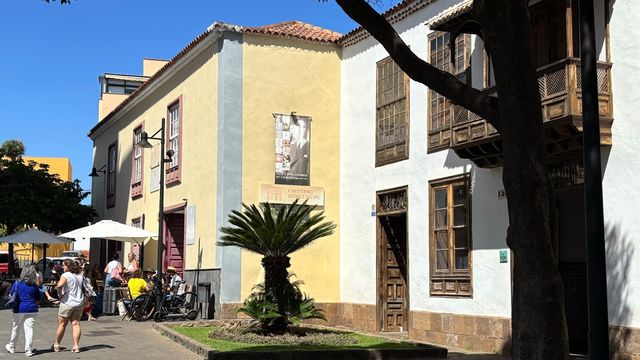
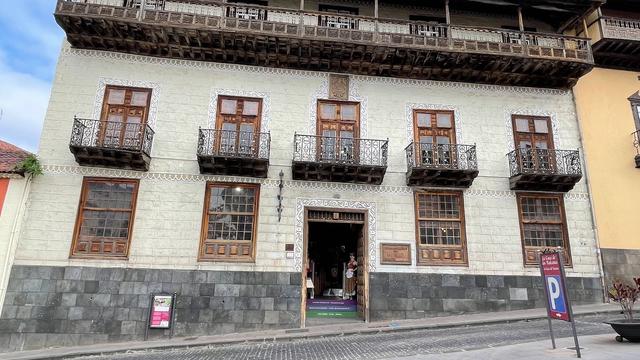
The Museum of History and Anthropology of Tenerife opened in 1993 in Casa Lercaro, a residence built in the 16th century by the Lercaro family, Genoese merchants settled on the island. The house stands in the historic centre of San Cristóbal de La Laguna, a UNESCO World Heritage Site. The exhibition covers the economic and cultural history of the islands through documents, letters and objects that include two old carriages. The museum belongs to the Museos de Tenerife network.
Museum of History and Anthropology of Tenerife
Local name: Museo de Historia y Antropología de Tenerife
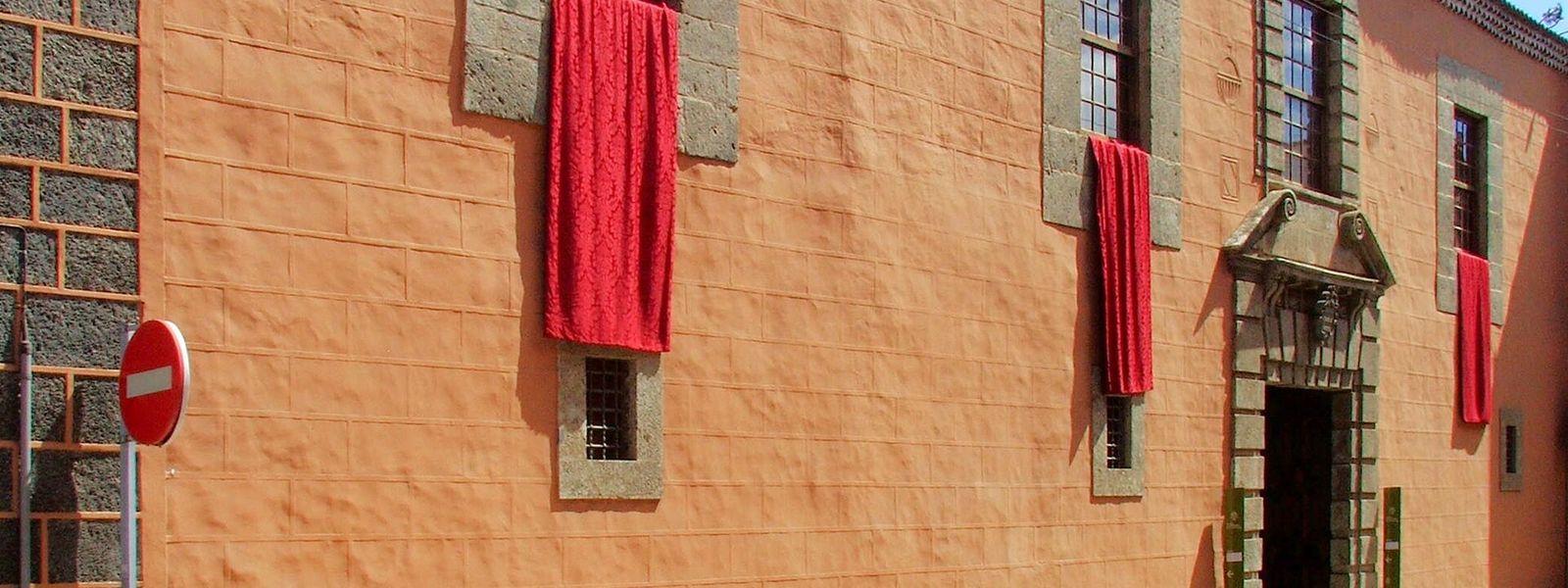
Island history museum in the 16th-century Casa Lercaro, with two old carriages and a garden.
- Entrance
- €5; free on Friday and Saturday from 4 pm.
- Accessibility
- Wheelchair-accessible entrance and toilets; no wheelchair-accessible parking.
- Parking
- Free street parking nearby; the two closest car parks, about 50 m and 150 m away, are private.
- Difficulty
- None: the museum is a townhouse in the old town, and you walk in from the street.
- Transport
- Bus stops Tabares de Cala and Deán Palahi, both about 130 m away.
- Hours
- Monday to Saturday 9:00–19:00; Sunday 10:00–17:00.
- Address
- C. San Agustín, 22, 38201 La Laguna, Santa Cruz de Tenerife, Spain
What makes it special
Two old carriages stand in the house, and they are the pieces that stay with you. The building earns as much attention as the collection: a 16th-century mansion arranged around a courtyard of wooden balconies, with a garden alongside and renovation work on the fabric still going on.
Casa Lercaro also carries a ghost story still told in the town. Legend has it that Catalina Lercaro, a daughter of the family, threw herself into the well of the house to escape a marriage arranged for her, and never left.
The exhibition is compact and leans on paper. Documents and letters come in quantity, objects are fewer, and together they trace how the islands made their living and what they made of themselves.
Good to know
- Labels are in Spanish only; an audio guide runs as a phone app.
- The collection leans heavily on documents and letters, with a limited number of objects.
- Twenty minutes is too short for it, so do not arrive just before closing.
- Toilets are inside the museum.
Getting there
The museum stands in the grid of streets that makes up the old town of San Cristóbal de La Laguna, and you walk in straight from the pavement.
Two bus stops, Tabares de Cala and Deán Palahi, are both about 130 m away in a straight line. By car, the option is free street parking in the surrounding streets; the two car parks closest to the museum are private. The tourist information office is about 230 m away if you want a town map before or after.
Best time to visit
Best: a grey or drizzly day, arriving with time in hand.
Avoid: the stretch just before closing.
San Cristóbal de La Laguna sits higher and cooler than the coast and often lies under cloud, which suits an indoor visit, and even this compact exhibition needs more than twenty minutes.
Things to do nearby
All tours in San Cristóbal de La Laguna on GetYourGuide
Paid links: booking through them supports YowJourney.
Sun & daylight
Nearby Places

Similar Places

Your whole travel map in one place
Get inspired by new places around the world and find the ones worth the journey
Frequently asked questions
Are the exhibits labelled in English?
No. Labels are in Spanish only; an audio guide is available as a phone app.How long does a visit take?
The exhibition is compact, but twenty minutes is too short for it. Leave yourself more time than that.What is Casa Lercaro?
The 16th-century house of the Lercaro family, Genoese merchants, which has held the museum since 1993.Can wheelchair users visit?
The entrance and the toilets are wheelchair-accessible. There is no wheelchair-accessible parking.