Whitewashed houses with carved wooden balconies line the old streets of San Juan de la Rambla, a municipality of about 5,000 people on the north coast of Tenerife. Its 20.67 km² run from a rocky Atlantic shore up the green northern slopes of the island. Travellers come for the quiet, and for a low-key base on the north coast, 12 km west of La Orotava.
San Juan de la Rambla

- Currency
- Euro (EUR)
- Language
- Spanish; English only in tourist areas
- Power plug
- Type C/F, 230 V
- Visa
- Schengen
- Time zone
- UTC+0 / UTC+1 (WET/WEST)
- Tap water
- Safe; mineral taste in the south
- Tipping
- Not expected; 5–10% for great service
- Emergency
- 112
Things to do
All tours in San Juan de la Rambla on GetYourGuide
Paid links: booking through them supports YowJourney.
When to go
High season
Dec – Mar
Winter brings most of the north coast's rain and its heaviest Atlantic swell, and the slopes above the town are at their greenest.
Shoulder
Apr – Jun
Spring days are mild, and the trade-wind cloud often gathers over the slopes above the town as the day goes on.
High season
Jul – Sep
Summer is the warmest and driest stretch, with a calmer sea along the north coast and Spanish families on holiday across the island.
Shoulder
Oct – Nov
Autumn stays warm while the island's summer crowds thin out before the winter season.
How long to stay
Half a day covers the old town and a look at the shore. As a base for the north of Tenerife, the town suits a stay of three or four days, with La Orotava 12 km to the east and Santa Cruz de Tenerife 40 km away.
What to see
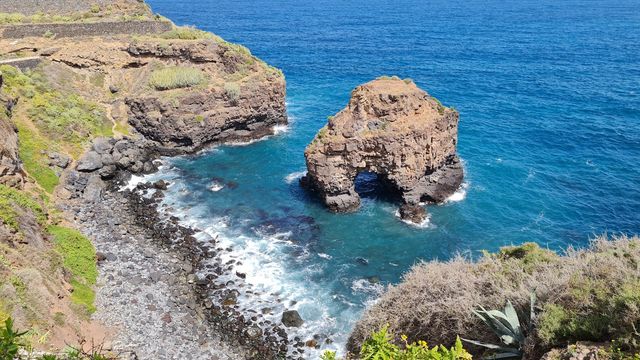
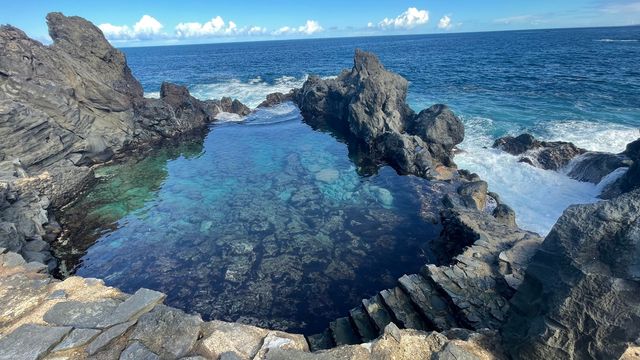
Destinations in San Juan de la Rambla
Frequently asked questions
Where is San Juan de la Rambla?
On the north coast of Tenerife, 12 km west of La Orotava and 40 km west of Santa Cruz de Tenerife, the island capital.How big is San Juan de la Rambla?
The municipality has about 5,000 inhabitants and covers 20.67 km², from the shore up the northern slopes of the island.Is the sea safe here?
The north coast faces the open Atlantic and takes heavy swell, most of all in winter. Waves break hard over the rocks: keep well back from the edge when the sea is up, and never turn your back on it.