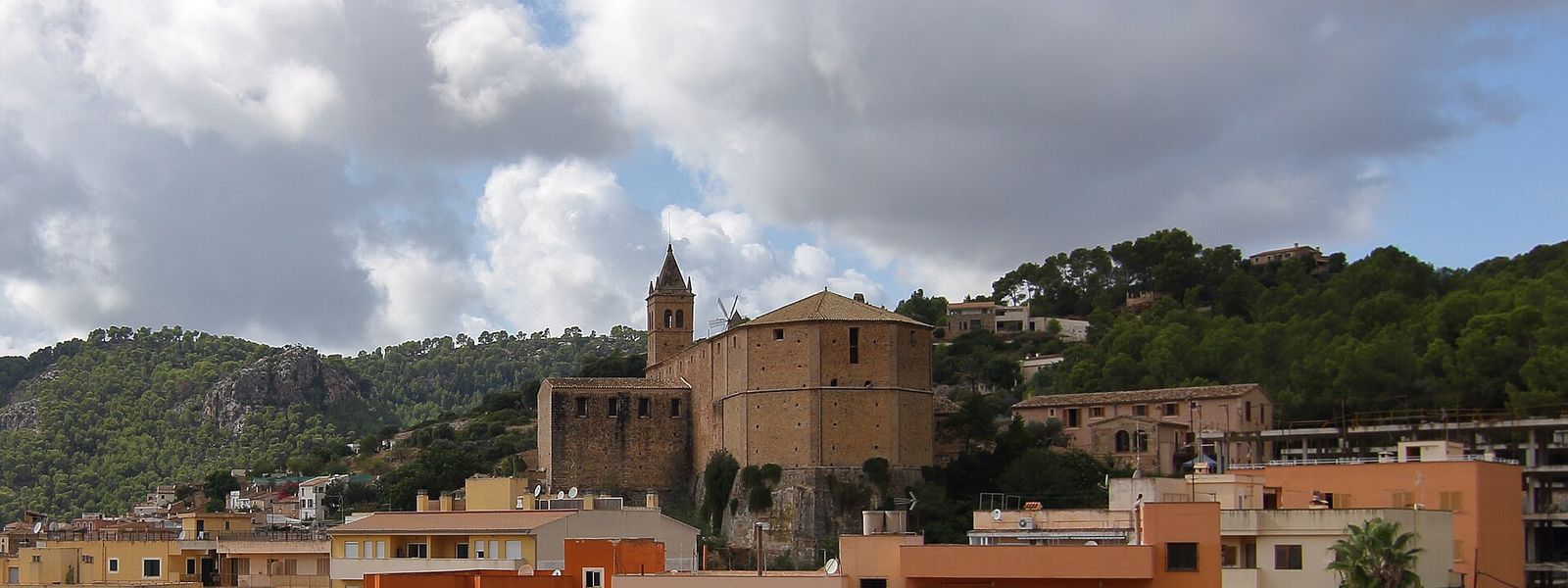
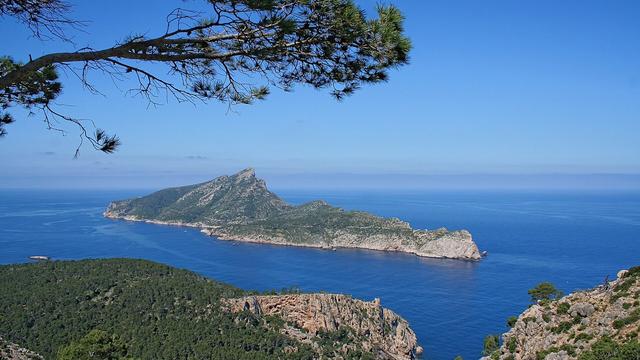
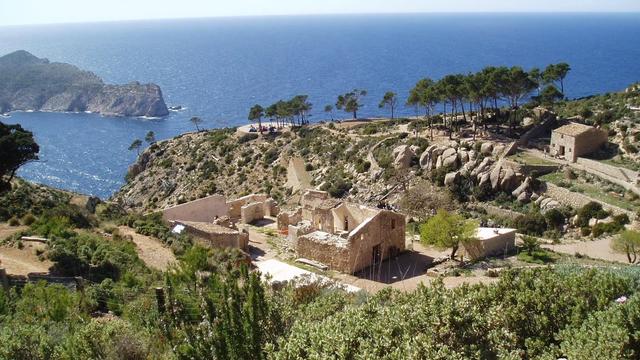
The old town stands inland, built back from the shore against Barbary pirates, and the coast below it is where most visitors end up: holiday villas above the harbour at Port d'Andratx, big hotels behind the sandy beach at Camp de Mar, a row of waterfront restaurants at Sant Elm. Offshore lies Sa Dragonera, an uninhabited islet and natural park reached by boat. Walkers come for the GR 221, which starts at the port and crosses the Tramuntana to Pollença.
Andratx
- Currency
- Euro (EUR, €). Credit and debit cards are widely accepted in cities and tourist areas. ATMs are abundant; most charge €2–7 per foreign card withdrawal. Some shops request ID before accepting a credit card. €500 banknotes are not accepted in most shops.
- Language
- Catalan and Spanish are both official languages of the Balearic Islands; the majority speaks Catalan fluently alongside Spanish. English is common in tourism sectors and establishments.
- Power plug
- Europlug (Type C) and Schuko (Type F) sockets; 230 V, 50 Hz
- Visa
- Schengen area: EU, EEA and Swiss nationals enter on national ID card or passport. Many non-EU nationalities have 90-day visa-free access. Non-EEA citizens staying longer than 90 days require an advance visa.
- Time zone
- Europe/Madrid (UTC+01:00 winter time, UTC+02:00 summer time from last Sunday in March to last Sunday in October). Canary Islands are one hour behind mainland Spain.
- Tap water
- Safe to drink throughout Spain. In some southern regions it has high mineral content and may taste unfamiliar; locals often drink bottled water instead. Bottled water is inexpensive and widely available.
- Tipping
- Not mandatory or customary. In restaurants: not expected for simple meals or basic establishments; 5–10% in mid-range or upscale venues if service was exceptional. Always pay cash to the server, not on card. Taxi drivers and hotel staff may appreciate small tips in upscale settings but it is not expected.
- Emergency
- 112
When to go
Shoulder
Apr – May
Long, mild days suit the Tramuntana paths above the town, before the summer crowd reaches the port and Camp de Mar.
High season
Jun – Sep
The beach at Camp de Mar and the harbour fill up, and midday heat on the bare mountain paths makes an early start the rule for walkers.
Shoulder
Oct – Oct
The sea holds some of its summer warmth while the villages empty out and walking weather returns to the hills.
Low season
Nov – Mar
Short days and quiet villages; rain turns the mountain paths slippery and the sea can make boat crossings rough.
How long to stay
A day covers the town and the port, and Palma is close enough to do it as a round trip. Give it two or three days to add Sant Elm, a boat out to Sa Dragonera and an afternoon on the beach at Camp de Mar. Walkers setting off on the GR 221 need far longer: the trail runs in nine stages to Pollença, and Port d'Andratx is only the start.
Getting around
You need your own wheels to see the area properly, and car hire is best arranged at Palma airport or in the city before you drive out. Buses do link the villages. TIB line 101 runs roughly hourly from Palma to Andratx and Port d'Andratx, taking about 50 minutes; line 121 runs hourly from Sant Elm and S'Arracó into Andratx, and line 122 hourly from Santa Ponça and Peguera. Sa Dragonera is reached by sea from Port d'Andratx or Sant Elm.
The caveat is the north. That part of the municipality is mountainous and virtually uninhabited, so beyond the villages you are in a car or on foot.
What to see
Destinations in Andratx
Frequently asked questions
How do I get to Andratx from Palma?
By road it is 30 km west on the Ma-1; from the airport, take the Ma-20 to bypass the city. TIB bus 101 runs roughly hourly from Palma and takes about 50 minutes to Andratx and Port d'Andratx.Are Andratx and Port d'Andratx the same place?
No. Andratx is the inland town, set back from the coast for fear of pirate raids, and Port d'Andratx is its harbour a few miles to the south. Both belong to the same municipality, along with Sant Elm, Camp de Mar, S'Arracó and Sa Coma.Can you visit Sa Dragonera?
Yes, by sea from Port d'Andratx or Sant Elm. The islet is uninhabited and has been a natural park since 1995; it is where the Tramuntana ridge surfaces briefly before running on underwater towards Ibiza.Is there a beach?
Camp de Mar has a small sandy beach, the one spot on this rugged coast with mass appeal, which is why the big hotels stand there. Elsewhere the shore is rock.Where does the GR 221 start?
At Port d'Andratx. The long-distance trail, known as the Ruta de Pedra en Sec after the dry-stone walls it follows, runs in nine stages along the north-west coast and through the Serra de Tramuntana to Pollença. The mountain sections are exposed, so carry water and start early in summer.