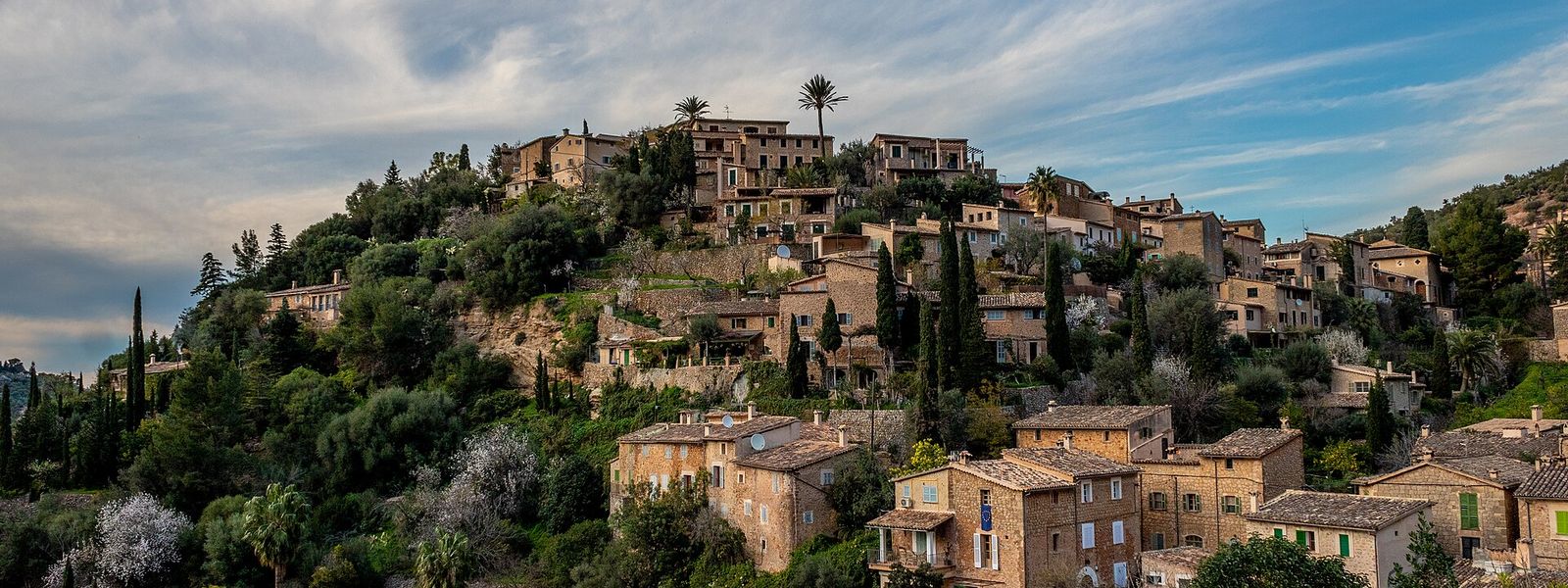
Stone houses climb a hillside of terraced orange and olive groves, with the parish church at the top and the Mediterranean below. Deià sits in the Serra de Tramuntana on Mallorca's north-west coast, a village of some 700 people. The English poet Robert Graves settled here, and his house is now a museum; painters, writers and musicians followed from the 1950s to the 1980s. Travellers come for that history, the cliffs and the mountain coast around it.
Deià
- Currency
- Euro (EUR, €). Credit and debit cards are widely accepted in cities and tourist areas. ATMs are abundant; most charge €2–7 per foreign card withdrawal. Some shops request ID before accepting a credit card. €500 banknotes are not accepted in most shops.
- Language
- Catalan and Spanish are both official languages of the Balearic Islands; the majority speaks Catalan fluently alongside Spanish. English is common in tourism sectors and establishments.
- Power plug
- Europlug (Type C) and Schuko (Type F) sockets; 230 V, 50 Hz
- Visa
- Schengen area: EU, EEA and Swiss nationals enter on national ID card or passport. Many non-EU nationalities have 90-day visa-free access. Non-EEA citizens staying longer than 90 days require an advance visa.
- Time zone
- Europe/Madrid (UTC+01:00 winter time, UTC+02:00 summer time from last Sunday in March to last Sunday in October). Canary Islands are one hour behind mainland Spain.
- Tap water
- Safe to drink throughout Spain. In some southern regions it has high mineral content and may taste unfamiliar; locals often drink bottled water instead. Bottled water is inexpensive and widely available.
- Tipping
- Not mandatory or customary. In restaurants: not expected for simple meals or basic establishments; 5–10% in mid-range or upscale venues if service was exceptional. Always pay cash to the server, not on card. Taxi drivers and hotel staff may appreciate small tips in upscale settings but it is not expected.
- Emergency
- 112
When to go
Low season
Nov – Feb
The village goes quiet, cloud and rain settle on the mountains, and the terraces are at their greenest.
Shoulder
Mar – May
Spring brings clear light over the sea and warm enough days to wander the groves before the summer crowds arrive.
High season
Jun – Sep
Summer fills the village with day-trippers and the Ma-10 with traffic, and the cove below is at its busiest.
Shoulder
Oct – Oct
The sea still holds the summer's warmth while the crowds thin out and the afternoons shorten over the cliffs.
How long to stay
Most of Deià fits into a day: the Graves house, the church and his grave on the hill, a long lunch and the drive down to the cove. Stay a night or two to see the village once the day-trippers have gone, and to use it as a base for the Tramuntana coast between Valldemossa and Sóller.
Getting around
Deià is small and walkable, and the village itself needs nothing more than your feet. The cove below it and the coast beyond are a different matter: for those you want a car, and a local taxi firm serves the village.
TIB bus 203 runs hourly from Palma, taking about 45 minutes via Valldemossa, and carries on to Sóller and Port de Sóller.
The Ma-10 through the village twists along the mountainside all the way to Sóller. Take it slowly, and expect cyclists on the bends.
What to see
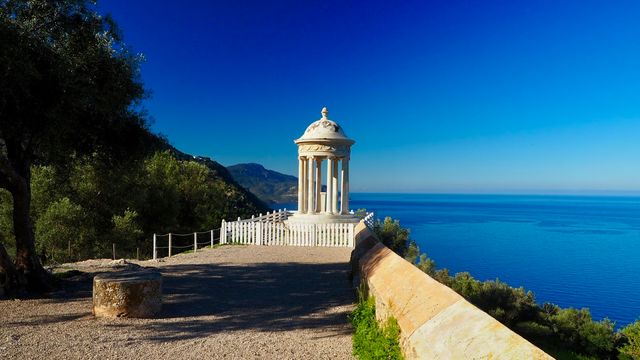
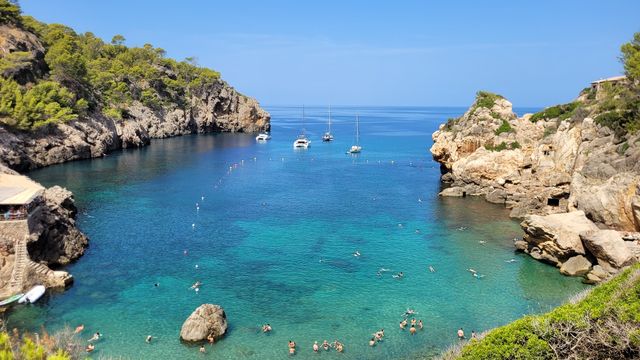

Destinations in Deià
Frequently asked questions
How do I get to Deià without a car?
TIB bus 203 runs from Palma to Deià in about 45 minutes via Valldemossa and continues to Sóller and Port de Sóller.How far is Deià from Palma?
About 30 km. The road follows the Ma-1110 to Valldemossa, then the winding Ma-10 along the mountain coast.Do I need a car in Deià?
The village is small and walkable. To reach the cove below it or explore further along the coast, you want a car or a taxi.What is there to see of Robert Graves in Deià?
Graves lived in Deià until his death, and his house is now a museum. His grave is in the village, by the church on the hill.