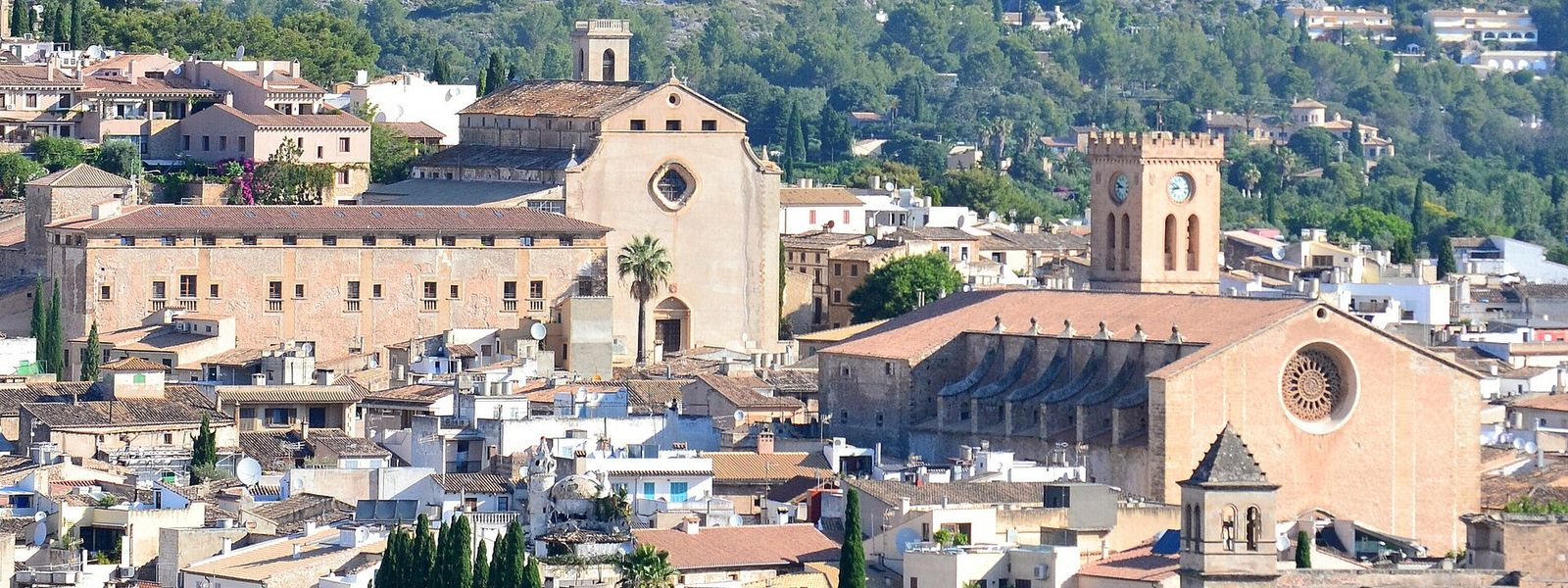
Pollença was built inland, some 6 km from the sea, to keep clear of pirates, and its narrow 17th- and 18th-century streets still follow a medieval grid. Life centres on Plaça Major, lined with cafés under the 13th-century church of Nostra Senyora dels Àngels, founded by the Knights Templar. North of the square a stairway of 365 steps climbs to the Calvari chapel. Travellers come for the old centre, the Good Friday procession and the coast of Formentor within reach, with beach tourism based down at Port de Pollença.
Pollença
- Currency
- Euro (EUR, €). Credit and debit cards are widely accepted in cities and tourist areas. ATMs are abundant; most charge €2–7 per foreign card withdrawal. Some shops request ID before accepting a credit card. €500 banknotes are not accepted in most shops.
- Language
- Catalan and Spanish are both official languages of the Balearic Islands; the majority speaks Catalan fluently alongside Spanish. English is common in tourism sectors and establishments.
- Power plug
- Europlug (Type C) and Schuko (Type F) sockets; 230 V, 50 Hz
- Visa
- Schengen area: EU, EEA and Swiss nationals enter on national ID card or passport. Many non-EU nationalities have 90-day visa-free access. Non-EEA citizens staying longer than 90 days require an advance visa.
- Time zone
- Europe/Madrid (UTC+01:00 winter time, UTC+02:00 summer time from last Sunday in March to last Sunday in October). Canary Islands are one hour behind mainland Spain.
- Tap water
- Safe to drink throughout Spain. In some southern regions it has high mineral content and may taste unfamiliar; locals often drink bottled water instead. Bottled water is inexpensive and widely available.
- Tipping
- Not mandatory or customary. In restaurants: not expected for simple meals or basic establishments; 5–10% in mid-range or upscale venues if service was exceptional. Always pay cash to the server, not on card. Taxi drivers and hotel staff may appreciate small tips in upscale settings but it is not expected.
- Emergency
- 112
When to go
Low season
Nov – Feb
The quietest months: the old town belongs to its residents, and the Formentor bus stops at the beach short of the cape.
Shoulder
Mar – May
Spring brings the Good Friday procession on Calvari, and in March the bus over the mountains from Sóller via Lluc starts running again.
High season
Jun – Sep
Peak season: the port and the coves fill, midday heat drives people under the café awnings of Plaça Major, and 2 August brings the Moros i Cristians battle to town.
Shoulder
Oct – Oct
The summer crowd thins; the Sóller bus runs to the end of the month, while the Formentor bus goes back to turning at the beach.
How long to stay
The town itself takes half a day to a day. Plaça Major, the church, the 365 steps up to Calvari and the bridge north of town known as the Roman Bridge, which dates from the 19th century, all lie within walking distance of each other.
Allow three to four days if you use Pollença as a base for the north: Port de Pollença, the Formentor headland and the coves of Cala Sant Vicenç.
Getting around
The old centre is for walking. Every sight is within walking distance, and the alleys are narrow, so park at the edge of town and leave the car there.
TIB buses 322 and 334 link the town with Alcúdia, and the 334 runs on through Port de Pollença to Formentor beach, the cape and the lighthouse. Bikes can be hired in the centre, with guided rides on offer, and two taxi firms work the town.
Two catches. From October to March the 334 turns back at Formentor beach and goes no further towards the cape. And bus 301 from Palma, which continues to Port de Pollença, may not be ridden for the town-to-port leg alone.
What to see
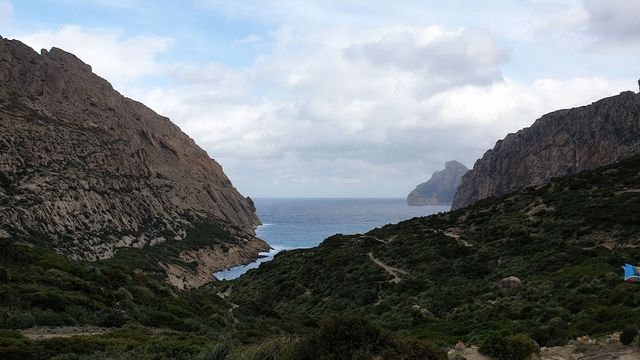
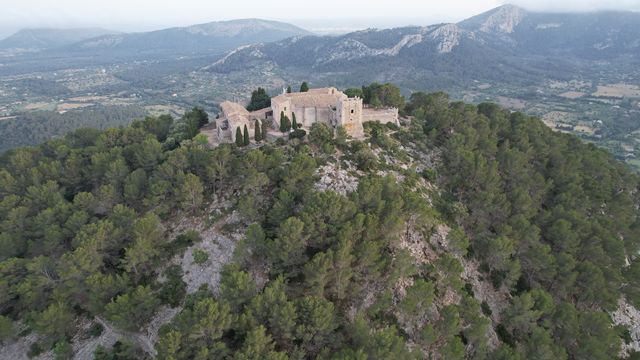
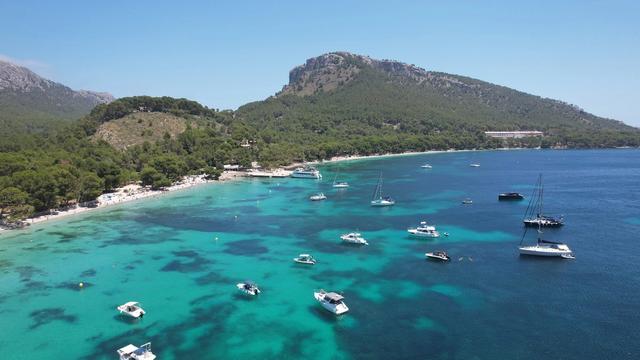
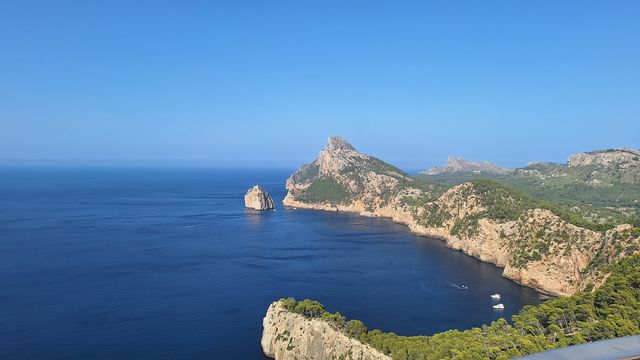


Destinations in Pollença
Frequently asked questions
How do I get to Pollença from Palma?
By road it is 54 km north-east of Palma on the Ma-13, branching onto the Ma-2200 near Sa Pobla; from the airport, the Ma-30 bypasses the city. TIB bus 301 runs from Palma via Inca and Sa Pobla and takes about an hour.Can I drive into the old town?
Park at the edge of town. The centre keeps a medieval grid of narrow alleys, and everything worth seeing is within walking distance.How many steps lead up to Calvari?
365. The stairway starts north of Plaça Major and climbs to the chapel on top of the Calvari hill.What happens at Easter and in August?
On Good Friday the Stations of the Cross are re-enacted on the road up the back of Calvari, the figure of Christ is taken down from the Cross on the hilltop, and a torchlit procession carries it through town in silence but for a slow drum. On 2 August, during the patronal festivals, the town re-enacts its 1550 fight against the corsair Dragut as Moros i Cristians.Is there a market in Pollença?
Yes, every Sunday morning in Plaça Major.