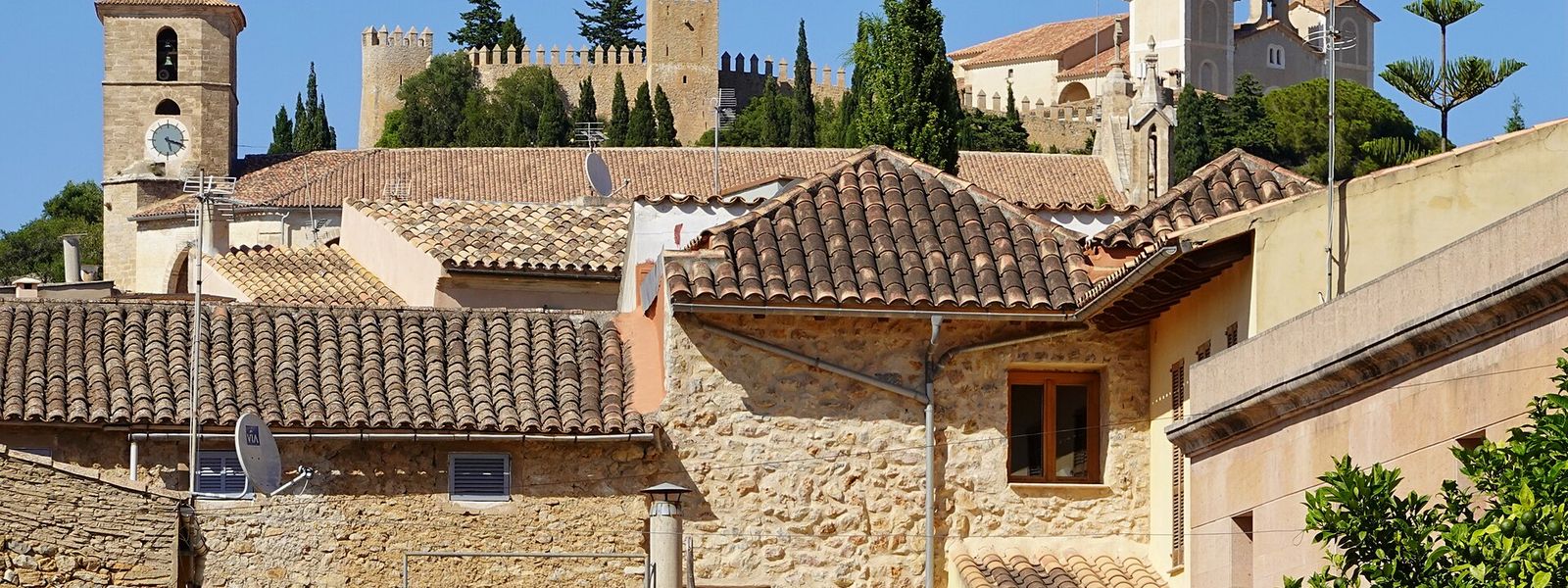
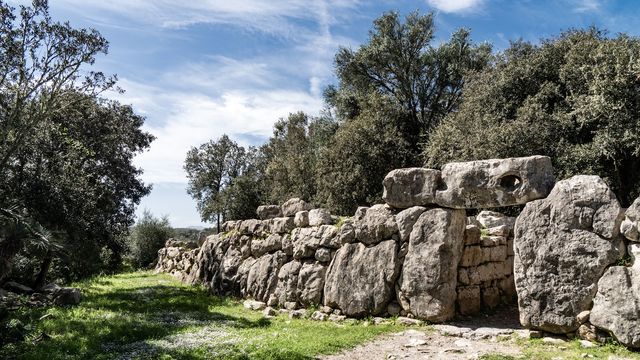
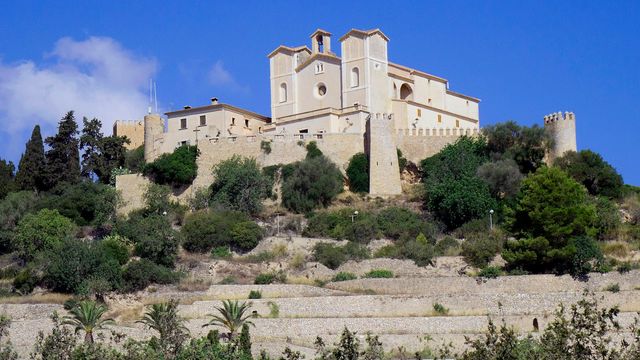
Artà climbs a hill in north-eastern Mallorca, its steep lanes rising to the metre-thick fortress walls and nine towers around the Santuari de Sant Salvador. Below stand the late Gothic parish church, the Talaiotic village of Ses Païsses and a regional museum founded in 1927. The municipality runs out to 25 km of undeveloped coast and the Parc Natural de la Península de Llevant, and the town still weaves baskets from fan-palm leaves.
Artà
- Currency
- Euro (EUR, €). Credit and debit cards are widely accepted in cities and tourist areas. ATMs are abundant; most charge €2–7 per foreign card withdrawal. Some shops request ID before accepting a credit card. €500 banknotes are not accepted in most shops.
- Language
- Catalan and Spanish are both official languages of the Balearic Islands; the majority speaks Catalan fluently alongside Spanish. English is common in tourism sectors and establishments.
- Power plug
- Europlug (Type C) and Schuko (Type F) sockets; 230 V, 50 Hz
- Visa
- Schengen area: EU, EEA and Swiss nationals enter on national ID card or passport. Many non-EU nationalities have 90-day visa-free access. Non-EEA citizens staying longer than 90 days require an advance visa.
- Time zone
- Europe/Madrid (UTC+01:00 winter time, UTC+02:00 summer time from last Sunday in March to last Sunday in October). Canary Islands are one hour behind mainland Spain.
- Tap water
- Safe to drink throughout Spain. In some southern regions it has high mineral content and may taste unfamiliar; locals often drink bottled water instead. Bottled water is inexpensive and widely available.
- Tipping
- Not mandatory or customary. In restaurants: not expected for simple meals or basic establishments; 5–10% in mid-range or upscale venues if service was exceptional. Always pay cash to the server, not on card. Taxi drivers and hotel staff may appreciate small tips in upscale settings but it is not expected.
- Emergency
- 112
When to go
Low season
Nov – Mar
The town is at its quietest, the almond orchards below Sant Salvador flower late in winter, and the Sant Antoni festival fills the streets on 16 and 17 January.
Shoulder
Apr – May
Mild days suit the climb to Sant Salvador and walks in the Massís d'Artà and the Llevant natural park before the summer heat sets in.
High season
Jun – Sep
July is the driest month, the coves and dunes draw beach crowds, the fire-scarred hills are at their most flammable, and the Festival of Sant Salvador runs on 5, 6 and 7 August.
Shoulder
Oct – Oct
October brings the year's heaviest rain, so plan the coast and the hills around the dry spells.
How long to stay
A day covers the town: the 180 cypress-lined steps of the Calvary stair from the parish church up to Sant Salvador, the terrace view over almond and olive groves to the coast, the Museu Regional on Plaça d'Espanya and the prehistoric settlement of Ses Païsses. Two or three days add the undeveloped coast, from the dunes of s'Arenal de sa Canova and Colònia de Sant Pere to the coves out towards Cala Torta, plus a walk into the Massís d'Artà. Plan one of those days around a Tuesday for the market.
Getting around
In town, walk. The lanes start at the foot of the hill and climb steep and narrow to the sanctuary walls, and the Calvary stair is the direct way up.
Roads link the villages of the municipality, including the coastal settlement of Colònia de Sant Pere and the hamlet of Son Serra de Marina on the western border. From there a coastal path follows the beach of s'Arenal de sa Canova as far as s'Estanyol, near Colònia de Sant Pere. The Ermita de Betlem hermitage sits in the hills 9 km north-west of the town.
The caveat: the railway that once ran from Palma via Manacor to Artà no longer operates, so there is no train here.
What to see


Destinations in Artà
Frequently asked questions
How do you get up to Sant Salvador?
A Calvary stair of 180 steps, flanked by cypresses and stone crosses, climbs from the parish church of Transfiguració del Senyor to the sanctuary on the 182-metre Puig de Sant Salvador. The terrace at the top looks over the coast, the hills and the Torre de Canyamel.When is the Artà market?
Every Tuesday, except on public holidays, on the Plaça del Conqueridor. A handicrafts market runs on Tuesday mornings in the grounds of Na Batlessa, and palm-leaf baskets from the area are sold at markets across the island.Are the Coves d'Artà in Artà?
No. The caves lie on the east coast in the municipality of Capdepera. They carry Artà's name because Capdepera belonged to the old district of Artà until the 19th century.What is Ses Païsses?
A prehistoric Talaiotic village near the town, from the period between 1300 and 100 BC. Coins, seals and vessels of the Talaiotic culture are on display in the Museu Regional d'Artà on Plaça d'Espanya.Can you reach Artà by train?
No. The railway from Palma via Manacor and Son Servera opened in 1921 and no longer operates.