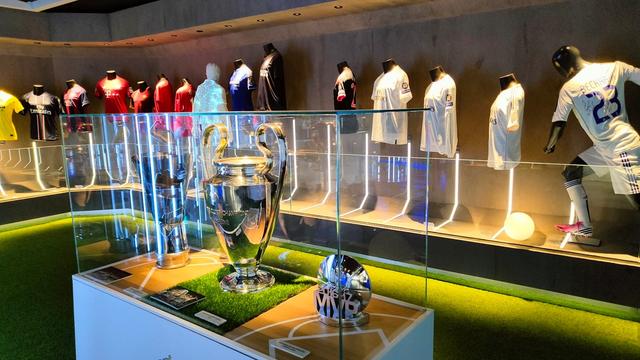
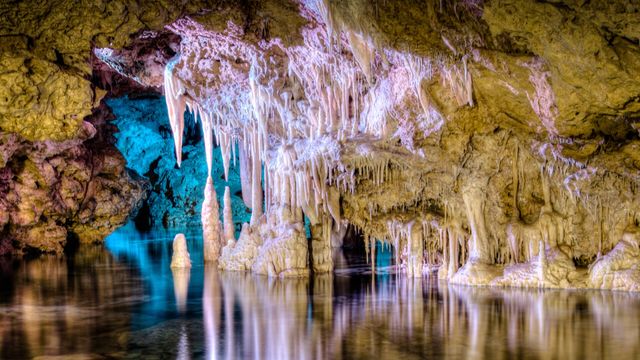
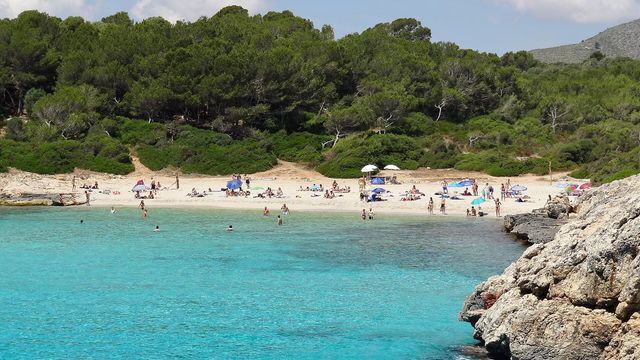
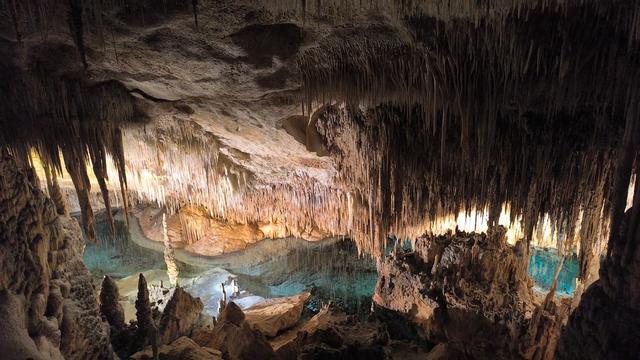
Manacor is the chief town of the Llevant, set on the flat farmland of the Pla in eastern Mallorca. Its name travels with furniture, olive wood, artificial pearls and Rafael Nadal, who was born here and opened his tennis academy in the town in 2016. The Monday morning street market is one of the busiest on the island. Beyond the town, the municipality reaches the sea at Porto Cristo, home of the Caves of Drach (Coves del Drac), and a coast of coves running south to Cala Murada.
Manacor

- Currency
- Euro (EUR, €). Credit and debit cards are widely accepted in cities and tourist areas. ATMs are abundant; most charge €2–7 per foreign card withdrawal. Some shops request ID before accepting a credit card. €500 banknotes are not accepted in most shops.
- Language
- Catalan and Spanish are both official languages of the Balearic Islands; the majority speaks Catalan fluently alongside Spanish. English is common in tourism sectors and establishments.
- Power plug
- Europlug (Type C) and Schuko (Type F) sockets; 230 V, 50 Hz
- Visa
- Schengen area: EU, EEA and Swiss nationals enter on national ID card or passport. Many non-EU nationalities have 90-day visa-free access. Non-EEA citizens staying longer than 90 days require an advance visa.
- Time zone
- Europe/Madrid (UTC+01:00 winter time, UTC+02:00 summer time from last Sunday in March to last Sunday in October). Canary Islands are one hour behind mainland Spain.
- Tap water
- Safe to drink throughout Spain. In some southern regions it has high mineral content and may taste unfamiliar; locals often drink bottled water instead. Bottled water is inexpensive and widely available.
- Tipping
- Not mandatory or customary. In restaurants: not expected for simple meals or basic establishments; 5–10% in mid-range or upscale venues if service was exceptional. Always pay cash to the server, not on card. Taxi drivers and hotel staff may appreciate small tips in upscale settings but it is not expected.
- Emergency
- 112
When to go
Low season
Nov – Mar
Mild but chilly days, and the town's biggest night on the eve of 17 January, when the demons of Sant Antoni dance through the streets and bonfires burn across the municipality.
Shoulder
Apr – Jun
Spring fair season: the Fires i Festes de Primavera run from late May into early June, open with the Cossiers dance and close with a parade of floats.
High season
Jul – Aug
Hot and sunny with around 11 hours of sun a day; the coves fill while the inland town keeps to its working rhythm, with the Saint James fair on 25 July.
Shoulder
Sep – Oct
The heat eases, the September Fair comes round, and the Fira de Teatre de Manacor usually fills the stages in September or October.
How long to stay
The town itself fills a morning: the 75-metre bell tower of Nostra Senyora dels Dolors, the baroque church and cloister of Saint Vincent Ferrer, and on Mondays the street market. Add a day for Porto Cristo and the Caves of Drach, and two or three more to work along the coves between S'Illot and Cala Murada. Few visitors stop over in the town, so treat it as a half-day from a base on the coast.
Getting around
The railway and bus station share one building, with public parking just to the south. Train T3 runs from Palma via Inca in just over an hour. Bus 401 from Palma takes about 50 minutes and carries on to Porto Cristo, S'Illot, Sa Coma and Cala Millor, another 30 minutes down the line; bus 501 is the slow road in via Llucmajor, Campos and Felanitx. Bus 411 arrives from Cala Ratjada via Capdepera, Artà and Sant Llorenç, and bus 412 from Costa dels Pins via Cala Millor and Son Servera.
Two catches. The airport bus A42 reaches Manacor non-stop in 40 minutes, but you may not ride it just for the local stretch between Manacor and Cala Bona. And the express 411e from Cala Ratjada bypasses Manacor on its way to Palma.
The roads are good for driving, and the distances suit a bicycle.
What to see
Destinations in Manacor
Frequently asked questions
When is the Manacor market?
The big street market is on Monday mornings and is one of the busiest on Mallorca. A farmers' market also sets up on Mondays outside Mercadona on Plaça de Ramon Llull, and the municipal market on Plaça de la Constitució trades on weekday mornings.How do I get from the airport to Manacor?
Bus A42 runs non-stop from the airport to Manacor in about 40 minutes and continues to Porto Cristo, S'Illot, Sa Coma and Cala Millor; it does not go into Palma. By car, head east on the MA-15.Is Manacor on the coast?
The town stands inland on the plain, but the municipality reaches the sea. Its coast runs through S'Illot, Porto Cristo, Cala Anguila, Cala Mendia, Cala Varques and on to Cala Murada, and the Caves of Drach open above the harbour at Porto Cristo.Is Manacor Rafael Nadal's home town?
Yes. Nadal was born in Manacor in 1986 and founded his tennis academy here in 2016; it trains players from promising juniors to touring professionals.What should I eat in Manacor?
Look for suspiros de Manacor, dry sweet biscuits eaten with coffee or tea, and pastís de pobre, the "poor man's cake". The town has no resort-style eating strip; the cafés and restaurants sit in the centre.