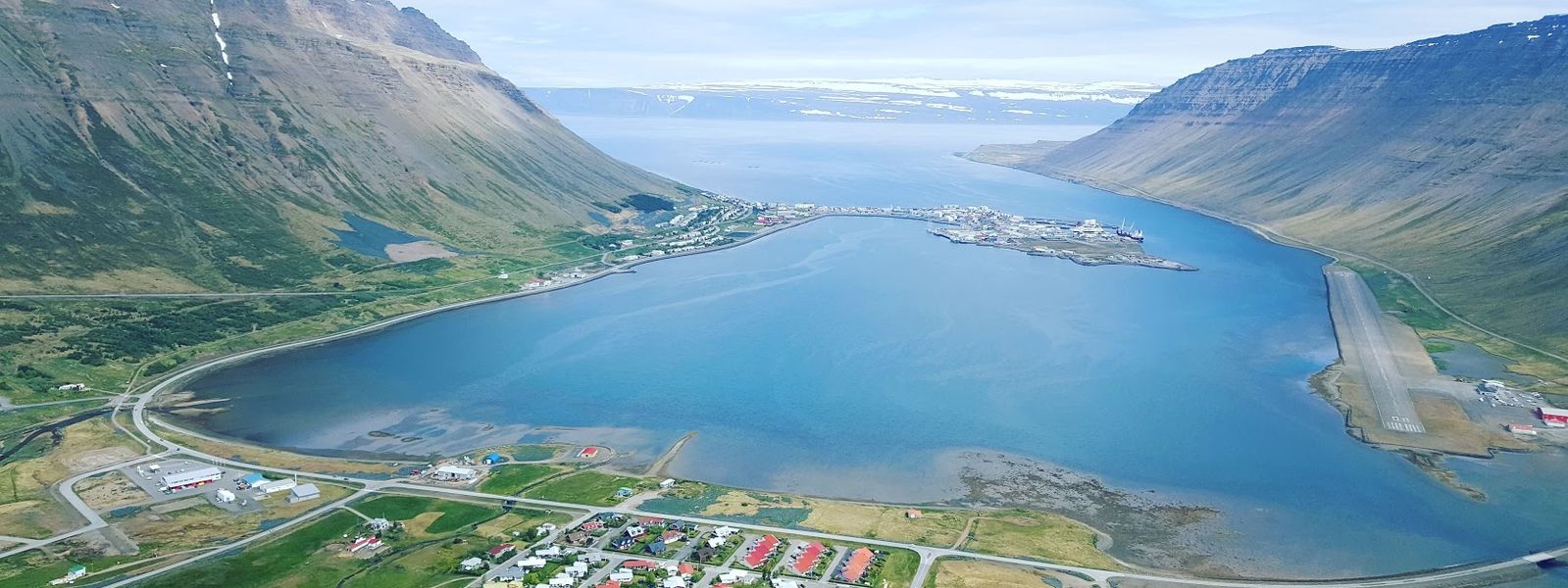
Ísafjörður is a town of about 2,600 people in the northwest of Iceland, and the largest settlement in the Westfjords. The oldest part, with the town centre, stands on a sand spit in Skutulsfjörður, a fjord opening into the larger Ísafjarðardjúp. Fishing built the town and remains its main industry, alongside a growing tourist trade. Neðstikaupstaður, the former Danish trading post, holds the oldest collection of timber-frame houses in Iceland. The town is the administrative centre of the Ísafjarðarbær municipality and the main access point for the Hornstrandir nature reserve.
Ísafjörður
- Currency
- Icelandic króna (ISK)
- Language
- Icelandic; nearly all speak English
- Power plug
- Europlug and Schuko sockets, 230 V
- Visa
- Schengen; outside the EU
- Time zone
- UTC±00:00 (Atlantic/Reykjavik)
- Tap water
- Safe; hot water smells of sulphur
- Tipping
- Not customary
- Emergency
- 112
Things to do
All tours in Ísafjörður on GetYourGuide
Paid links: booking through them supports YowJourney.
When to go
High season
Jun – Aug
Buses from Reykjavík and Akureyri run only in this window, and ferries to Hornstrandir go daily. July is the warmest month, with a mean of 9.9 °C. The short inland road from the ring road, over the moor, is open. Cruise ships call at the harbour, and the Act Alone theatre festival runs in August.
Shoulder
Sep – Oct
Buses and the Hornstrandir ferries have stopped for the year. Flights and the tunnel roads still run. At 66° north the daylight shortens fast, and clear days are rare at any time here.
Low season
Nov – Mar
The short summer road over the moor is shut, so driving in means the long eastern route through the fjords. November is the wettest month, with 120 mm of precipitation. Winters are cold and windy; flights from Reykjavík run all year.
Shoulder
Apr – May
The Aldrei fór ég suður rock festival fills the town in mid-April, and beds go early. Days lengthen quickly, but the buses and the Hornstrandir ferries have not started yet.
How long to stay
Two days cover the town itself: the timber houses of Neðstikaupstaður, the Westfjords Heritage Museum and the walk out to Hnífsdalur. Add a third or fourth day for the summer ferry to Hornstrandir, or if you come for one of the festivals. Ísafjörður also works as a base for the northern Westfjords, since the tunnels put Bolungarvík, Suðureyri and Flateyri within easy reach.
Getting around
The town centre sits on a sand spit and is small enough to cross on foot; a bike rental in town covers the rest. Everything else lies beyond walking distance, with one exception: Hnífsdalur, a village of 250 people 5 km north, reached by a paved path alongside Road 61. A 5.4 km road tunnel runs northwest to Bolungarvík, 15 km away, and a road runs east to Súðavík. The partly one-lane Vestfjarðagöng tunnel leads to Flateyri, Suðureyri and the western Westfjords. The airport is about 5 km out, on the other side of the fjord, with two Icelandair flights a day from Reykjavík; walking in takes a little over an hour on the gravelled shoulder of a lightly used road. Ferries from the harbour serve nearby settlements and run daily to Hornstrandir in summer. Buses from Reykjavík and Akureyri run only from 1 June to 31 August.
What to see


Destinations in Ísafjörður
Frequently asked questions
How do you get to Ísafjörður?
Two Icelandair flights a day come in from Reykjavík's domestic airport, landing about 5 km from town on the other side of the fjord. Buses from Reykjavík and Akureyri run from 1 June to 31 August. By car there is a year-round route up the eastern side of the peninsula on Road 61, and a shorter summer route from the ring road over a moor, which is closed in winter.Is a car needed in the town?
No. The centre is small and walkable, and there is a bike rental in town. Other settlements are too far to walk, so use the bus or a car. The exception is Hnífsdalur, 5 km north on a paved path running alongside Road 61.What is there to see in the town?
Neðstikaupstaður, the former Danish trading post, holds the oldest collection of timber-frame houses in Iceland: Krambúð of 1757, Faktorshús of 1765, and Tjöruhúsið of 1781, now a restaurant. The Westfjords Heritage Museum occupies Turnhúsið, built in 1784.Can Hornstrandir be visited from Ísafjörður?
Yes. Ísafjörður is the main access point for the Hornstrandir nature reserve, an uninhabited peninsula to the north. Ferries run there daily during summer and not at all outside it.What is the weather like?
Cold winters and cool summers: the Westfjords are the coolest part of Iceland at sea level. July is the warmest month, with a mean of 9.9 °C, and November the wettest, with 120 mm. Winds are high and clear days are few in any season, so pack for rain whatever the month.