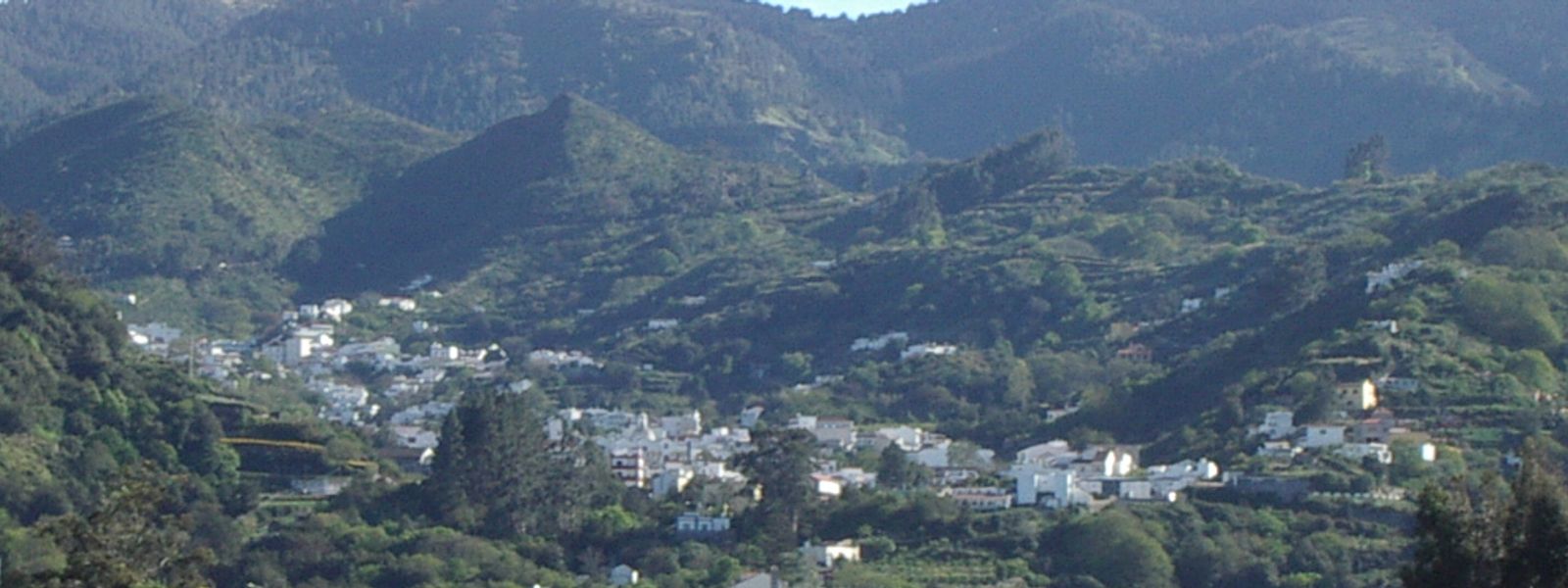
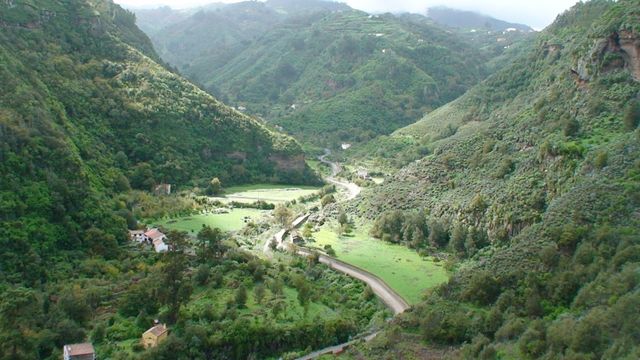
Valleseco sits at 1,000 m in north-central Gran Canaria, and the cloud often sits there with it. The name means "dry valley", yet this is one of the wettest municipalities on the island: the trade winds drop their rain here on plots of potatoes, maize and fruit. More than 80% of the land is protected, from laurel-forest ravines to a crater lagoon and Canarian pine near the summit. In the village stand an 1898 church and a mill that still grinds gofio.
Valleseco
- Currency
- Euro (EUR)
- Language
- Spanish; English, German in resorts
- Power plug
- Type C/F, 230 V
- Visa
- Schengen
- Time zone
- UTC+0 / UTC+1 (WET/WEST)
- Tap water
- Safe; mineral taste in the south
- Tipping
- Not expected; 5–10% for great service
- Emergency
- 112
Things to do
All tours in Valleseco on GetYourGuide
Paid links: booking through them supports YowJourney.
When to go
Low season
Nov – Mar
The wet months: rain and low cloud are most likely, roads can be foggy, and the laurel forest in the ravines is at its greenest.
Shoulder
Apr – Jun
The festival of San Vicente Ferrer falls in mid-May or early June, its date set by Easter, and brings the village out around the church.
High season
Jul – Oct
The driest stretch for the summit roads and walks around La Laguna, ending on the first Sunday of October with the feast of Nuestra Señora de la Encarnación and the Apple Festival.
How long to stay
One day covers Valleseco. Spend the morning in the village centre, with the church of San Vicente Ferrer, the gofio mill and the craft exhibition at the tourist office. Give the afternoon to La Laguna de Valleseco and the drive up the GC-21 towards the summit. Teror is 3 km away, so the two towns fit naturally into one trip through the north of the island.
Getting around
The GC-21 is the spine of the municipality. Downhill it runs 3 km to Teror; uphill it climbs into Las Cumbres Protected Landscape (Paisaje Protegido de Las Cumbres), where Cortijo de Calderetas is reached from the road on foot along a short track. The GC-30 branches off towards Firgas, and La Laguna de Valleseco is reached from the junction of the two roads, about 2.5 km from the centre.
The caveat is the weather. At 1,000 m the town is often wrapped in cloud, and the trade winds bring rain, so expect fog and wet roads on the way up and drive accordingly.
What to see
Destinations in Valleseco
Frequently asked questions
Why is Valleseco called "dry valley" when it is so wet?
The name means "dry valley" in Spanish, but at 1,000 m the town catches the trade winds, which leave their rain and cloud here. It is one of the wettest municipalities on Gran Canaria, and that water is what keeps the ravines green and the potato, maize and fruit plots productive.What is there to see in the village itself?
The church of San Vicente Ferrer, built in 1898 and the oldest building in Valleseco, with a Mudéjar-style pulpit and coffered ceiling, a reliquary holding part of a bone from the saint's arm, and a restored 18th-century German organ that came from the church of El Pino in Teror. Nearby, a mill more than 80 years old grinds toasted maize into gofio between two turning stones, and the tourist office houses a permanent exhibition of local crafts: fabrics, musical instruments, wooden furniture, traditional costumes and openwork.How do I get to La Laguna de Valleseco?
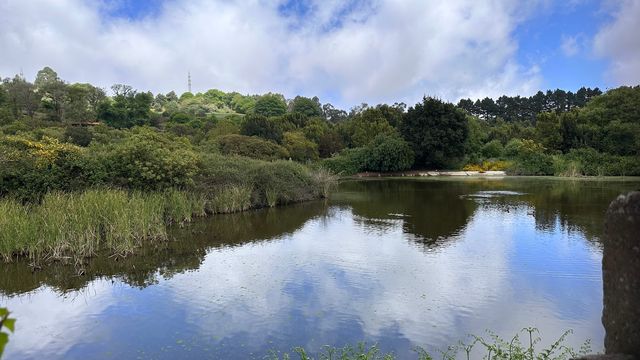
La Laguna lies about 2.5 km from the town centre, reached from the crossroads of the GC-21 to Teror and the GC-30 to Firgas. It is a volcanic crater lined with laurel forest (laurisilva) and holding a small lagoon, inside Doramas Rural Park (Parque Rural de Doramas). Birds come down to drink, from canaries to migrating herons.When are the main festivals?
San Vicente Ferrer is honoured in mid-May or early June, depending on when Easter falls. On the first Sunday of October the town celebrates Nuestra Señora de la Encarnación together with the Apple Festival, and on the day before, people arrive in traditional costume.What should I eat in Valleseco?
The cooking is built on meat: pork in mojo sauce, kid goat in sauce, marinated pork and rabbit, beef stew and roast leg of pork. Look also for vegetable stew with wild jaramagos, watercress stew, and coriander soup served with kneaded gofio and goat cheese.