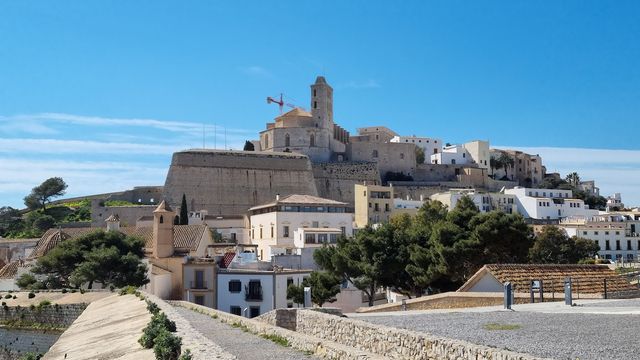
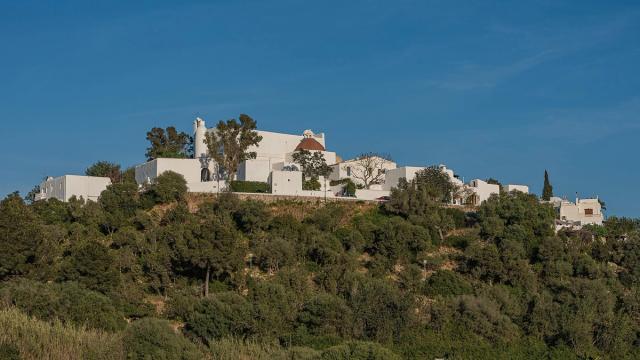
Dalt Vila, the "upper town", is the walled upper part of the historic centre of Ibiza Town, declared a UNESCO World Heritage Site in December 1999. Its walls were built in the 16th century under Charles V, to Italian designs, as a defence against Turkish attacks, and took forty years to complete. They form an irregular heptagon with a bastion at each corner, enclosing houses, churches, the town hall and the cathedral of Santa Maria at the summit.
Dalt Vila

Walled hilltop old town of Ibiza, ringed by seven 16th-century bastions and crowned by the cathedral of Santa Maria.
- Entrance
- Free; there is no ticket to walk the walled town.
- Accessibility
- Narrow cobbled lanes that climb uphill, with stairways in places.
- Parking
- Free car park about 190 m away in a straight line; a second car park about 270 m away.
- Difficulty
- An uphill walk on cobbles and stairways from the gates to the top of the hill.
- Transport
- Nearest public transport stop about 270 m away in a straight line.
- Advance booking
- Not needed to walk the old town.
- Hours
- Open at all hours.
- Address
- Plaça dels Desemparats, 07800 Eivissa, Illes Balears, Spain
What makes it special
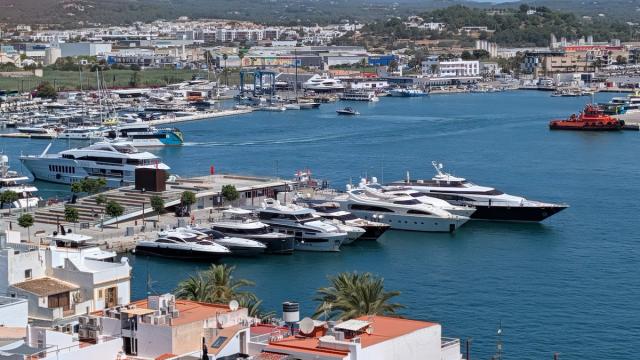
From the Plaça de la Universitat the whole of Ibiza Town falls away below you to the harbour and the open sea. The same view opens again through the gaps in the bastions and from their esplanades, and the highest point of all is the Santa Tecla bastion (Baluard de Santa Tecla).
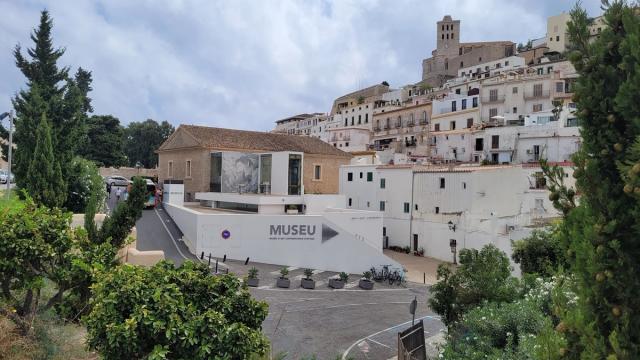
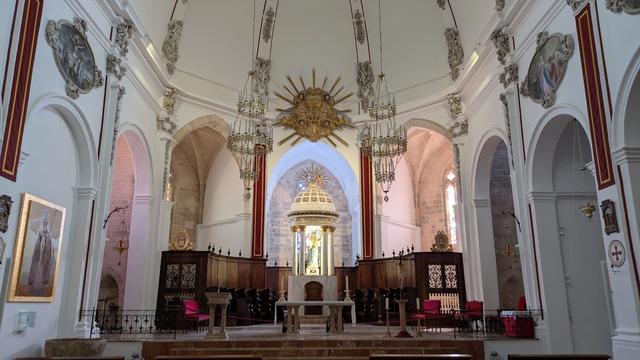
The way up is half the reason to come. Narrow cobbled lanes, small stairways and balconies full of flowers climb between houses where people still live, about seventy thousand square metres of town inside the walls, roughly ten football pitches. At the top stands Santa Maria, now the cathedral, which keeps its 14th-century Gothic apse and tower and faces north over the port. The castle beside it faces south, across the water towards Formentera.
By day the lanes are quiet. In the evening warm lights come on, the restaurants fill and music carries through the alleys.
Good to know
- The lanes are cobbled, uphill and broken by stairways: wear shoes with grip.
- Cars still drive through the narrow lanes, so step aside when one comes up behind you.
- Free public toilets stand about 120 m away and a drinking-water tap about 90 m away.
- The La Cúria tourist office (Oficina de Turisme La Cúria) is about 130 m away.
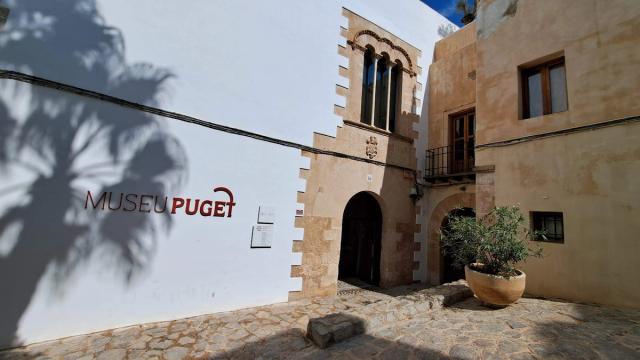
- Inside the walls are churches, museums, galleries, cafés, restaurants and shops as well as homes, so there is more to see than the walls alone.
Getting there
The main way in is the Portal de ses Taules, reached from the Mercat Vell: a gateway flanked by two Roman statues and protected by a drawbridge. The other entrances are the Portal Nou, the Portella de Sella and the Passadís des Soto, the one entrance that is a passage instead of a gate.
Car parks lie about 190 m and 270 m away in a straight line, and the nearest public transport stop about 270 m away. Beyond the gates everything is on foot. The lanes are narrow and climb steadily on cobbles and stairways towards the cathedral and the Santa Tecla bastion, so take the climb at your own pace.
Best time to visit
Best: late afternoon into the evening. Avoid: the middle of a summer day.
The climb runs uphill on stone with the sun overhead at midday, while the evening brings sunset views over the town and the sea from the top and the lanes at their liveliest.
Sun & daylight
Nearby Places
Similar Places
Featured in our guides
Dalt Vila on the map
Get directions
Your whole travel map in one place
Get inspired by new places around the world and find the ones worth the journey
Frequently asked questions
Do you need a ticket to enter Dalt Vila?
No. Dalt Vila is a walled neighbourhood open at all hours, and there is no ticket to walk its streets.Where are the best views in Dalt Vila?
From the Plaça de la Universitat, through the openings in the bastions and from their esplanades. The Santa Tecla bastion is the highest point of the town, looking over Ibiza Town, the harbour and the sea.Which is the main gate into Dalt Vila?
The Portal de ses Taules, reached from the Mercat Vell. It is flanked by two Roman statues and protected by a drawbridge. The Portal Nou, the Portella de Sella and the Passadís des Soto also lead inside.When was Dalt Vila made a World Heritage Site?
In December 1999, when the historic centre of Ibiza Town was declared a UNESCO World Heritage Site.When were the walls of Dalt Vila built?
In the 16th century, under Charles V, to protect the town against Turkish attacks. The work drew on Italian military engineering and took forty years.