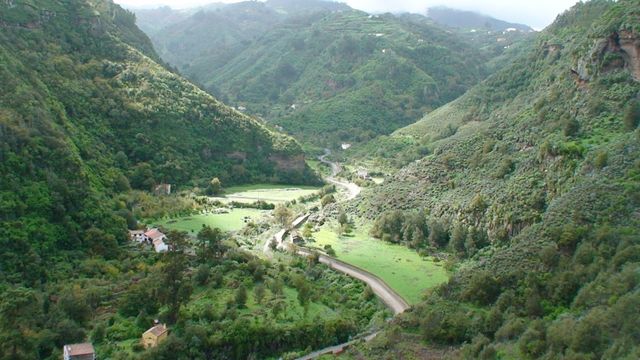
Fataga Ravine is a ravine and watercourse in the municipality of San Bartolomé de Tirajana on Gran Canaria, in Spain's Canary Islands. Brown rock strewn with green gives it the name "valley of the thousand palms". The village of Fataga stands in the ravine, and the Arteara necropolis lies at Arteara, on the way up from Maspalomas. Many of the battles in the final stages of the Spanish conquest of the island were fought in and around it.
Fataga Ravine
Local name: Barranco de Fataga
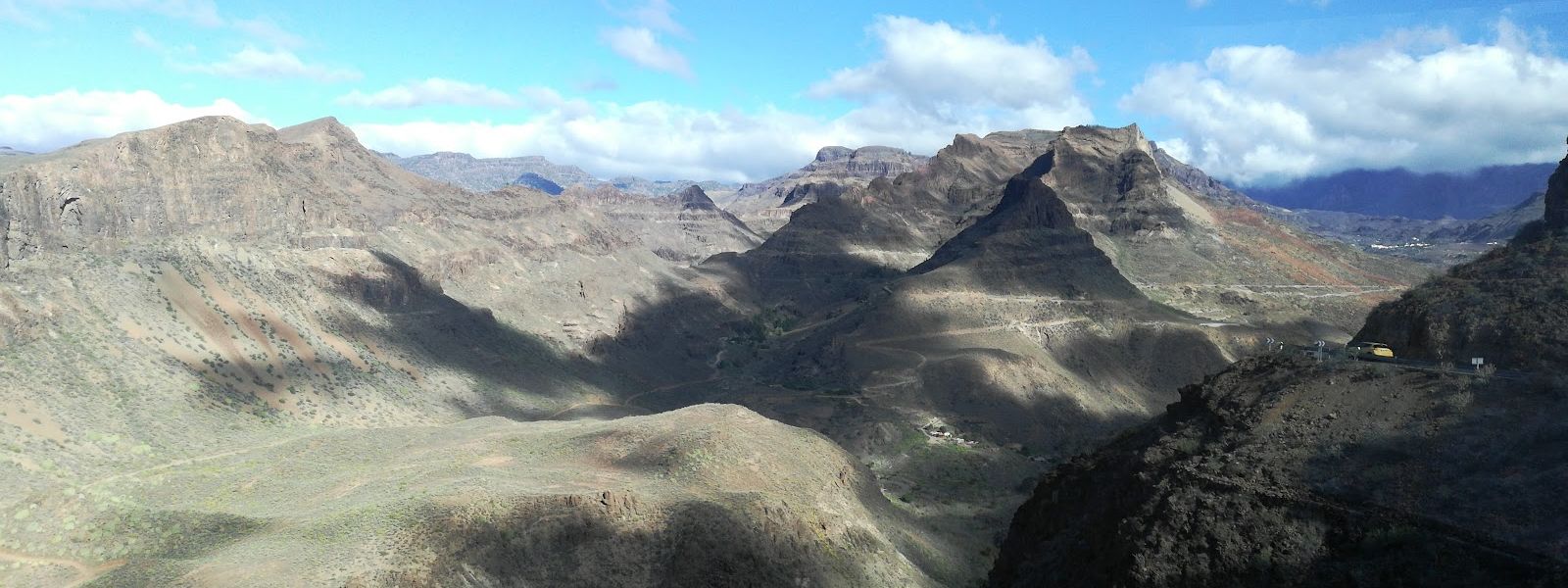
Ravine of treeless brown hills and palm groves, with the stone-lane village of Fataga inside it
- Entrance
- Free: the ravine is open countryside with no ticket.
- Parking
- Two free car parks, one tarmac and one gravel, about 1.5 km away in a straight line.
- Transport
- Bus stops Mirador (86004) and Mirador de las Yeguas (86011), about 1.5 km away in a straight line.
- Advance booking
- Not needed.
- Hours
- Open at any time.
- Address
- Barranco de Fataga, Las Palmas, Spain
What makes it special
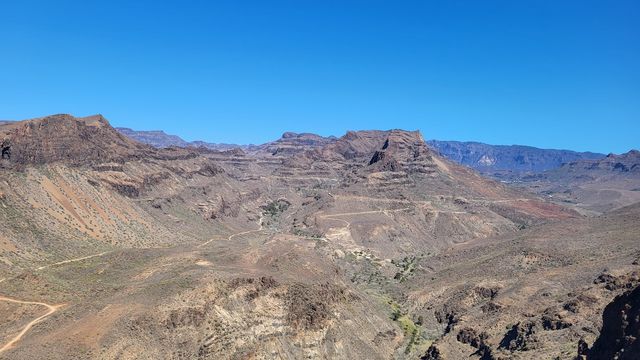
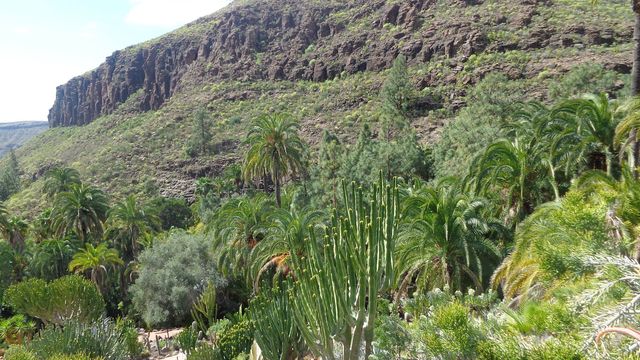
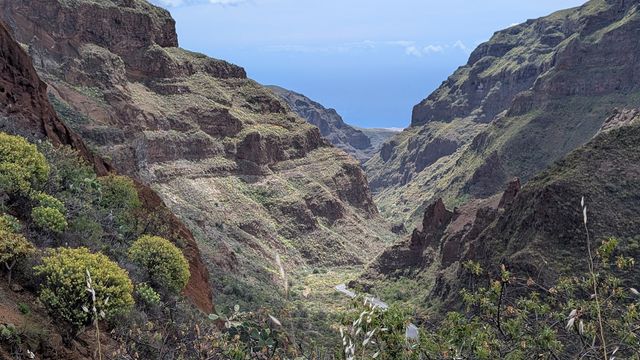
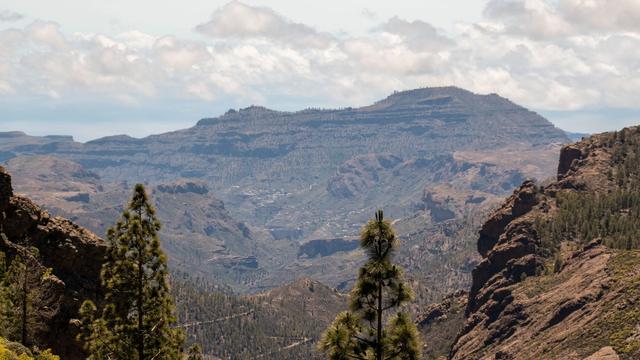
Brown, treeless hills rise on both sides, and down in the bed of the ravine a green line of palms runs along the bottom. That strip of green is the reason for its old name, the valley of the thousand palms. The bare slopes look like another planet.
Inside the ravine sits Fataga, a village of stone-paved lanes and old Canarian houses around the church of San José, built in 1880. It keeps a watermill, small craft shops near the church and one of the oldest bakeries on the island.
The ground carries older history too. Many battles in the final stages of the conquest of the Canaries were fought in and around the ravine, and the Arteara necropolis (Necrópolis de Arteara) lies at Arteara, on the way up from Maspalomas.
Good to know
- There are no toilets and no drinking water close by. Fill your bottles before you set out.
- The hills are bare and treeless, so there is no shade once the sun is high. Bring a hat.
- For food, head to Fataga village, which has restaurants and one of the oldest bakeries on the island.
- The Arteara necropolis lies at Arteara, on the way up from Maspalomas, and pairs well with the ravine on the same day.
Getting there
The ravine is open country with no single entrance. Two car parks, one tarmac and one gravel, lie about 1.5 km away in a straight line, and the bus stops Mirador and Mirador de las Yeguas sit at a similar distance. A walkers' guidepost stands about 770 m away. The village of Fataga lies within the ravine itself and makes the obvious place to stop and look around.
Best time to visit
Best: early morning or late afternoon, when the low sun throws the ridges into relief and the slopes are cooler.
Avoid: the middle of a summer day.
The hills are bare, so there is no shade once the sun is high, and there is no drinking water close by.
Sun & daylight
Nearby Places
Similar Places
Featured in our guides
Fataga Ravine on the map
The ravine walls shed loose rock, and the bare slopes give no shade. Keep away from the foot of the cliffs and carry enough water, since there is none to be had nearby.
Get directions

Your whole travel map in one place
Get inspired by new places around the world and find the ones worth the journey
Frequently asked questions
Can you reach Fataga Ravine by bus?
The nearest bus stops, Mirador and Mirador de las Yeguas, are about 1.5 km away in a straight line.Why is Fataga Ravine called the valley of the thousand palms?
The slopes are brown rock, and palms grow in a green strip through it. The name comes from that contrast of bare hills and palm groves.Where can you eat or find toilets?
There are no public toilets or drinking water close by. Fataga village, inside the ravine, has restaurants and one of the oldest bakeries on the island.What is there to see besides the scenery?
Fataga village has stone-paved lanes, old Canarian houses, the church of San José from 1880 and a watermill. The Arteara necropolis lies at Arteara, on the way up from Maspalomas.