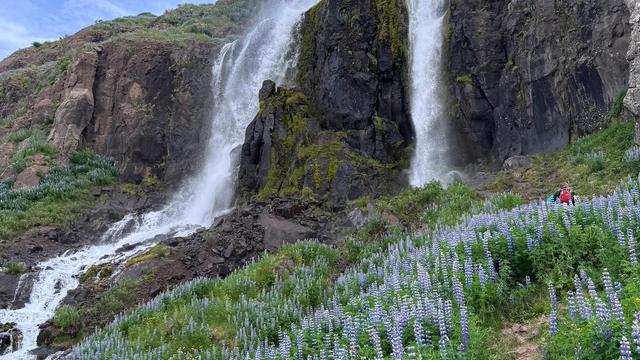
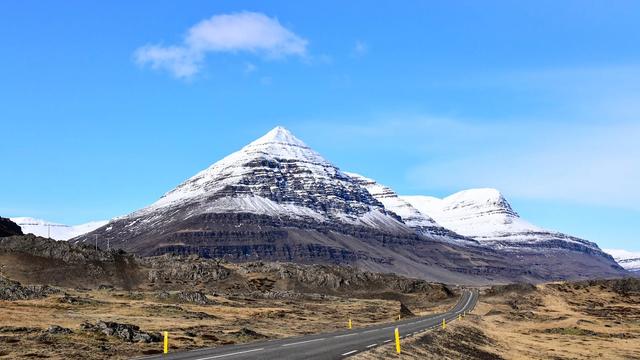
Páskahellir is a cave on the coast at Neskaupstaður, in East Iceland. It is reached by a footpath along the cliff tops, about 20 minutes each way, ending in a steep flight of stairs down to the shore. The cave is a hollow worn into old lava by the surf rather than a passage into the rock, and the last stretch to it is over boulders. The walk gives views of the mountains and the open sea, and wildflowers line the path in summer.
Páskahellir (Easter Cave)
Local name: Páskahellir
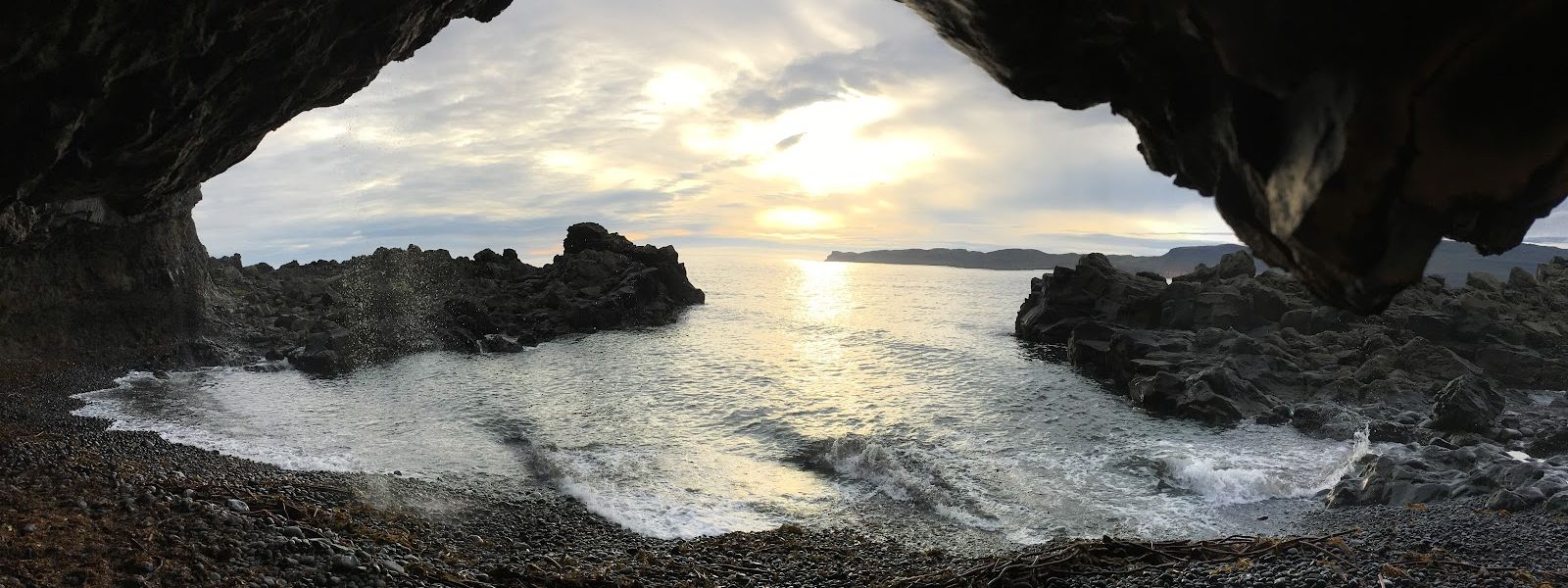
The name means Easter Cave: by old local belief, the rising sun could be seen dancing over the sea from here on Easter morning.
- Entrance
- Free
- Accessibility
- Not wheelchair accessible: the approach ends in a steep flight of stairs, and the last stretch is over boulders.
- Parking
- Free at the reserve car park
- Difficulty
- About 20 minutes on foot each way, with one large rock to climb over halfway and steep stairs down to the shore at the end.
- Transport
- Self-drive to Neskaupstaður, then the reserve road
- Hours
- Open 24 hours, every day.
- Address
- 741 Neskaupstaður
What makes it special
The path runs along the top of the sea cliffs, through wildflowers, with mountains inland and open water below. About halfway, a large rock sits in the way and has to be climbed over. At the end, steep stairs drop to the shore.
What waits there is not a passage into the rock. The sea has worn a hollow under the cliff, and reaching the back of it means climbing over boulders. Against Iceland's larger caves it is a modest thing. The cliffs are the more interesting part: old lava, cut back by the surf, with the impressions of tree trunks left in the stone.
Good to know
- Steep stairs at the end — the drop to the shore is by a steep flight of steps. They are solid, but this is the hard part of the visit.
- A rock in the path — about halfway along, a large rock sits in the way and has to be climbed over.
- Not a cave to walk into — it is a hollow under a cliff, and getting to the back of it means climbing over rocks.
- Footwear matters — the last stretch is over boulders under the cliff, with no made surface.
Getting there
The last part is on foot. A path follows the coastline cliffs at Neskaupstaður, about 20 minutes each way. Halfway along, a large rock has to be climbed over. At the far end a steep flight of stairs drops to the shore, and the final stretch to the cave is over boulders under the cliff. Nothing drives down to the cave itself.
Best time to visit
Better: summer. Wildflowers line the cliff path, and in midsummer it stays light almost all night, so there is no rush to be back.
Avoid: frozen conditions. The descent is a steep flight of stairs and the last stretch is over bare rock, and neither is worth doing on ice.
Things to do nearby
All tours in East Iceland on GetYourGuide
Paid links: booking through them supports YowJourney.
Sun & daylight
Nearby Places


Similar Places

Páskahellir (Easter Cave) on the map
The path follows the edge of sea cliffs, and the way down to the shore is a steep flight of stairs. Take the steps one at a time and keep children away from the edge.
Get directions

Your whole travel map in one place
Get inspired by new places around the world and find the ones worth the journey
Frequently asked questions
Is Páskahellir an actual cave?
It is a hollow the sea has cut under a cliff, not a passage you walk into. Reaching the back of it means climbing over rocks. Anyone coming for a cave in the usual sense should adjust their expectations.How long does the walk take?
About 20 minutes each way along the coast, plus time spent at the shore. The two obstacles are a large rock about halfway and the steep stairs at the end.What is there to see apart from the cave?
The coastline cliffs, wildflowers along the path and views of the mountains and the open sea. The cliff rock is old lava, and it holds the impressions of tree trunks the flow once buried.Can children do the walk?
Yes, for children who can manage a steep flight of stairs and climbing over a large rock. The path runs along the cliff top, so keep them close on the way out.