The Torre del Oro is a dodecagonal military watchtower on the Guadalquivir in the old town of Seville. The Almohad governor Abu l-Ulà ordered it built in 1220–1221 to control river access to the city; it anchored a chain across the river and was joined by a wall to the Torre de la Plata. Its three levels date from three periods, the last a cylindrical top added in 1760 after the 1755 Lisbon earthquake. A prison in the Middle Ages, it now houses a naval museum.
Torre del Oro

Twelve-sided Almohad watchtower from 1220 on the Guadalquivir, with a naval museum inside and views from the top.
- Entrance
- Entry by voluntary donation of any amount; donations are taken by card only.
- Accessibility
- The visit involves a lot of stairs, including spiral staircases, with around 100 steps to the top; hard going for anyone with limited mobility. No wheelchair-accessible parking.
- Parking
- Two car parks about 130 m and 205 m away in a straight line; the one at 205 m is free, open to the public and asphalted. No wheelchair-accessible parking.
- Difficulty
- No approach to speak of: the tower stands on the riverside promenade, a few dozen metres from the nearest stops. Inside, the climb to the top is around 100 steps, much of it on spiral stairs.
- Transport
- Stops Torre de Oro, about 30 m away, and Paseo Colón (Torre del Oro), about 60 m away.
- Hours
- Monday to Friday 9:30–19:00; Saturday and Sunday 10:30–19:00.
- Address
- Torre del Oro, P.º de Cristóbal Colón, s/n, Casco Antiguo, 41001 Sevilla, Spain
What makes it special
From the top, the Guadalquivir opens out below: the Triana bridge, the palm-lined promenade and the river-cruise boats at the embarkation point beside the tower. The climb passes through three periods stacked one on another. The twelve-sided base is Almohad work from 1220. Peter of Castile added the second level, also twelve-sided, in the 14th century, and the round top went on in 1760, after the 1755 Lisbon earthquake.
The tower once held one end of a chain that could close the river; the Castilian fleet under Ramón de Bonifaz broke through it in 1248. After the earthquake, a plan to pull it down and widen the road failed when the people of Seville appealed to the king.
Inside, the naval museum runs through Spanish naval history in order, from the Vikings to the modern navy, with ship models, old navigational instruments, nautical charts and engravings tying Seville to its river and the sea.
Good to know
- The climb to the top is around 100 steps, much of it on spiral stairs, and hard going for anyone with limited mobility.
- Allow about an hour for the museum and the view from the top.
- The audio guide is online and runs on your own smartphone, so bring headphones.
- Free public toilets are about 360 m away in a straight line, and drinking water about 265 m.
Getting there
The tower stands on the riverside promenade of Paseo de Cristóbal Colón, a couple of streets from the bullring and right beside the embarkation point for the river cruises. Two public transport stops sit almost at its foot: Torre de Oro about 30 m away and Paseo Colón (Torre del Oro) about 60 m. Drivers have two car parks about 130 m and 205 m away in a straight line. The promenade is lined with palms and cafés, and a tourist information office stands about 220 m from the tower.
Best time to visit
Best: weekday mornings, when the doors open earlier than at weekends, and late afternoon for photographs of the tower from the promenade. Avoid: the climb at midday in high summer.
The tower takes its name from the golden shine its walls cast on the river, and low sun brings that colour out; in summer the doors close well before sunset, so the evening glow is one to watch from outside, while the top of the tower offers no shelter from the midday heat of a Seville summer.
Things to do nearby
All tours in Seville on GetYourGuide
Paid links: booking through them supports YowJourney.
Sun & daylight
Nearby Places
Similar Places
Torre del Oro on the map
Get directions
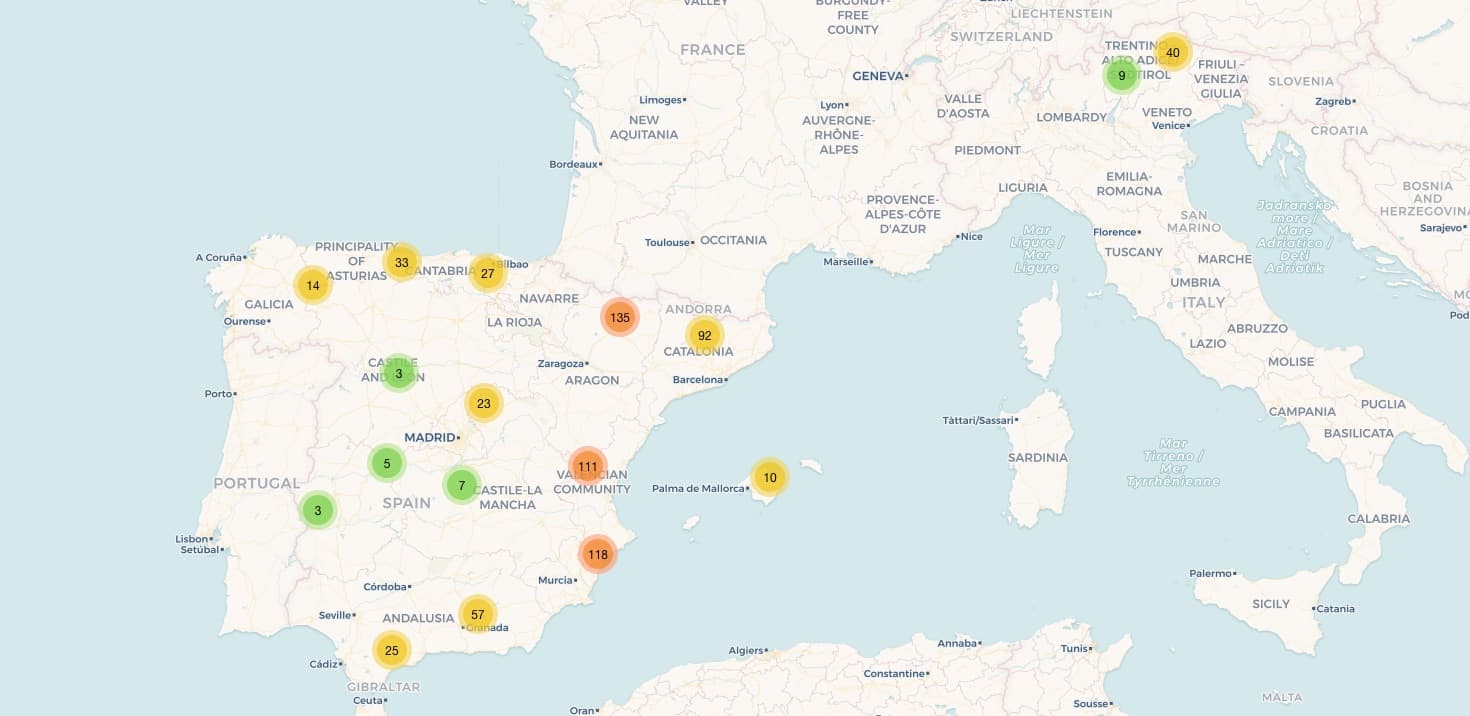
Your whole travel map in one place
Get inspired by new places around the world and find the ones worth the journey
Frequently asked questions
How long does a visit to the Torre del Oro take?
About an hour covers the naval museum and the view from the top.How many steps are there to the top?
Around 100, much of the way on spiral stairs. The climb is hard going for anyone with limited mobility.What is inside the tower?
A naval museum that runs through Spanish naval history from the Vikings to the modern navy, with ship models, old navigational instruments, nautical charts, engravings and historical documents. The audio guide is online and plays on your smartphone.Why is it called the Tower of Gold?
The usual explanation is the golden shine its building materials, a mixture of mortar, lime and pressed straw, cast on the river. Another theory ties the name to the gold and treasure that passed through Seville from the Americas.