Fuerteventura in winter: weather, sea and what to do
9 min read7 destinations
Canary Islands · Spain
Fuerteventura works well in winter. From November to March daytime highs are 21–24 °C and it rarely rains: about 81 mm falls over the five months, and December is the wettest. The catch is the sea. Atlantic swell builds on the north and west coasts, so you swim on the sheltered south-east coast and in the lagoons near El Cotillo, and in the west you watch the waves or learn to ride them. Here is the weather month by month, where to swim and what to do inland.
In short
- Air: 21–24 °C by day and 15–18 °C at night, coolest in January and February.
- Sea: about 18–22 °C, warmest in November.
- Rain: what little rain there is falls mostly in winter, and December is the wettest month.
- Waves: big swell on the north and west coasts, calm water on the south-east coast and in the El Cotillo lagoons.
- Crowds: winter is high season. Corralejo fills with northern Europeans, and Caleta de Fuste, Morro Jable, Costa Calma and Las Playitas are at their busiest.
- Closed: the climb up Caldera de Gairía, from February to July.
Weather: November is still warm, January the coolest
These are AEMET's 1981–2010 average highs and lows for the airport on the east coast, with the sea temperature alongside:
- November: 24 / 18 °C, sea about 22 °C.
- December: 22 / 16 °C, the wettest month (26 mm) and the one with the least sun; sea about 20 °C.
- January: 21 / 15 °C, sea about 19 °C.
- February: 21 / 15 °C, sea about 18 °C.
- March: 22 / 16 °C, the sunniest of the five months; sea about 18 °C.
November is the warm end of the season, with the sea still at its warmest. By February and March the water has cooled by three to four degrees, even as the days grow sunnier. These figures come from a single station, so they don't show whether the north and south differ.
Where to swim in winter: the south-east and the El Cotillo lagoons
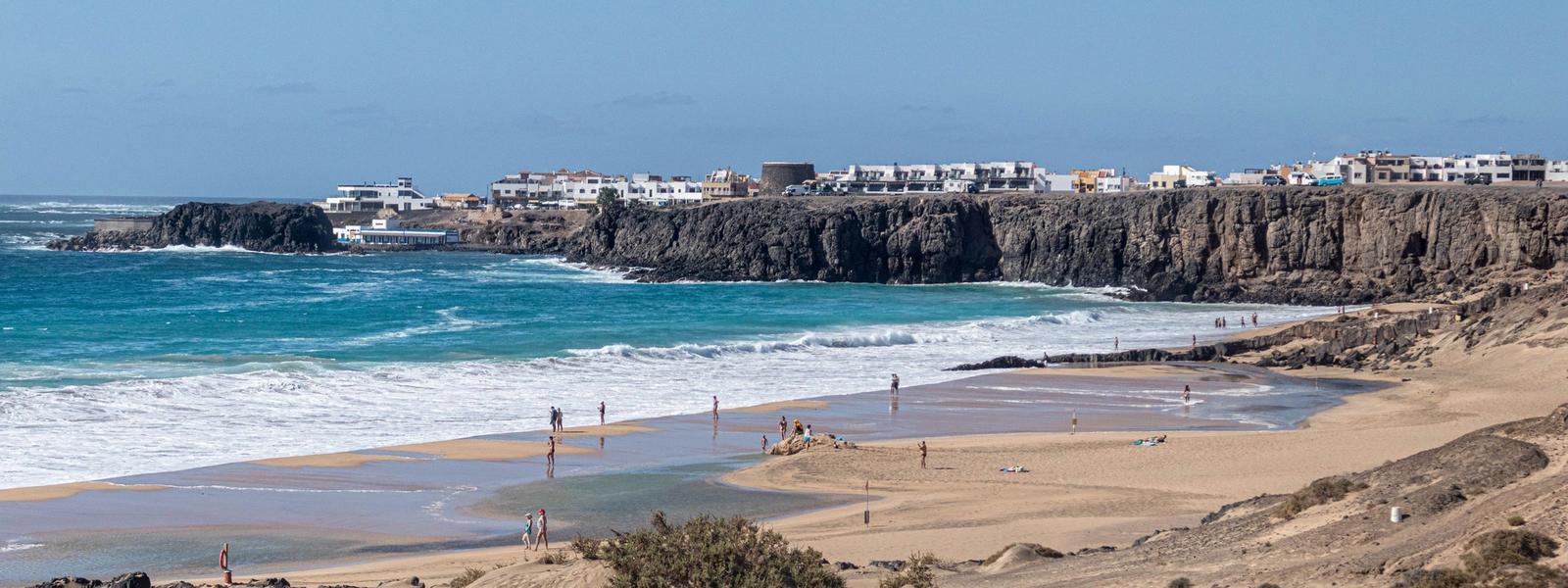
On the west coast around El Cotillo the winter surf is strong, and on the north and west shores you should never turn your back on the sea. You'll find calmer water off the sheltered south-east beaches of Sotavento, between Costa Calma and Morro Jable, and at the lagoon beaches just north of El Cotillo. At Costa Calma the sea is usually calm and clear, and lifeguards are on duty by day; swim only when the green flag is flying.
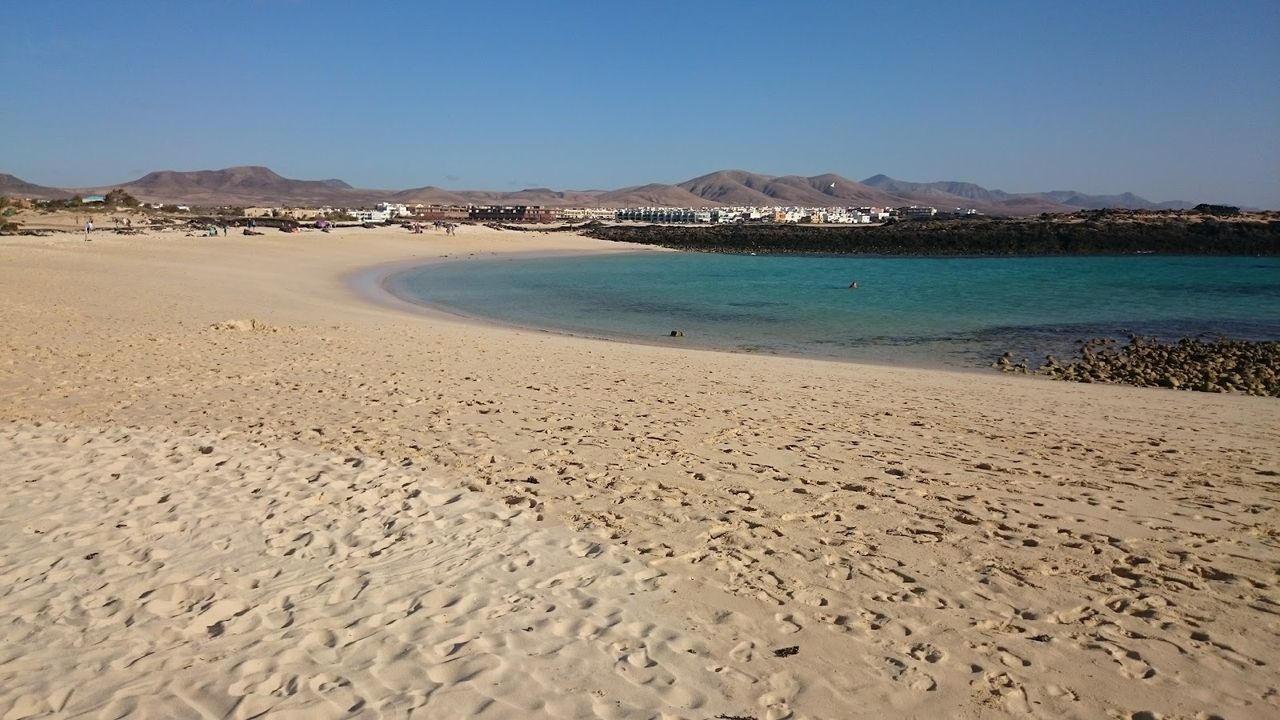
La Concha Beach (El Cotillo)
A reef and rocks break the Atlantic swell, so the water inside the bay rarely has big waves. The beach is lifeguarded. Stay inside the rocks: the open sea beyond them is rough. On some high tides a lagoon fills at the back of the beach, so check a tide table if you are hoping to find it full. Water shoes help on the sharp reef.
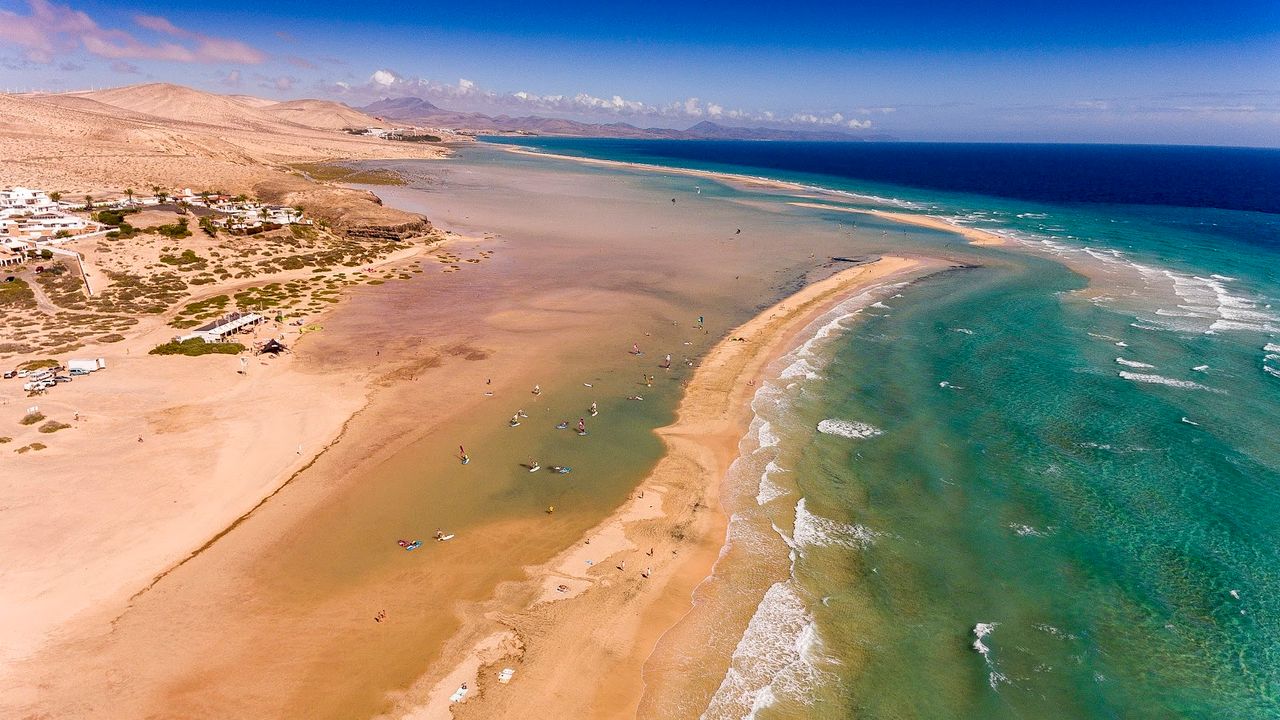
Sotavento Beach
The water is shallow, and children chase small fish around their ankles, but the beach gets very windy: bring a windproof layer and expect blowing sand. The beaches here ring a tidal lagoon, which the sea floods near high tide, and on a windy day the kites come out over it. The incoming tide can cut off anyone crossing the lagoon, so cross only on a falling tide.
At Los Lagos, north of El Cotillo, the coves stay calm, but the wind blows across the sand and can feel cold when you come out of the water, so bring a layer.
Waves on the north and west coasts: watch them or learn to surf
The winter Atlantic swell is what makes Fuerteventura a surfing island at this time of year.
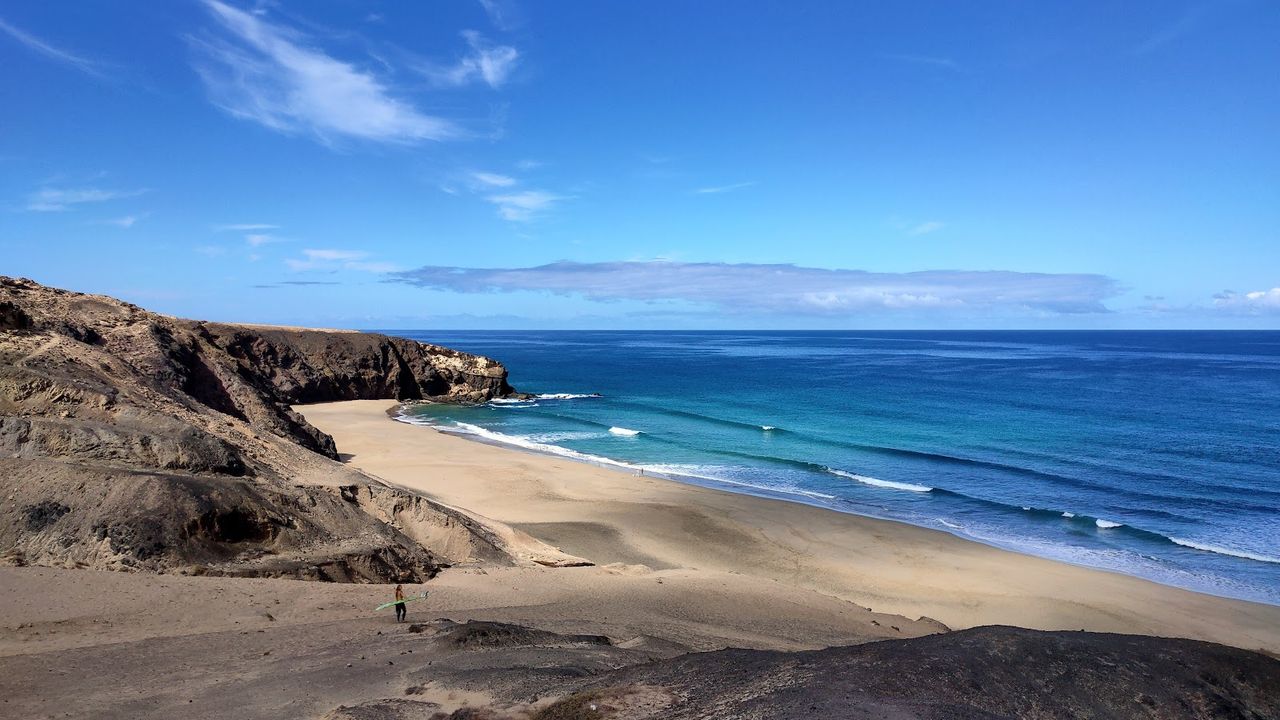
Viejo Rey Beach
The waves here run big, especially in winter, and several surf outfits give lessons. This is not a beach for swimming. Towards evening the small clifftop car park becomes a viewpoint, with the sun going down into the Atlantic. It's about a 15-minute walk down to the sand, partly on steps, and uphill on the way back.
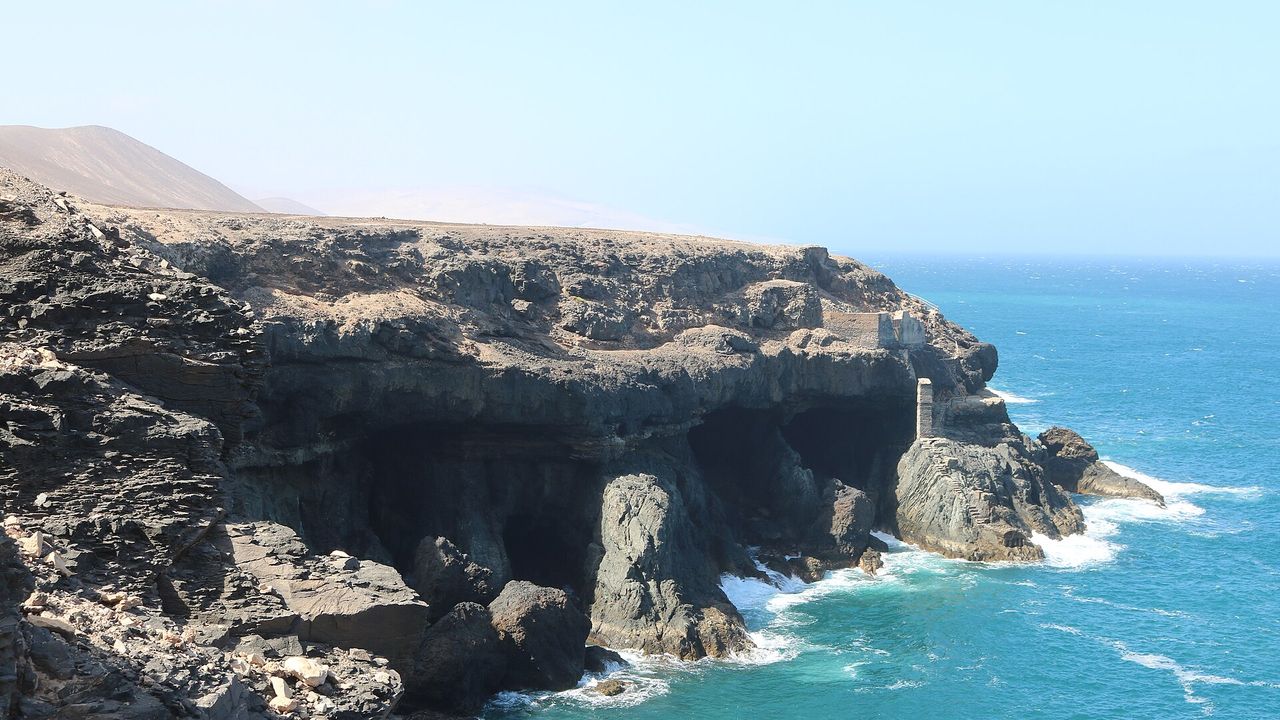
Ajuy Caves
Winter storms carved these caves, and in a heavy sea, waves wash over the rocks around them, so give the caves a miss on a stormy day. Come on a calm afternoon, when the low sun lights the west-facing cliffs. Bring a torch and closed-toe shoes with good grip. Swimming isn't allowed at the black-sand beach where the path to the caves begins.
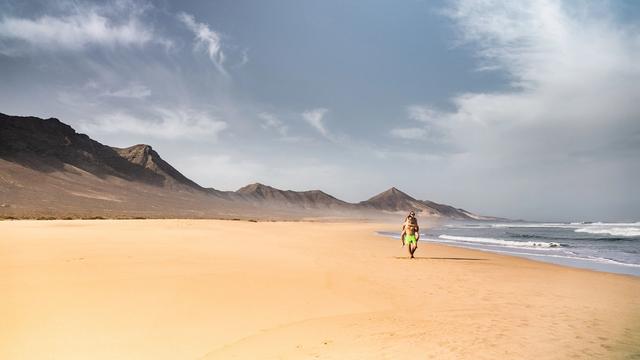
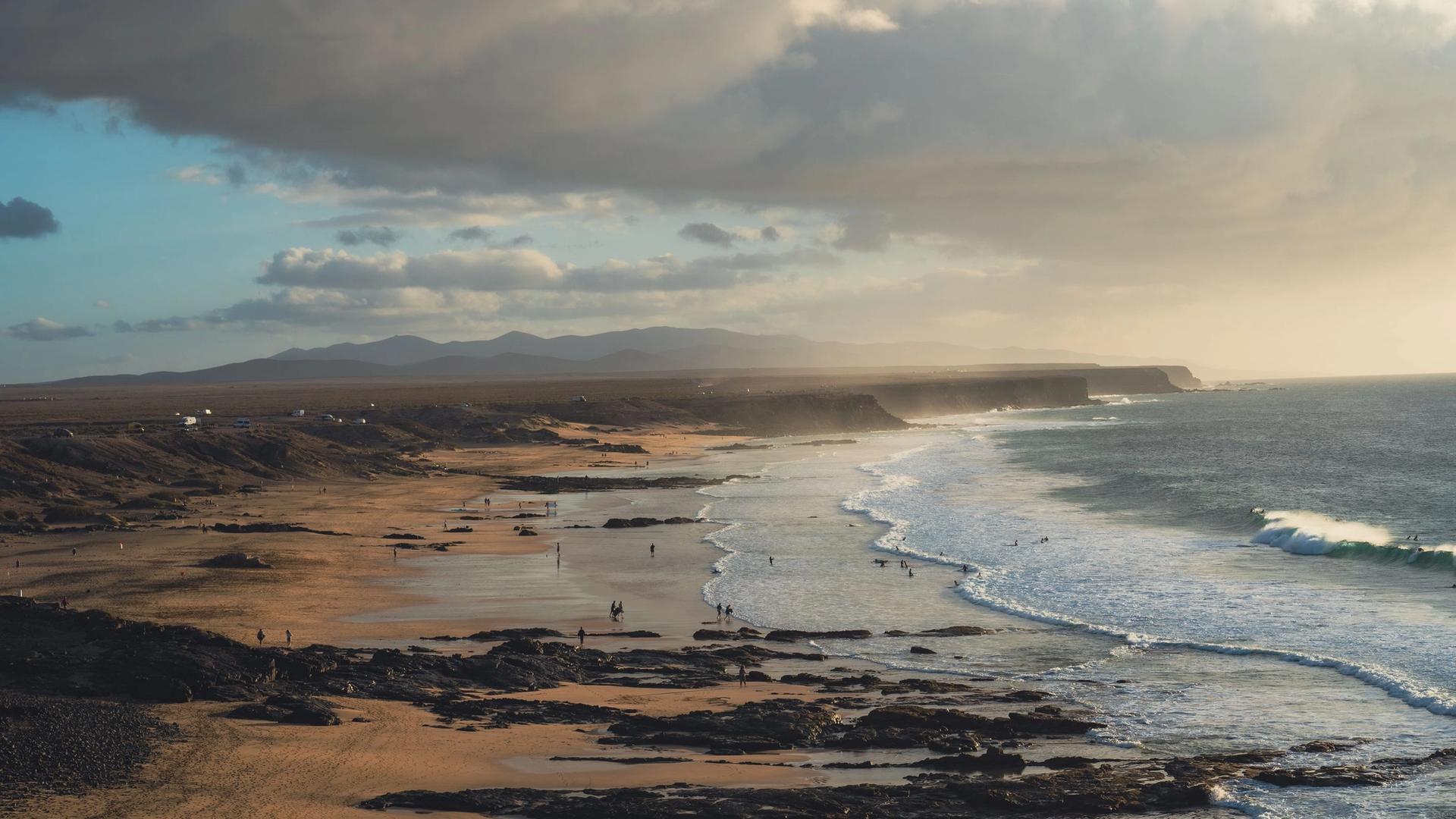
In El Cotillo, Castillo Beach is open to the swell and busy with surfers and kiters, so swim only when the sea is calm, and well away from them. At Puertito de los Molinos, waves can break over the cliff on a rough, windy day; watch from a distance. Further south, on the windward side of the Jandía peninsula, Cofete is only good for a swim on a calm day; when the wind is up, expect blowing sand and heavy surf.
Things to do in Fuerteventura
Paid links: booking through them supports YowJourney.
Inland: walks and museums for a windy day
Autumn to spring is the walking season here: the hills give almost no shade, and the cooler months make for easier going on the slopes.
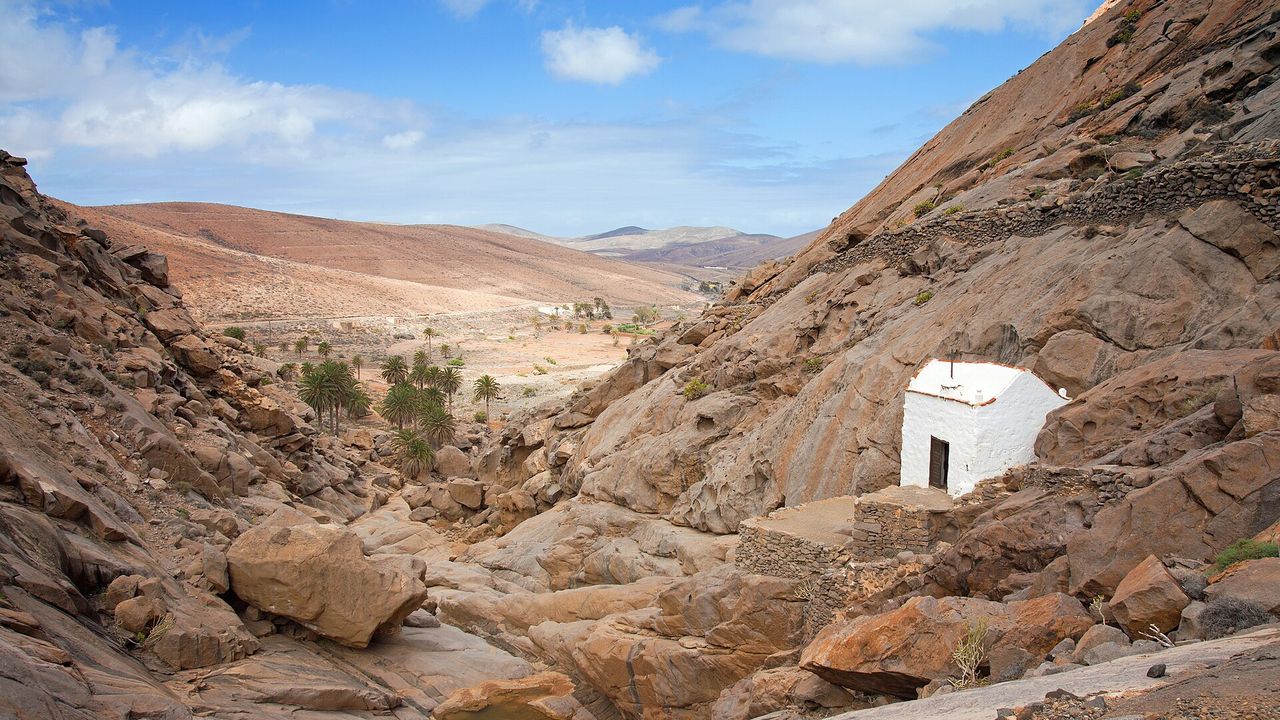
Las Penitas Ravine
From Vega de Río Palmas the path runs along a green valley floor to an old dam, then turns rocky and steep through the gorge, past the chapel of the island's patron saint, Our Lady of La Peña, to the Arco de las Peñitas: about 6 km there and back. Start early in the morning, and carry water, since there is none on the way.
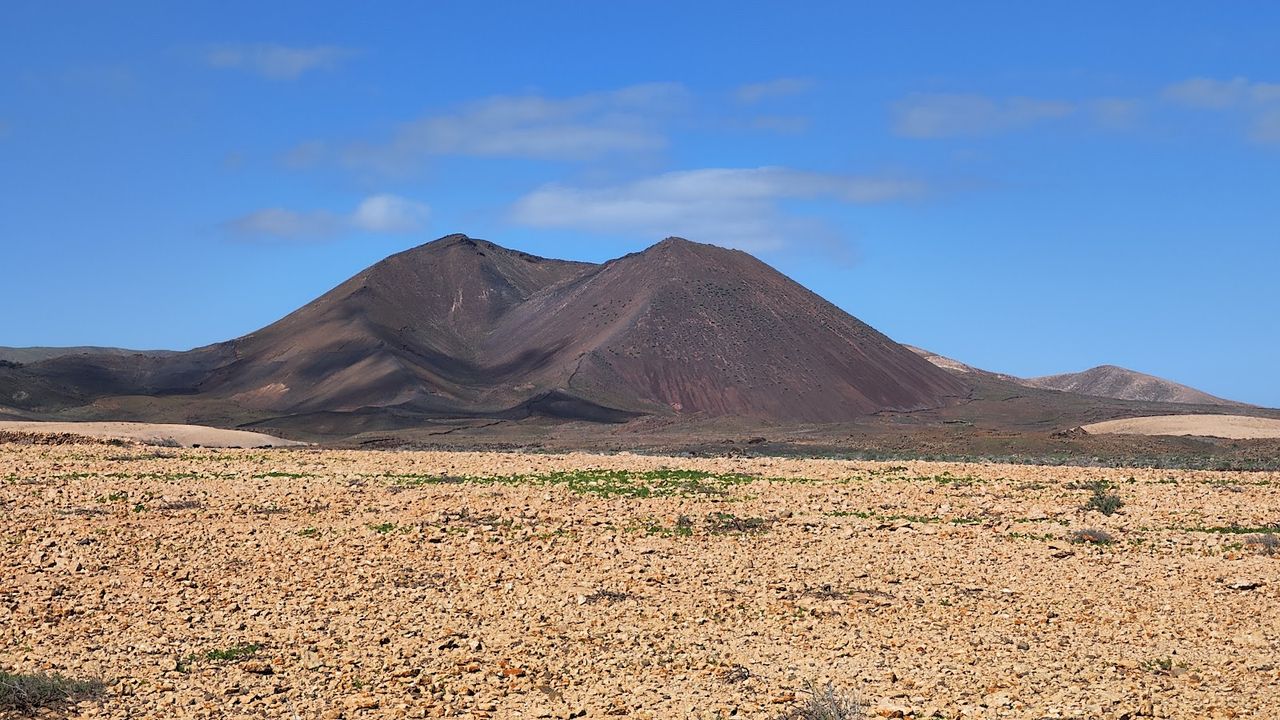
Caldera de Gairia
The climb is short, about 1.5 km with some 200 m of ascent, but steeper than Calderón Hondo in the north and loose underfoot the whole way. A path also leads down onto the crater floor. Go before February: from February to July the routes up are closed for nesting birds. The closure notice stands some way along the trail rather than at the roadside, so check the dates before you set out. Boots with grip make the descent safer.
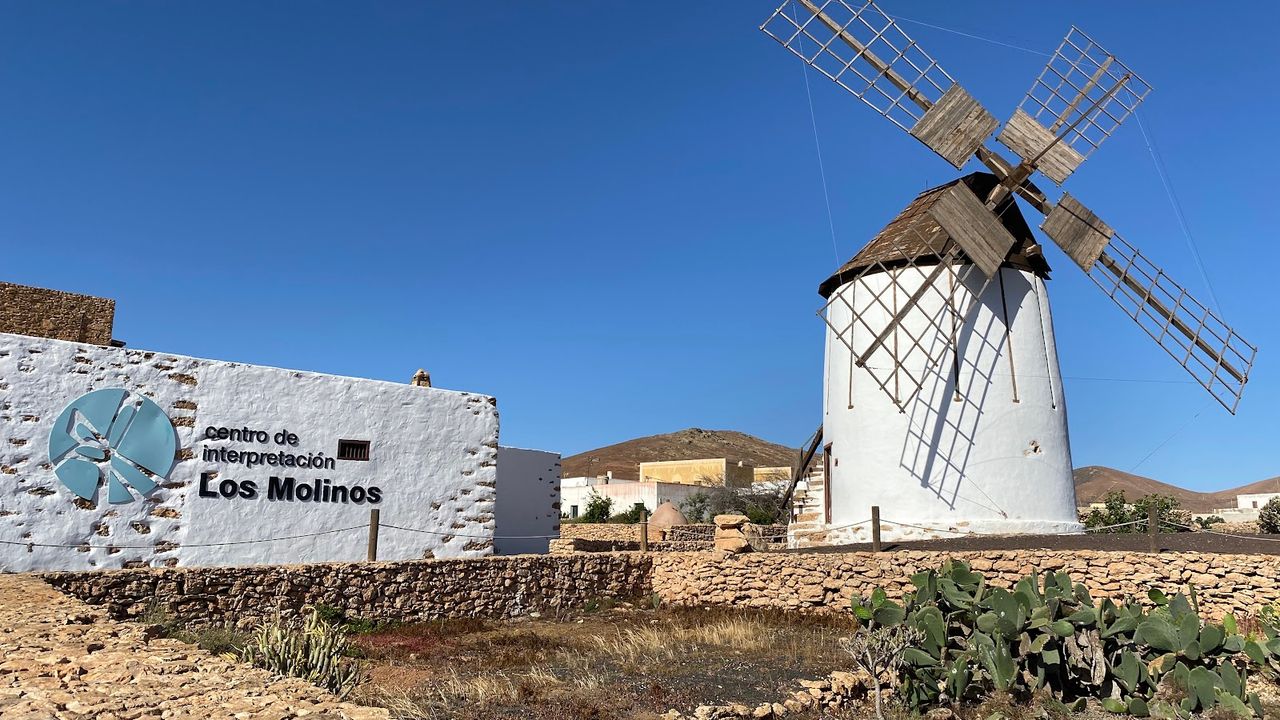
Tiscamanita Windmill Interpretation Centre
Most of the visit is indoors, which suits a day when wind or cloud makes the coast less inviting. The displays follow grain from the field to the millstone, part of the museum is a windmill you can go into, and you finish with a taste of gofio. The centre is closed on Sundays and Mondays.
When it's grey or windy, the La Cilla grain museum and the Casa Mané art centre in the north work well too. On a rainy day, try the El Carmen Salt Pans, where part of the visit is indoors.
What's harder in winter
- Swell: when the sea is up, avoid Popcorn Beach, the natural pools at Aguas Verdes and the cove at Los Ojos, and don't walk along the water's edge at La Solapa. The pool at Caleta de Fuste, on the east coast, is best skipped on days of heavy swell too.
- Rain: the dirt tracks of the Jandía Natural Park turn to mud, and some car-hire contracts don't cover driving on them.
- Calima: this dust-laden wind off the Sahara can cut visibility to 100–200 m and leave little to see from the viewpoints inland. Drive with care while it blows.
Winter events
- Kite festival, Corralejo: every November the International Kite Festival fills the sky over Corralejo's beaches. In 2026 it runs from 9 to 15 November.
- Candelaria, 2 February: La Oliva's parish feast at the church of Our Lady of Candelaria, with candles at Mass, a procession, fireworks, music and dancing.
- Carnival: in 2026, Puerto del Rosario's carnival ran from 6 to 22 February and Corralejo's from 5 to 15 March. The 2027 dates will be announced nearer the time.
What to pack
A windproof layer for the beaches and viewpoints, shoes with good grip for Gairía and the Ajuy caves, a torch for the caves themselves, and sunscreen and a hat, since there is little or no shade on the beaches and trails.
The weather figures are AEMET's 1981–2010 averages for Fuerteventura airport. Sea temperatures are from temperaturadomar.pt. Event dates are from the La Oliva and Puerto del Rosario councils and the Canary Islands tourist board. All were checked in October 2026. Place details come from our catalogue.
For calm water in winter, stay on the south-east coast or near the El Cotillo lagoons; for the waves, head west. The temperatures here are long-term averages, so any given week can run cooler or warmer. For the island's sights at any time of year, see things to do in Fuerteventura.
FAQ
Can you swim in Fuerteventura in winter?
Yes, on the sheltered coasts: the south-east beaches between Costa Calma and Morro Jable, and the lagoons north of El Cotillo. Costa Calma and La Concha have lifeguards. In January the sea is about 19 °C.Is Fuerteventura hot in January?
Warm rather than hot. January is the coolest month, at about 21 °C by day.Is it windy in winter?
Often, yes. Fuerteventura is one of the windiest of the Canary Islands. The trade winds are steadiest in summer, but in winter the wind still drives sand across the beaches on many days.Fuerteventura or Lanzarote in winter?
By day there is less than a degree in it. Fuerteventura's nights are about half a degree warmer and it has fewer rainy days in every month, while Lanzarote gets a little more sun. For Lanzarote month by month, see [the best time to visit Lanzarote](/articles/best-time-to-visit-lanzarote).Do you need a car in winter?
Buses link Puerto del Rosario and the airport with Corralejo, Caleta de Fuste, Morro Jable and El Cotillo, and there is a stop about 100 m from the windmill centre at Tiscamanita. For remote beaches such as Viejo Rey, and for the caves at Ajuy, you'll need a car or a tour.