Tenerife or Gran Canaria: which island suits your trip
8 min read4 destinations
Canary Islands · Spain
Choose Tenerife for Spain's highest mountain and scenery that changes from green forest in the north to near-desert in the south. Choose Gran Canaria if you'd rather keep one base and reach most of the island on day trips. Below, we compare the two on winter weather, mountains, beaches, old towns, roads and how many days you need.
In short: who should pick which
- Tenerife, if you want to ride a cable car most of the way up Teide, see the island change from the green north to the dry south, and have a week or more for it.
- Gran Canaria, if you want one base with most of the island within day-trip range, plus a city beach in Las Palmas and the Maspalomas dunes.
We use the same sources for both: climate averages from AEMET, Spain's weather service, for the two coastal airports (Tenerife South and Gran Canaria Airport), a single source for sea temperatures, and our own catalogue for places, roads and trip length.
Tenerife
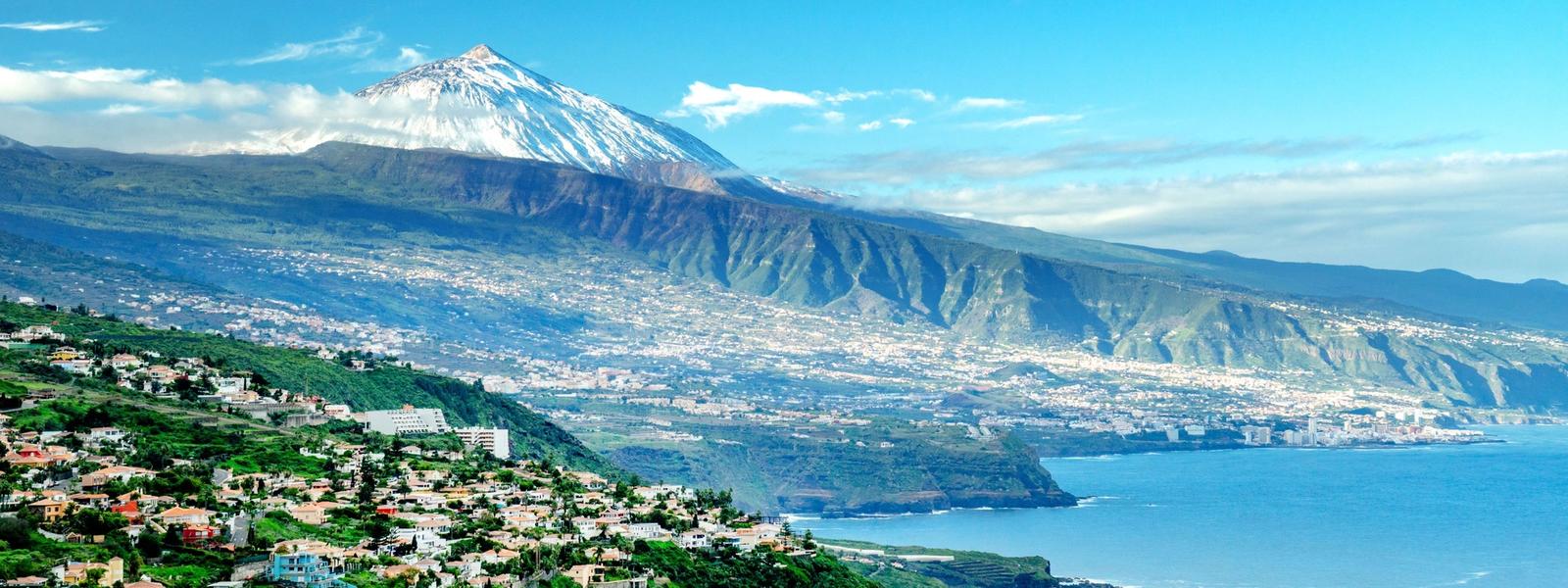
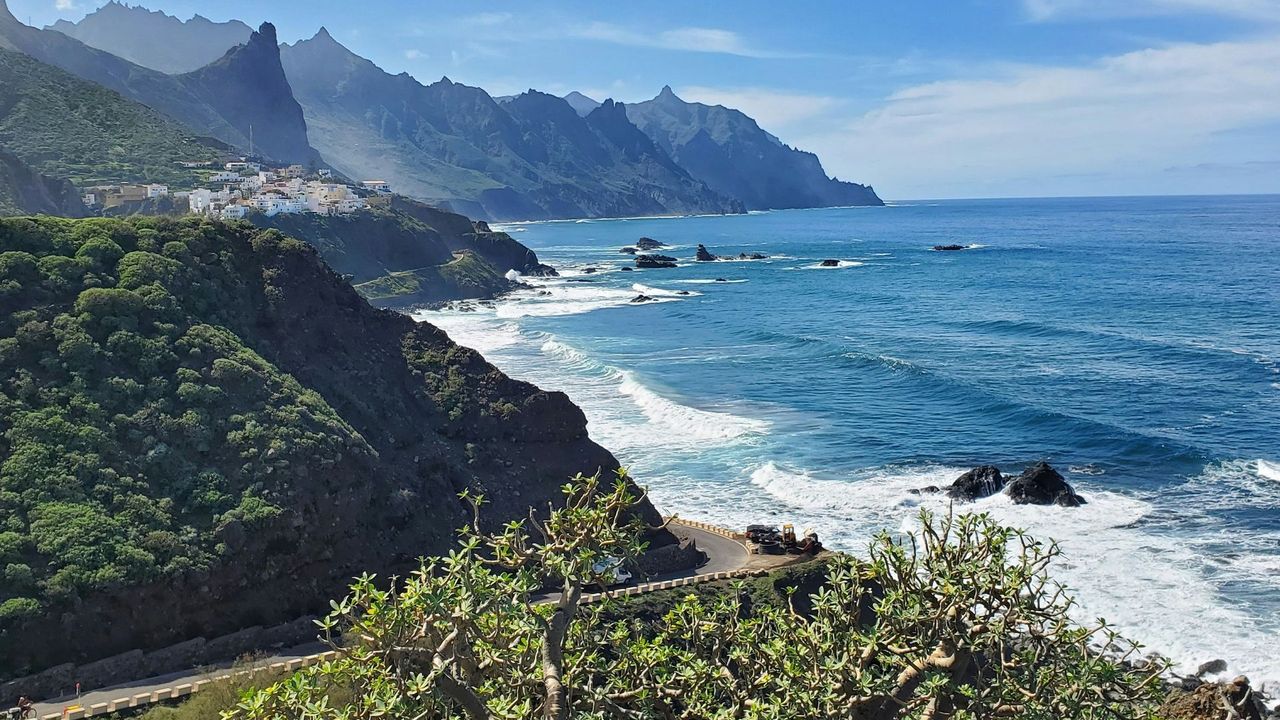
Best for: variety and altitude. Tenerife is the largest of the Canary Islands, with Teide, Spain's highest mountain, in the middle. The north is greener and wetter and has the old colonial towns; the south is drier and warmer, with most of the beach resorts. A full loop of the island takes 7–10 days.
Gran Canaria
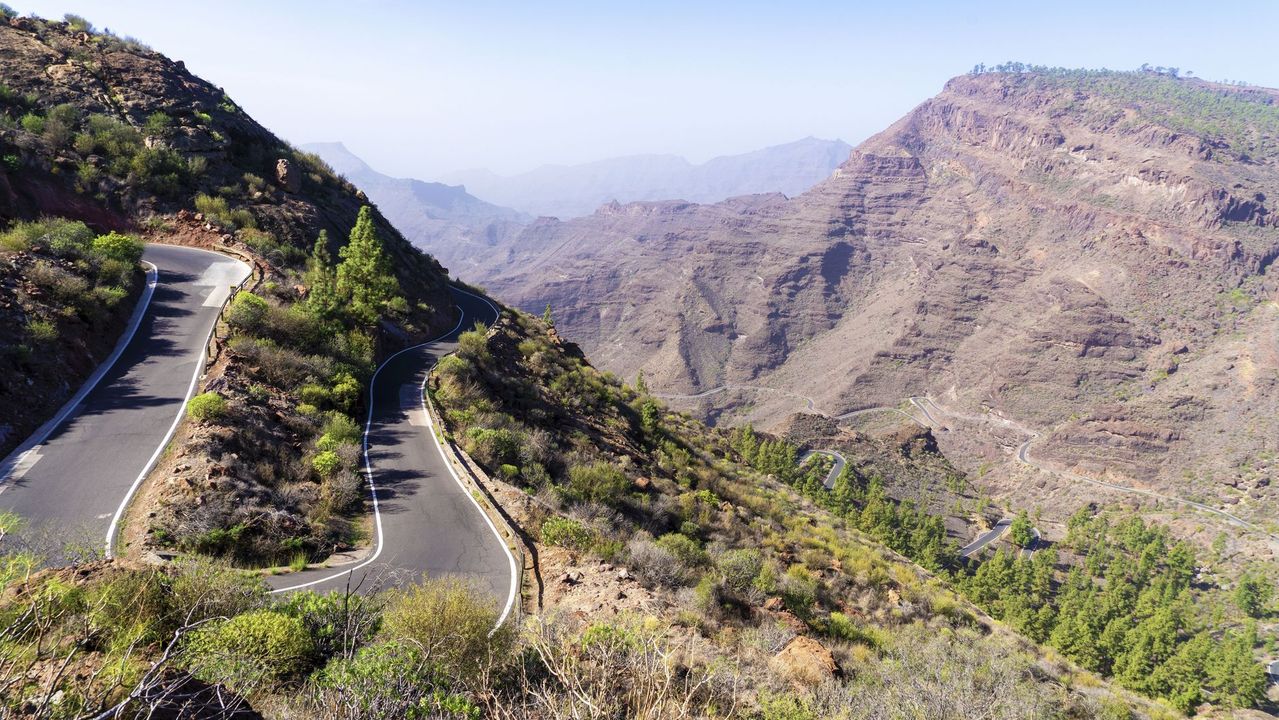
Best for: one base and day trips. Gran Canaria is nearly circular, about 50 km across, and climbs from its beaches to 1,956 m. Las Palmas, the largest city in the Canaries, is in the north-east, and the resorts and the Maspalomas dunes are on the south coast. A week covers the essentials.
Winter weather: which is warmer
On the coast there's little in it. These are AEMET's 1981–2010 January averages for the two coastal airports:
- Tenerife South, January: 21.7 °C by day, 15.2 °C at night, 17 mm of rain.
- Gran Canaria Airport, January: 20.8 °C by day, 15.0 °C at night, 25 mm of rain.
Tenerife's south is about a degree warmer in the afternoon and a little drier, and the nights are the same. Tenerife's north is another matter: at the northern airport, 632 m up near La Laguna, January days average 16.0 °C, with 80 mm of rain. The sea is much the same around both islands, about 19–20 °C from January to March. Up high, both get cold. Snow falls on Teide in winter, and Gran Canaria's summits can see frost and the occasional snowfall.
A volcano or mountains in the middle
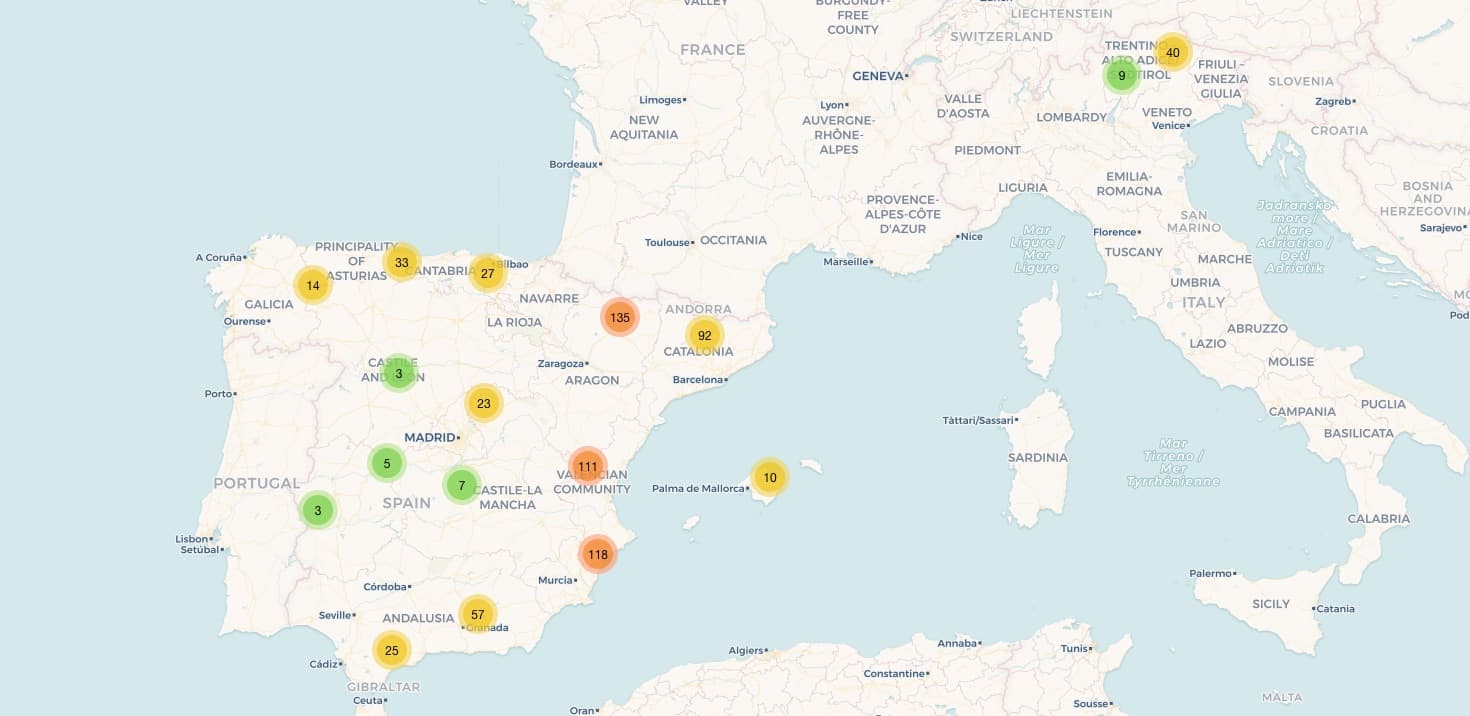
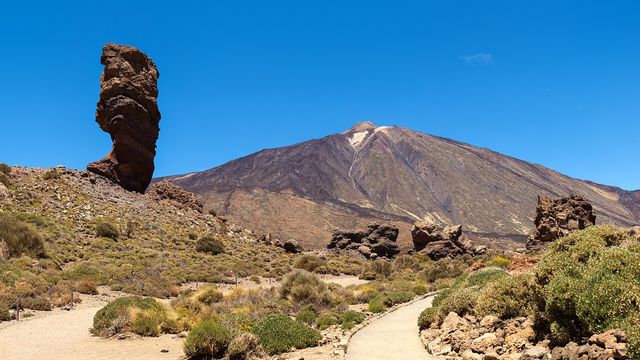
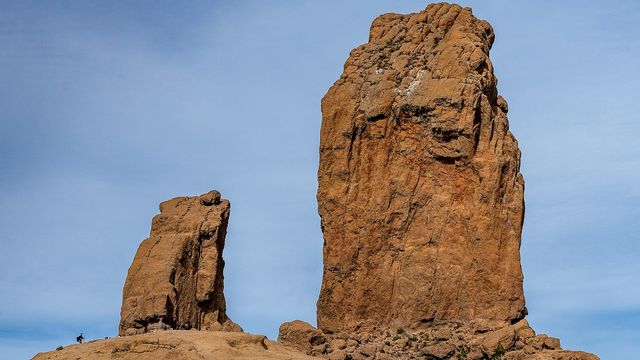
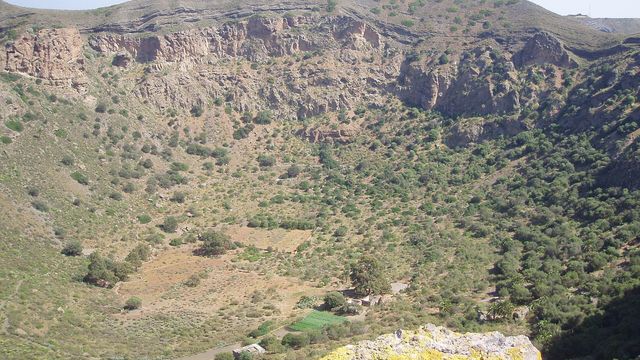
Teide rises in the middle of Tenerife. A road crosses the lava fields of the national park, and a cable car climbs about 1,200 m in eight minutes to 3,555 m, some 160 m below the summit. The last stretch to the top needs a permit. Gran Canaria's centre is lower and more rugged, with pine forest, ravines and rock towers, and the 80 m pillar of Roque Nublo stands near the island's highest point. From Roque Nublo, on a clear day, you can see Teide across the sea. Near Las Palmas, the Bandama crater is about 1 km wide and 200 m deep, with a 3.5 km path round its rim. For more on each, see things to do in Tenerife and Gran Canaria's mountains and ravines.
Tenerife

Gran Canaria
Things to do in Canary Islands
Paid links: booking through them supports YowJourney.
Beaches: black sand or dunes
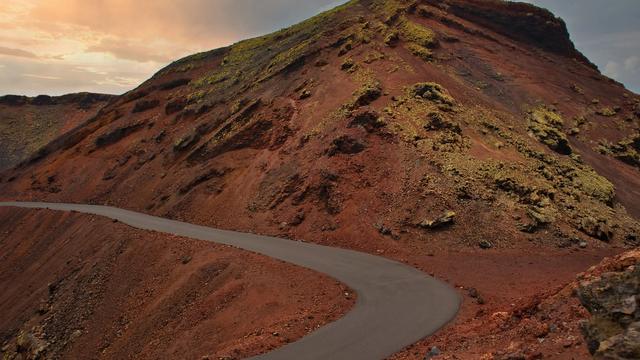
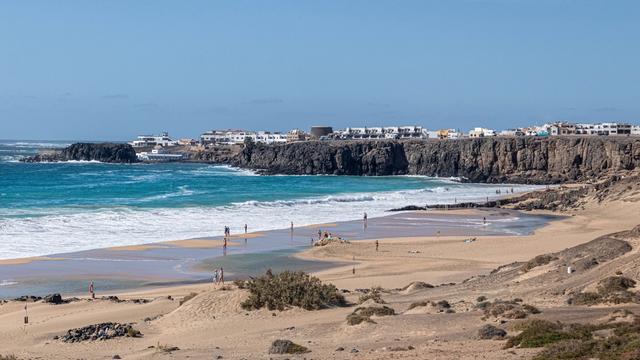
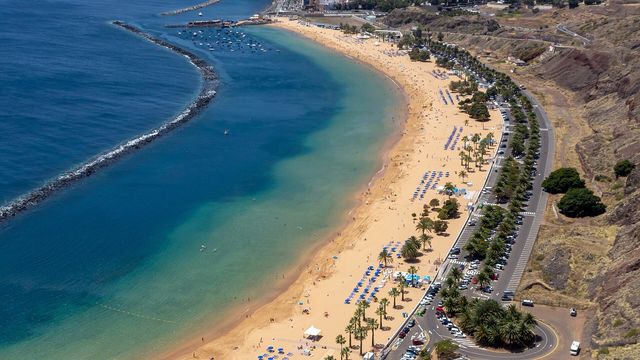
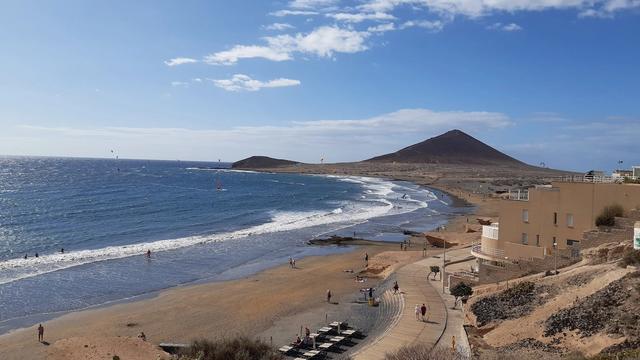
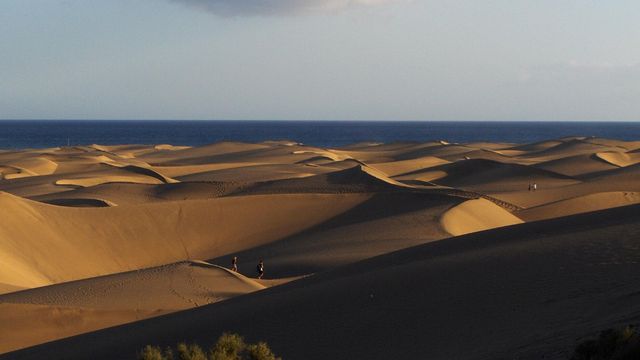
Most of Tenerife's beaches are black volcanic grit. Las Teresitas, near Santa Cruz, is pale because its sand was shipped in from the Sahara in 1973, and behind its kilometre-long breakwater the water lies still. On the south coast, El Médano is a windsurfing town; a chain of buoys marks off the swimming area, and the beach in front of the main square is sheltered from the bigger waves. On Gran Canaria, the Maspalomas dunes run straight down to the beach on the south coast, and Las Canteras is a city beach just over 3 km long in the middle of Las Palmas. A reef about 200 m out shelters most of the beach, and the northern end is the calmest. We cover Tenerife's beaches one by one in a separate guide.
Tenerife
Gran Canaria
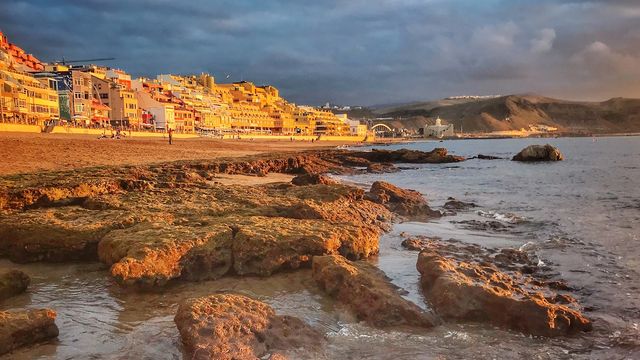
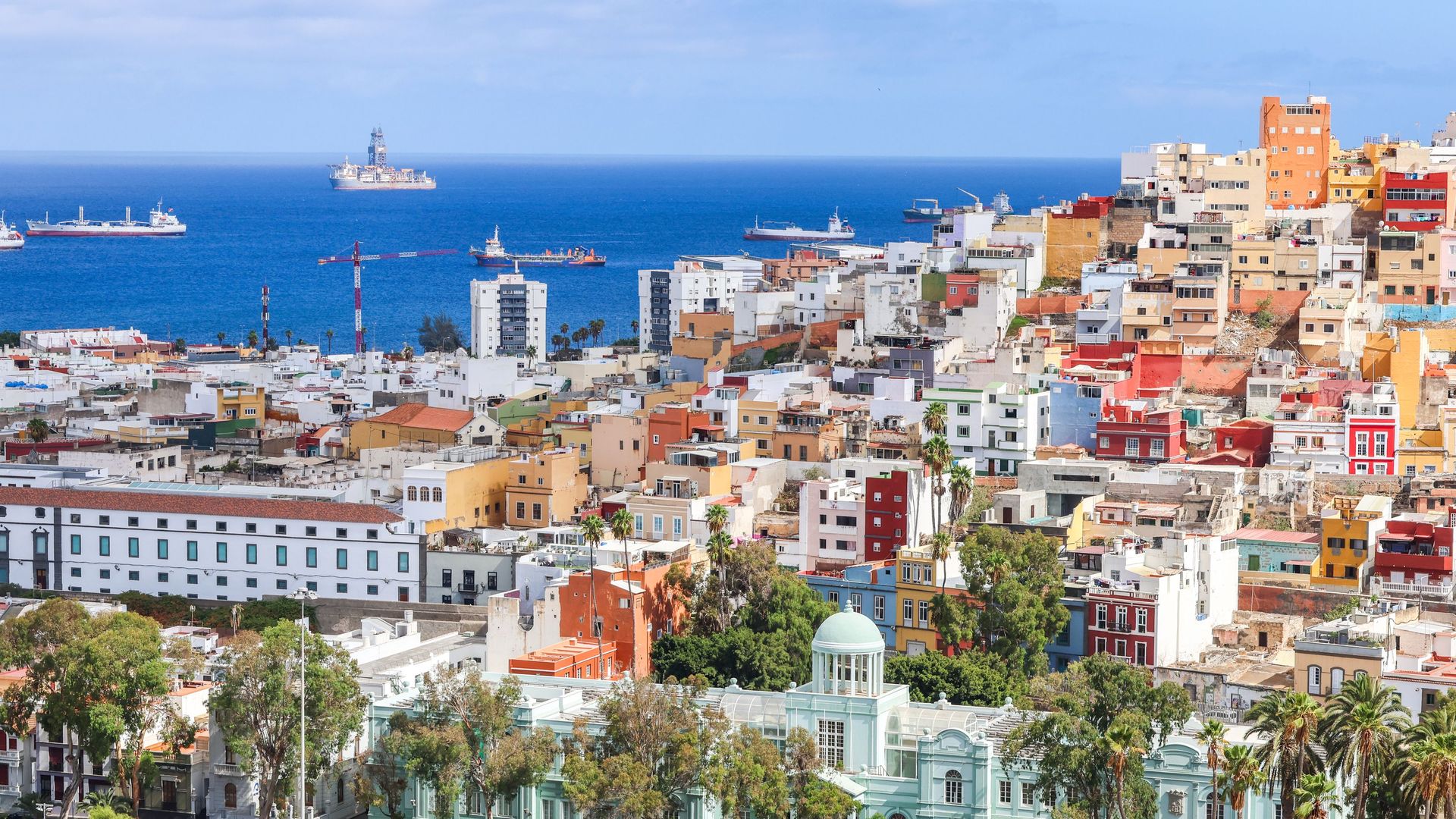
Old quarters: La Laguna and Vegueta
Both islands have an old town laid out soon after the Spanish conquest. On Tenerife it's San Cristóbal de La Laguna, founded in 1496 and capital of the islands until 1723. Its street grid became a model for Havana and Lima. On Gran Canaria it's Vegueta, where Las Palmas began as a Castilian camp in 1478. La Laguna has the first university in the Canaries, while Las Palmas is a port city of about 382,000 people with Las Canteras beach right in town.
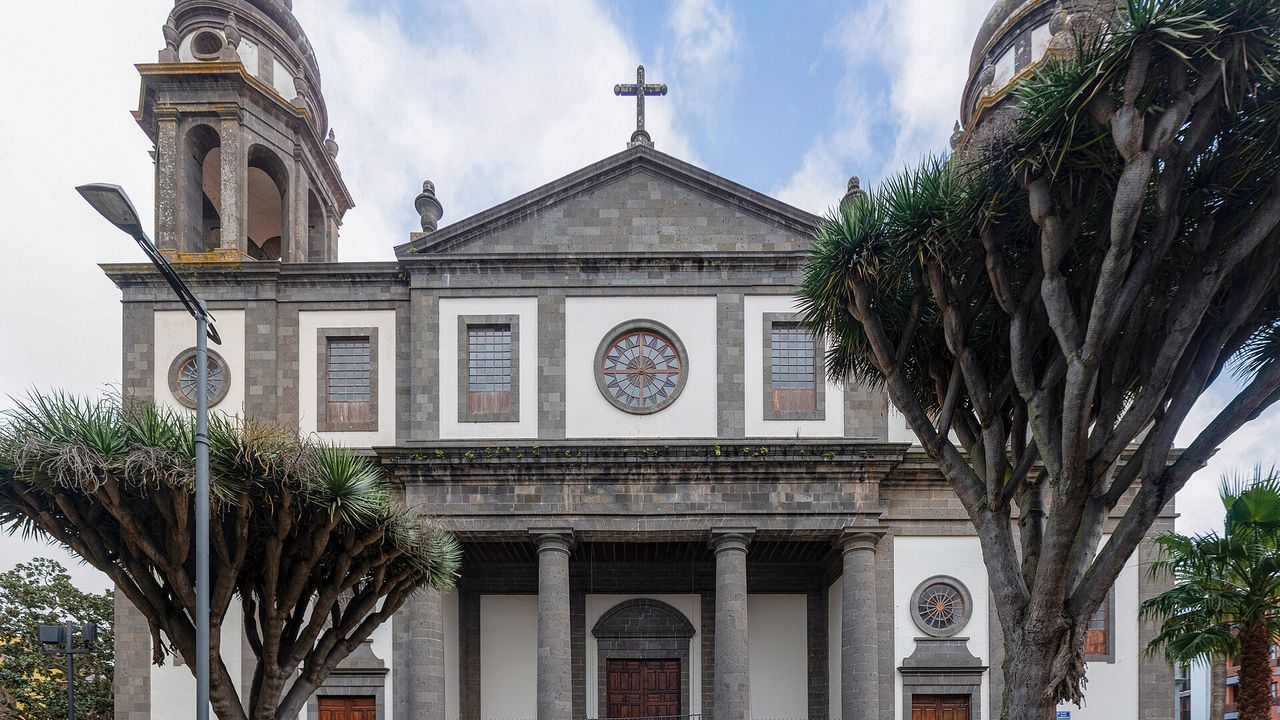
Cathedral of San Cristóbal de La Laguna
Behind the 1820 facade the cathedral is Neo-Gothic, with three wide aisles and, round the chancel, the only ambulatory in the Canary Islands. A transept chapel holds the largest altarpiece in the islands, gilded Baroque carving around the Virgin of Los Remedios on a silver throne. There's an entry fee, and the ticket includes an audio guide and the treasury. Tip: go on a weekday, when it stays open from morning to late afternoon; at weekends it closes over lunch.
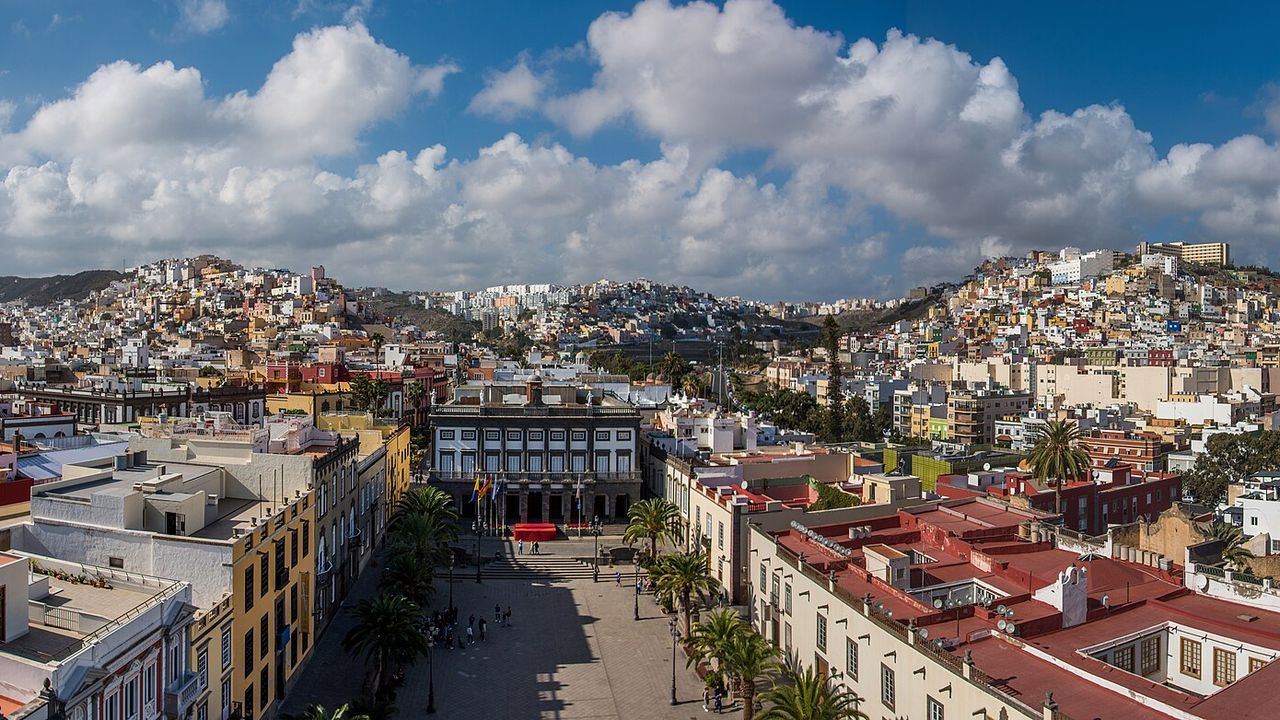
Vegueta Historic Quarter
The camp of 1478 grew into a quarter of straight, ordered streets around Plaza de Santa Ana, with the cathedral on one side and the town hall opposite. The quarter has been protected as a national heritage site since 1973. The museums are the reason to stay longer: Casa de Colón, devoted to Columbus's voyages, the Museo Canario and the Centro Atlántico de Arte Moderno. Tip: the streets are cobbled, so wear shoes with a good grip.
Island size and roads
Gran Canaria is about 50 km across, so wherever you stay, most of it works as a day trip, and the GC-1 motorway runs from Las Palmas past the airport to the south coast. Tenerife is the largest of the islands, and its roads are often narrow and winding: expect to average 30 km/h or less. Gran Canaria's mountain roads are narrow too and twist above steep drops, so on both islands allow extra time for driving in the interior. Buses link the main towns and the airports on both: Global on Gran Canaria, and on Tenerife TITSA, a well-run network, though some journeys involve a change and services stop around midnight. A hire car is the practical way into the mountains, but for Roque Nublo the bus is easier, since you can't drive up to the trail entrance.
How many days, and can you do both?
On Gran Canaria, a week is enough for the main sights. Tenerife takes 7–10 days for a full loop, or 3–4 days if you stick to one side: either the beaches of the south or the greener north. You can also combine both islands: the Fred Olsen catamaran from Agaete, on Gran Canaria's west coast, reaches Santa Cruz de Tenerife in 80 minutes. Ferries and flights between the islands are expensive, though, so with a week or less one island is the simpler plan. To choose between Tenerife's north and south, see north or south Tenerife.
So which one?
Pick Tenerife if Teide is the reason you're going, if you want forest and lava as well as beaches, and if you have a week or more, or are happy to stay on one side of the island. Pick Gran Canaria if you want a single base for day trips across most of the island, plus the Maspalomas dunes and a big city with a beach. If warm winter afternoons matter most, Tenerife's south has the edge: it's about a degree warmer by day in January.
Tenerife suits a trip planned around Teide and the contrast between north and south; Gran Canaria suits staying in one place, with most of the island a day trip away. With a week or less, pick one; with more time, the catamaran from Agaete links them in 80 minutes.
FAQ
Where is the sea warmer?
There's barely any difference. Sea temperatures off Santa Cruz de Tenerife and Las Palmas both average about 19–20 °C from January to March and 23–24 °C in September and October.Can you get around without a car?
On both islands, yes, for the main towns, the airports and the resorts. Tenerife's TITSA buses run from both airports, though some journeys involve a change, and there are no buses from about midnight until 5am or 6am. On Gran Canaria, buses link the resorts, the airport and Las Palmas, and the service from Tejeda stops at the Roque Nublo trail entrance. For the rest of the mountains, a hire car is the practical choice on either island.Where can you find golden sand?
On both islands. On Gran Canaria it's at Maspalomas and Las Canteras; on Tenerife at Las Teresitas, where it was shipped in from the Sahara. Most of Tenerife's other beaches are black volcanic grit.