Things to do in Iceland: from geysers to glacier lagoons
10 min read11 destinations
Iceland
Route 1, the Ring Road, links most of Iceland, and many of the places people come for lie on it or close to it: a waterfall you can walk behind, a geyser that goes off every few minutes, icebergs drifting out to sea. In June it barely gets dark, and the mountain roads open at the end of that month; in December there are almost 20 hours of darkness and some sites are out of reach. Here are seven things to do on a first trip, where to go for each, and what to book.
Paid links: booking through them supports YowJourney.
In short
- Without a car: there's a bus stop about 500 m from Gullfoss and another a few minutes' walk from Sky Lagoon, and day tours from Reykjavík cover the Golden Circle and the south coast.
- In bad weather: the Raufarhólshellir lava tube, and Perlan in Reykjavík, where the exhibitions, an ice cave and a planetarium are all indoors.
- With children: Perlan's ice cave, indoor geyser and Lava Show; the Raufarhólshellir tour takes children too.
- Free to enter, paid parking: Thingvellir and Reynisfjara.
Drive the Golden Circle
Three stops east of Reykjavík make up the Golden Circle: the rift valley at Thingvellir, the geysers of Haukadalur and the Gullfoss waterfall. Route 36 runs to Thingvellir and Route 35 to Geysir. The circuit is the standard day out from the capital, by car or on a Golden Circle day tour. Kerið, a red crater with a lake at the bottom, is on the same route and charges for entry.
Thingvellir
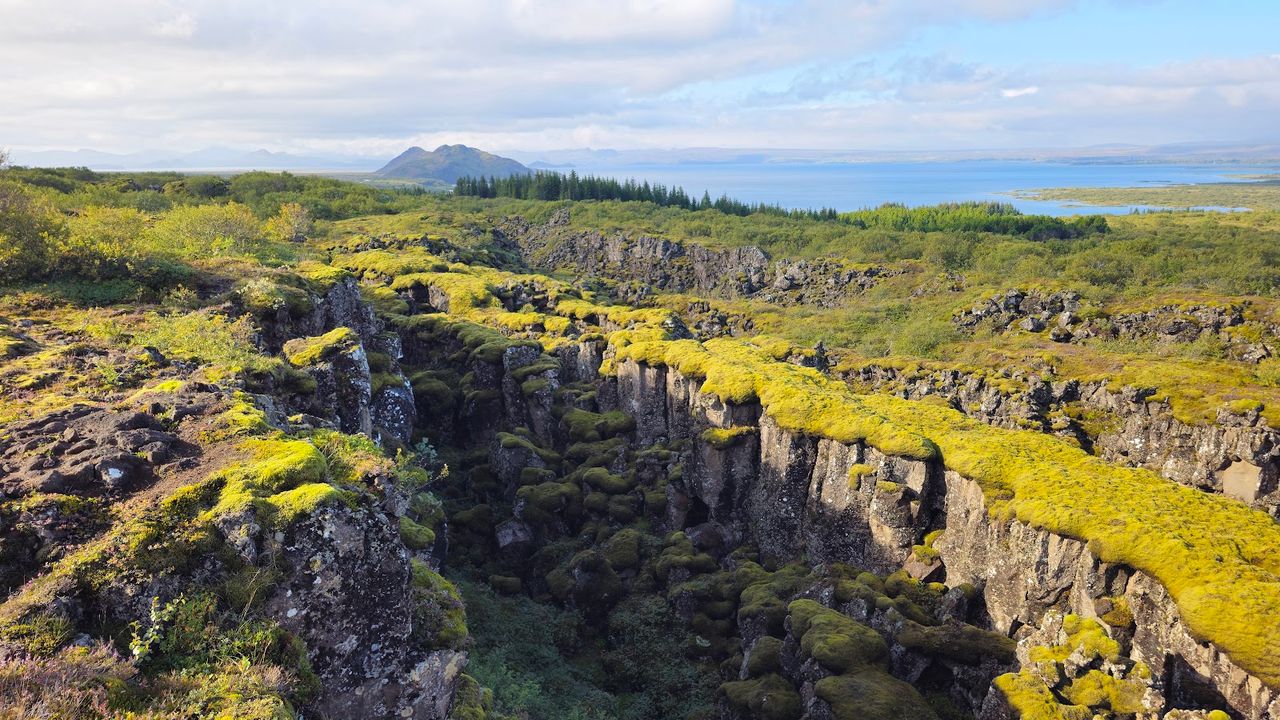
Iceland's parliament, the Althing, met in this rift valley from 930 until 1798. Before the law was written down, the Lawspeaker recited it from memory at the Law Rock. Faults split the valley floor, the largest of them the canyon of Almannagjá, and a river drops over its wall as a waterfall. On the lake shore is the Silfra fissure, where you can dive or snorkel with a tour operator. Give it a couple of hours: the sites are spread out, and the car parks sit along the road rather than at one entrance. Tip: the paths turn icy in winter, so bring ice grips from about November to March.
Geysir
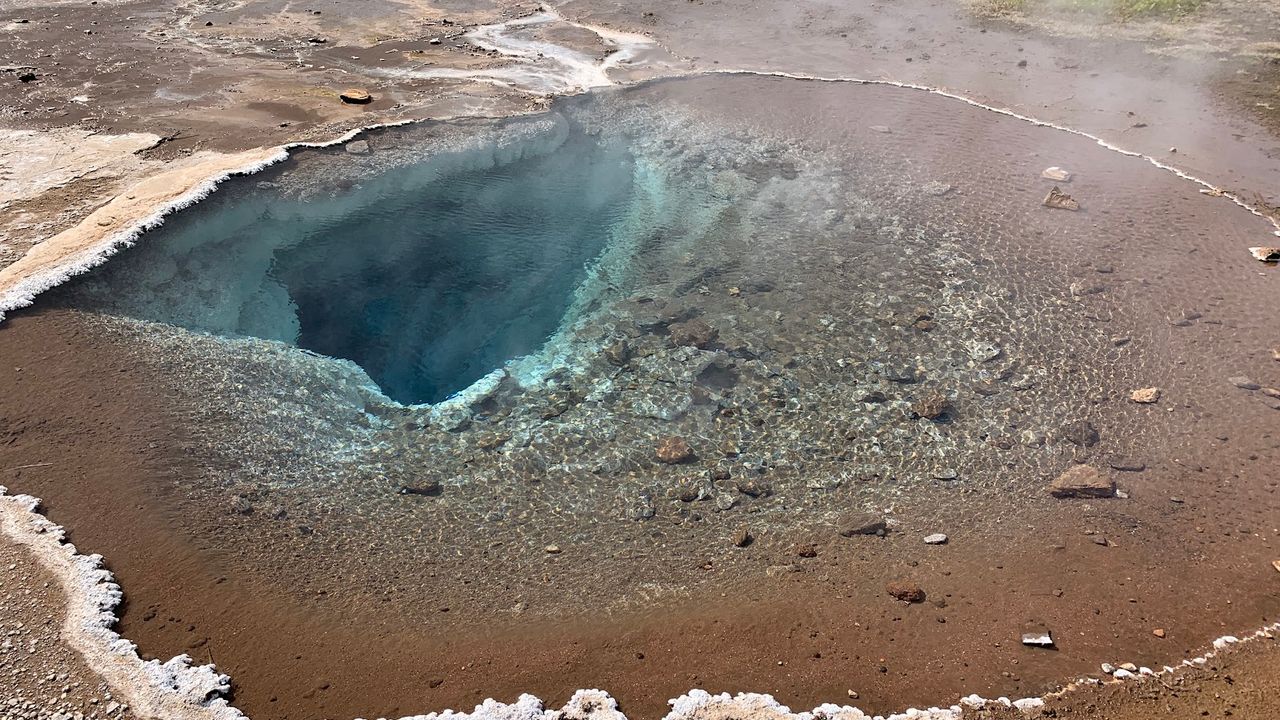
Geysir gave English the word geyser, but it rarely erupts now. The one in most photographs is Strokkur, about 50 m away, which throws boiling water up to 35 m every few minutes. Around them lie some thirty smaller geysers and hot pools, and the whole field smells of sulphur. The water is at boiling point, so keep to the walkways and hold children back from the edges. Come on a summer evening after about 20:00, when it's still broad daylight, and you'll have the field almost to yourself.
Gullfoss Waterfall
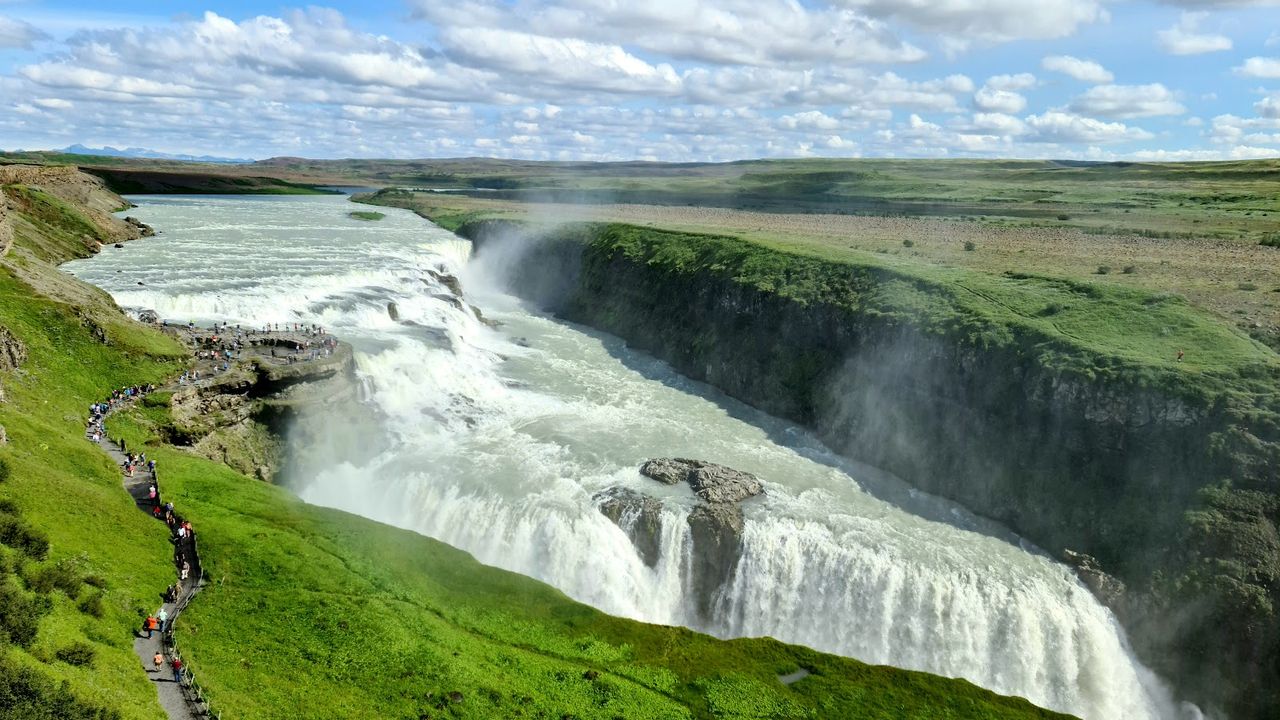
The Hvítá turns sharply and drops in two stages, 11 m and then 21 m, into a crevice 32 m deep. From the upper platform the falls look like a wide staircase of water; take the steps down and both tiers rise in front of you, close enough for the spray to reach you. A grey sky doesn't spoil the view. In summer the river carries far more water than in winter: 141 cubic metres a second against about 80. Parking at the visitor centre is free.
Walk behind a waterfall
On the south coast, two waterfalls let you get closer than most viewpoints allow. At Seljalandsfoss a path runs behind the water; at Skógafoss you walk to the foot of the drop, then climb the stairs beside it. Bring a waterproof jacket for both. From the Seljalandsfoss car park another path leads to Gljúfrabúi, a waterfall hidden in a cleft in the rock; to reach it, you pick your way up the streambed from rock to rock. For more, see our guide to Iceland's best waterfalls.
Seljalandsfoss Waterfall
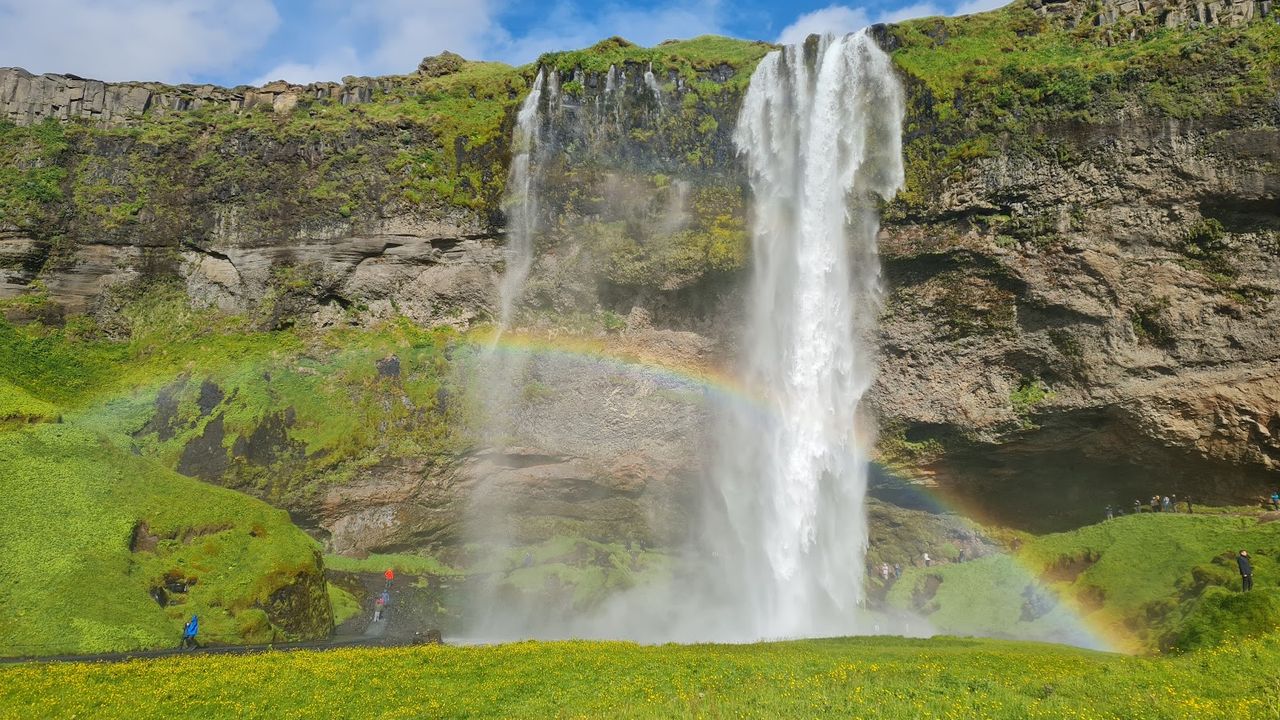
A 60 m column of water falls off the cliff, and the path goes round the back of it, between rock and spray, into a small cave and out the other side. You will get soaked, so keep your camera or phone covered. The water comes off Eyjafjallajökull, the ice-capped volcano. Come early in the day: later on, a steady stream of people fills the narrow loop. The car park by the falls charges; a free gravel one is about 750 m away.

Skogafoss Waterfall
Here you can walk right up to the base of a 60 m drop, and the spray soaks you within minutes; on a sunny day it throws a rainbow, sometimes a double one. Then climb the 527 steps on the eastern side to a platform at the top, where a trail carries on upstream past more waterfalls. Tip: if you're on a tour with a short stop, choose one: the base or the stairs.
See icebergs at the edge of a glacier
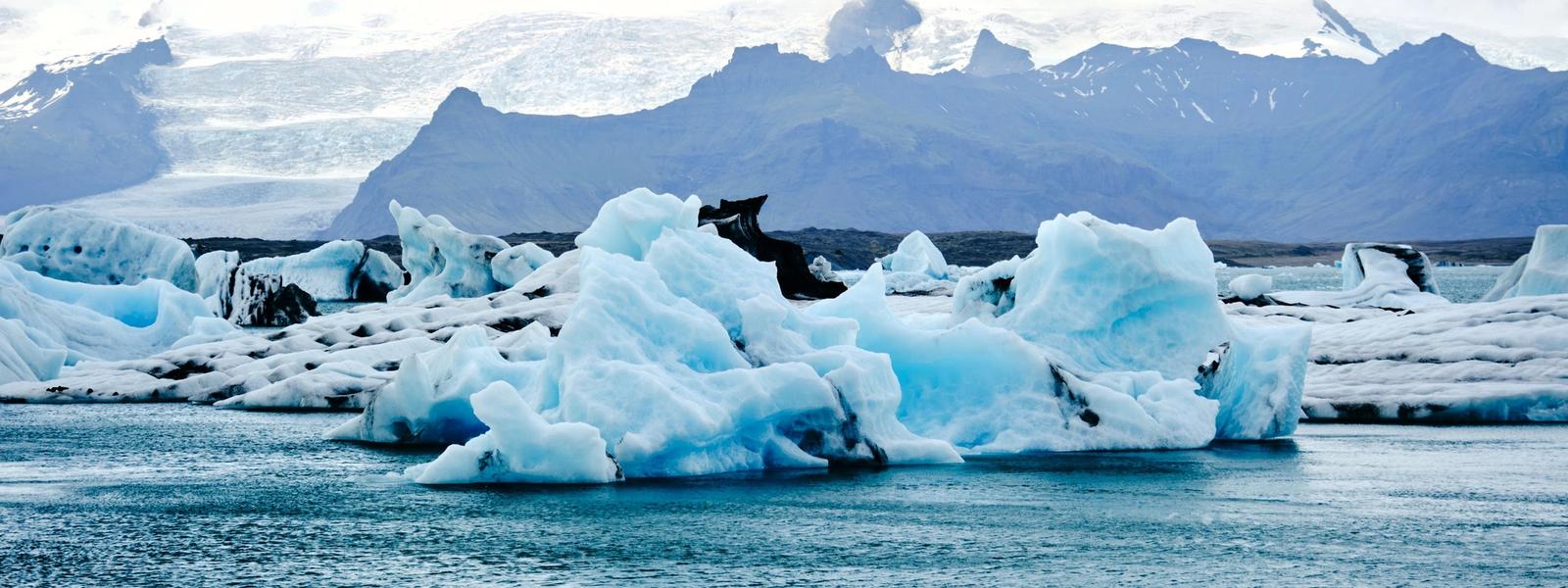
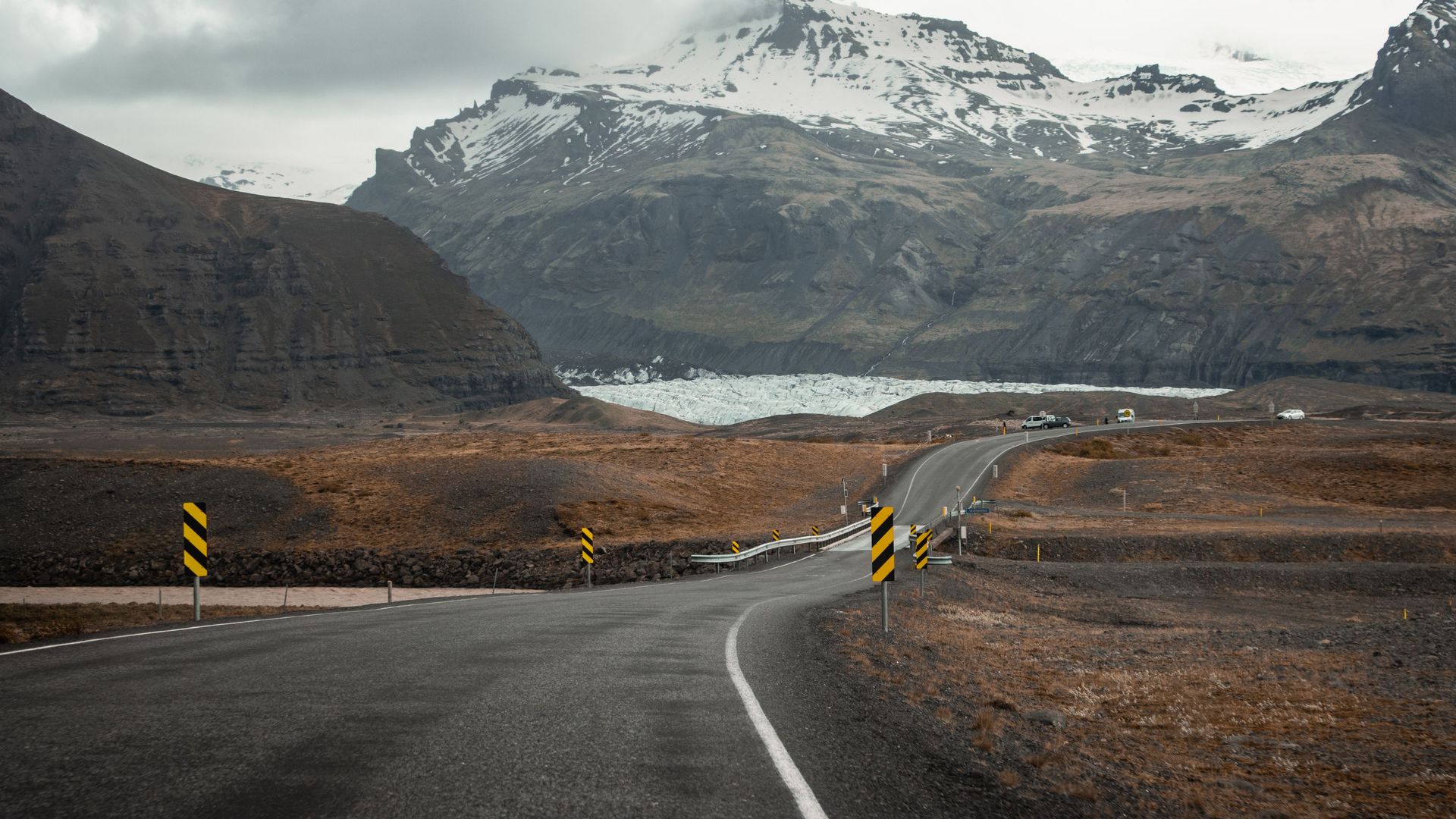
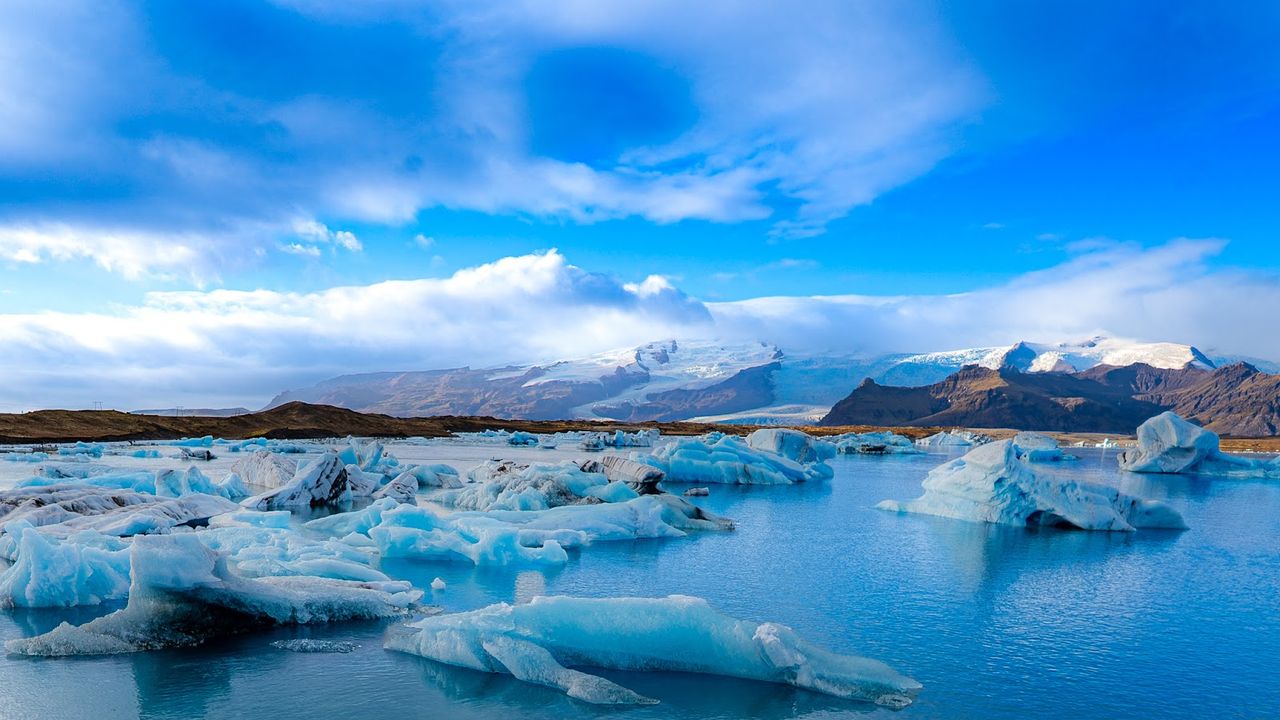
About 60 km east of Skaftafell, Route 1 crosses the outlet of Jökulsárlón, a lagoon where icebergs break off the glacier and drift towards the sea. Across the road, ice that has floated out washes up on the black sand of Diamond Beach. The lagoon lies inside Vatnajökull National Park, and from Reykjavík the drive takes over four hours.
Jokulsarlon Iceberg Lagoon
Blocks of ice up to about 30 m high calve from Breiðamerkurjökull at the head of the lagoon, some milky white, some deep blue, some striped grey with ash from old eruptions. They drift with the tide and the wind, so the view rearranges itself through the day. The cracking of the ice carries across the water. In the cold months seals gather at the outlet to fish. Boat and amphibious-vehicle tours run in the warmer months, and in winter ice cave tours leave from the car park. Tip: the amount of ice varies, so check the live webcam before the long drive.
Things to do in Iceland
Paid links: booking through them supports YowJourney.
Walk a black beach and keep back from the waves

Reynisfjara Black Sand Beach
At the eastern end, basalt columns so regular they look man-made frame a cave. The Reynisdrangar sea stacks rise offshore, and the Dyrhólaey headland closes the view to the west. Storms in February 2026 brought down some of the columns and stripped much of the sand, and by July the shore was more black pebble than sand. Entry is free; the car parks charge. Important: sneaker waves surge far up the beach without warning, and six people have died here since 2007. Never turn your back on the sea, stay well away from the water's edge and follow the warning lights: under a red warning the cave and the columns are closed.
For more beaches like this one, and tips on visiting them safely, see our guide to Iceland's black sand beaches.
Soak in hot water outdoors
Iceland's hot baths range from spa lagoons to simple, no-frills pools. Sky Lagoon is far nearer Reykjavík than the Blue Lagoon, which lies about 20 km from Keflavík airport, takes its water from a geothermal power station and costs more than most pools. The Secret Lagoon at Flúðir is a pool built in 1891, with a small geyser beside it, and in the north the Mývatn Nature Baths stay open until 23:00. For hot springs in the wild, see our guide to Iceland's hot springs and geothermal pools.

Sky Lagoon
Sky Lagoon sits on the shore at Kársnes Harbour in Kópavogur, and its open side faces the Atlantic. The water is kept at 38–40 °C and doesn't smell strongly of sulphur. The centrepiece is a seven-step ritual of hot water, a cold plunge, sauna, steam and a scrub; the standard ticket doesn't cover it. Coming straight from a morning flight, you can book an early visit and soak before hotel check-in. It isn't set up for young children.
Go underground and over boiling ground
Raufarholshellir Lava Cave
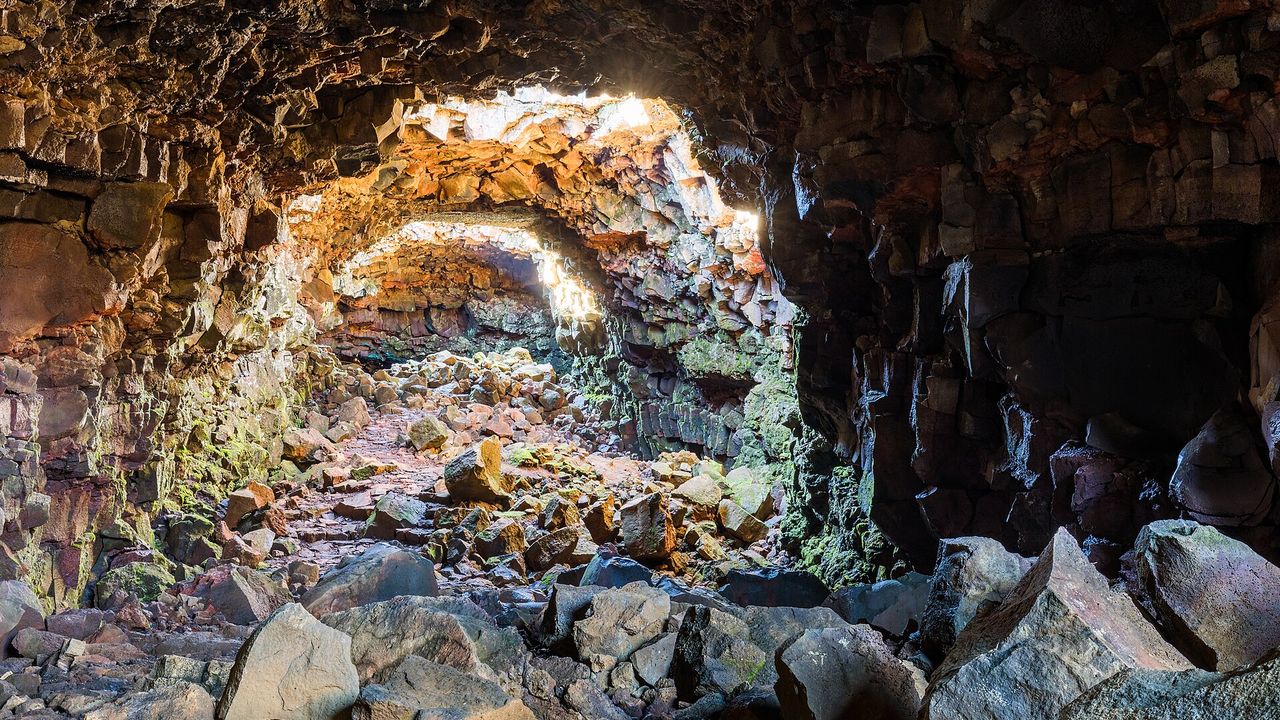
Raufarhólshellir is a lava tube 1,360 m long and up to 30 m wide, its walls banded red and ochre by lava that flowed 5,600 years ago. Daylight falls through holes in the roof, and at one point the guide switches the lights off. You go in only on a guided tour, first along decking and then over broken lava, with a helmet, a head torch and a walking stick handed out at the start. Tours run at set times with limited places, so book before you drive out.
Hverir Geothermal Area
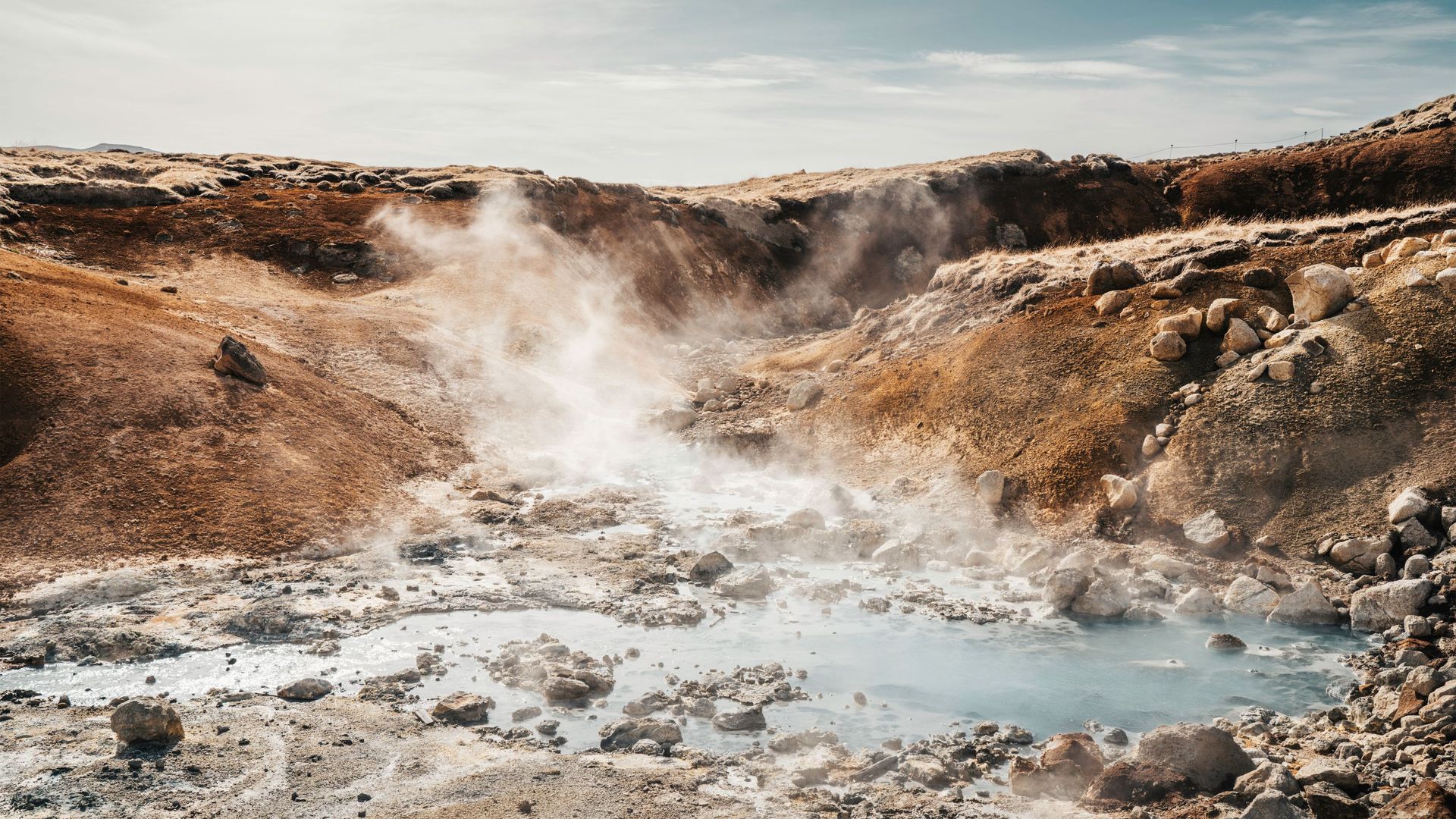
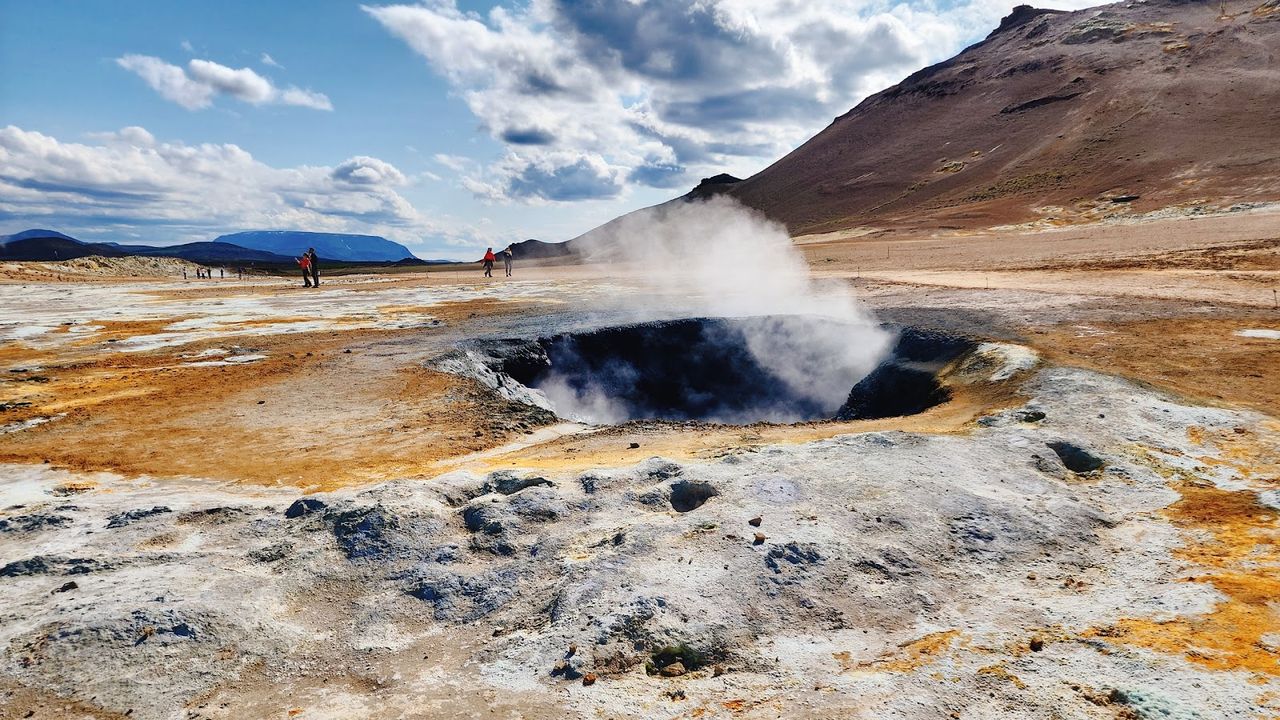
East of Lake Mývatn, beside the Ring Road, Hverir packs most kinds of geothermal activity into one field: mud boiling at your feet, fumaroles hissing steam, ground stained ochre and rust, and a smell of sulphur that stays on your clothes. Boardwalks lead through the field; the ground either side is hot, so don't step off them. Tip: for the view from the slope above, walk the loop from left to right, since coming down the other way is steep and dangerous when wet.
The largest lava tube in Iceland, Víðgelmir, is in the west of the country. For craters, see our guide to volcano craters you can walk up to.
Watch puffins and whales
The puffin is the emblem of Vestmannaeyjar, the islands off the south coast. Puffins return to the cliffs there in spring and leave in autumn, and the Herjólfur ferry crosses to the islands from Landeyjahöfn in 30 to 40 minutes. In the Westfjords, at Látrabjarg, puffins nest within metres of the car park, though by early July the season there is nearly over. Látrabjarg is a stop on our three-day Westfjords road trip. For whales, boats sail in summer from the harbour at Húsavík, in the north.
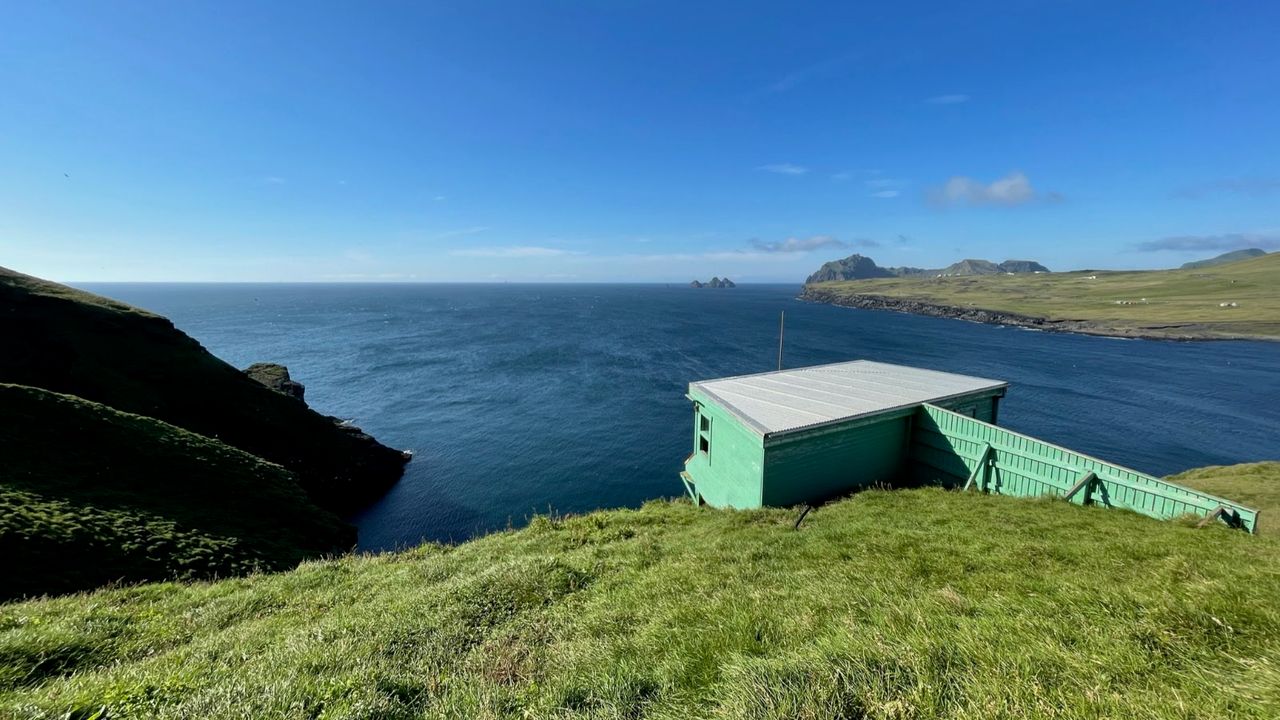
Puffin Lookout
On Stórhöfði, on the island of Heimaey, a wooden hide faces a slope full of puffin burrows. You watch through openings cut in the walls, sheltered from the wind, and if you keep your voice down the birds stay put. Mid-morning the slope can hold thousands of them, and around sunset hundreds more fly in from the sea. Rain helps rather than hurts: in fine weather most of the puffins are out at sea all day.
Before you go
A hire car gives the most freedom. Route 1 circles the island, the main roads are mostly paved, and a two-wheel-drive car handles them; only the F-roads of the interior, open in summer, need four-wheel drive. If you're not driving, buses link Keflavík airport with Reykjavík, and guided tours cover the main routes. Off-road driving is strictly forbidden, and headlights must be on at all times. Our guides to planning a self-drive trip, the seven-day Ring Road itinerary, the best time to visit Iceland and Iceland in winter cover the details.
Places and practical details come from our catalogue pages; the tour link was checked on its GetYourGuide page in October 2026.
With four or five days, base yourself in the south-west for the Golden Circle, the south-coast waterfalls, Reynisfjara and a soak near Reykjavík. Jökulsárlón, more than four hours' drive from the capital, fits more easily into a longer trip, and the full Ring Road adds Hverir in the north.
FAQ
How many days do you need in Iceland?
Seven to ten days for the Ring Road with stops, though eight is the realistic minimum if you want more than one night in the north. Four or five days cover the south-west: Reykjavík, the south coast and one geothermal area.What can you see in Iceland in three days?
Keep to the south-west. Four or five days cover Reykjavík, the south coast and one geothermal area, so in three you'll have to drop something; the Golden Circle alone takes a full day. Jökulsárlón is hard to fit in, with over four hours of driving each way.Do you need a four-wheel-drive car?
Only for the interior, which opens in summer and is reached on F-roads. A two-wheel-drive car handles the Ring Road and the rest of the paved network. Rental prices are high, so book as far ahead as you can.What is there to see in Reykjavík?
The centre is compact and walkable, with Hallgrímskirkja, the Harpa concert hall, the National Museum and the Laugavegur shopping street. Perlan, on Öskjuhlíð hill, has an ice cave and a northern lights planetarium under one roof, plus an observation deck.