Vatnajökull National Park covers some 14,000 sq km in South Iceland, close to 14% of the country. It is built around the Vatnajökull glacier, the largest in Europe, and takes in glacier tongues, volcanoes, canyons, black desert, glacial lagoons and waterfalls. Jökulsárlón, Svartifoss and Skaftafell all lie inside it. Marked hiking trails of varying difficulty start from Skaftafell, where the visitor centre has maps and guided tours. Ice caves are visited in winter, with a guide.
Vatnajökull National Park
Local name: Vatnajökulsþjóðgarður
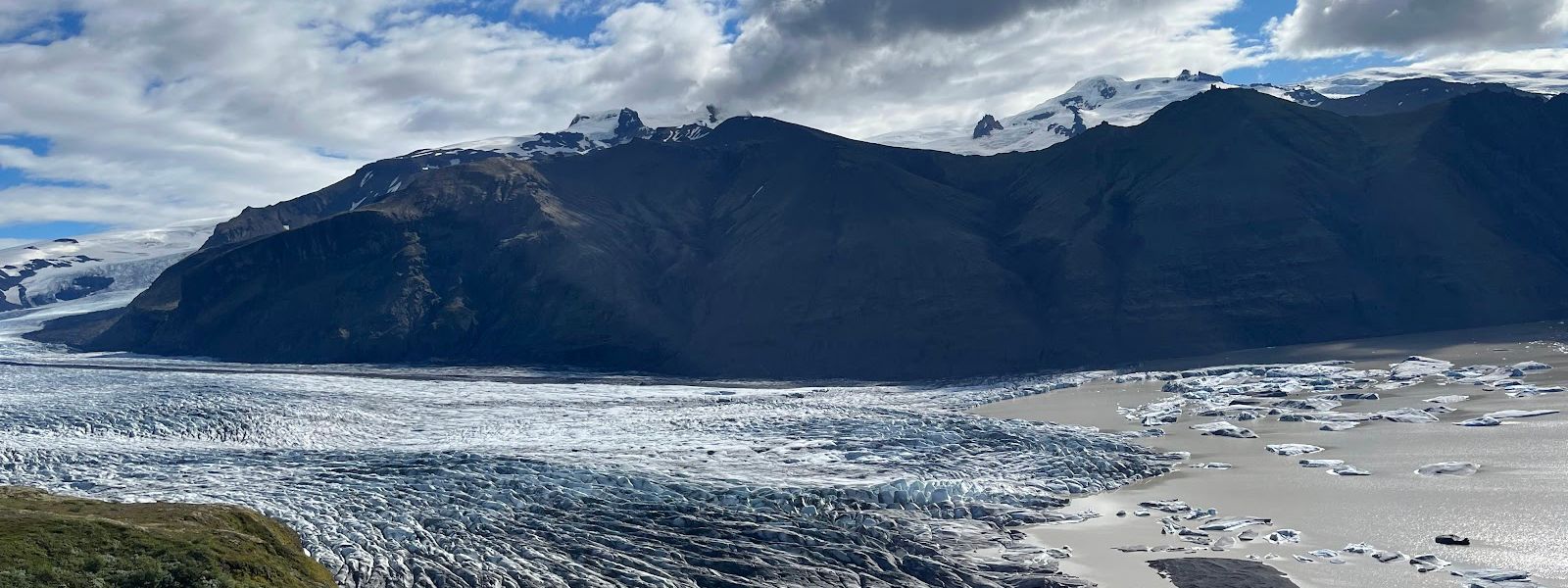
The park takes in some 14,000 sq km — close to 14% of Iceland — and at its centre lies Vatnajökull, the largest glacier in Europe.
- Entrance
- Free to enter the park
- Accessibility
- Wheelchair-accessible entrance and parking. Trails beyond the main areas are rugged.
- Parking
- Paid: both the car park and street parking. Cards and contactless accepted. Wheelchair-accessible parking.
- Difficulty
- Marked trails of varying difficulty from Skaftafell. The black trail to the Kristínartindar peaks is the longest and hardest: a steady uphill climb, rocky and uneven in places, needing decent fitness and proper hiking boots.
- Transport
- Self-drive the Ring Road; Skaftafell and Jökulsárlón are the southern gateways
- Advance booking
- Book glacier and ice-cave tours ahead
- Hours
- Open year-round; Skaftafell visitor centre daily, others seasonal
What makes it special
The park is not one landscape but several. You can walk to the foot of glacier tongues such as Skaftafellsjökull and Svínafellsjökull, and elsewhere in the park there are deep canyons, glacial lagoons, black desert and geothermal vents. Jökulsárlón, Svartifoss and Skaftafell all lie inside the boundary. Trails run around the ice and onto it, and some of the waterfalls sit well off the main routes. The springs run clean enough to drink from. Reindeer, Arctic foxes and nesting birds live here, depending on the season. Accessibility is good along the south side, where the Skaftafell visitor centre has maps, guided tours and facilities. Step past the main areas and the park turns wild: roads become gravel, trails become rugged and the mobile signal fades.
Good to know
- Parking is paid. Both the car park and street parking charge; cards and contactless are accepted.
- Dress for the ice. It gets very cold as you get nearer the glacier, so bring layers whatever the forecast says.
- Past the main areas the park turns wild. Roads become gravel, trails become rugged and the mobile signal fades.
- Glaciers and ice caves need a guide. Guided tours are strongly recommended for going onto the ice or inside a cave.
- Facilities. The Skaftafell visitor centre has maps, guided tours and a gift shop. Dogs are allowed.
Getting there
Skaftafell, on the south side of the park, sits on Route 1. Kirkjubæjarklaustur is about 70 km to the west and Höfn around 130 km to the east, so it works as a stop on a Ring Road drive rather than a separate trip. Parking on site is paid. Marked hiking trails of varying difficulty start from Skaftafell; the longest and hardest, the black trail, climbs to the Kristínartindar peaks. Beyond the main areas the roads turn to gravel.
Best time to visit
Better: the summer months, for the hiking trails — that is when snow is least likely on them.
Avoid: relying on the forecast. The weather here is unpredictable, with strong winds and sudden rain, and snow outside summer. Winter has its own reason to come, the ice caves, and those are entered on a guided tour. In any season it gets very cold as you get nearer the glacier.
Sun & daylight
Nearby Places

Similar Places

Featured in our guides
Vatnajökull National Park on the map
It gets very cold close to the glacier, and the weather turns fast: strong winds, sudden rain, snow outside the summer months. Mobile signal fades once you leave the main areas, and on the climb to the Kristínartindar peaks it disappears near the top. Do not go onto glacier ice or into an ice cave without a guide — guided tours are strongly recommended for both. Sections of the higher trails are rocky and uneven, so wear proper hiking boots.
Get directions

Your whole travel map in one place
Get inspired by new places around the world and find the ones worth the journey
Frequently asked questions
Do you need a guide for the glacier or the ice caves?
Guided tours are strongly recommended for going onto glacier ice or into an ice cave. Ice caves are a winter trip.How do you reach Skaftafell?
It sits on Route 1. Kirkjubæjarklaustur is about 70 km to the west and Höfn around 130 km to the east.Is parking free?
No. Both the car park and street parking are paid. Cards and contactless are accepted, and there is wheelchair-accessible parking.Is there mobile coverage in the park?
Not everywhere. The signal fades once you leave the main areas, and on the black trail to Kristínartindar it goes near the top.Can you bring a dog?
Yes, dogs are allowed. The park also suits children.