Things to do in Tenerife: from Teide to the Anaga forest
12 min read11 destinations
Canary Islands · Spain
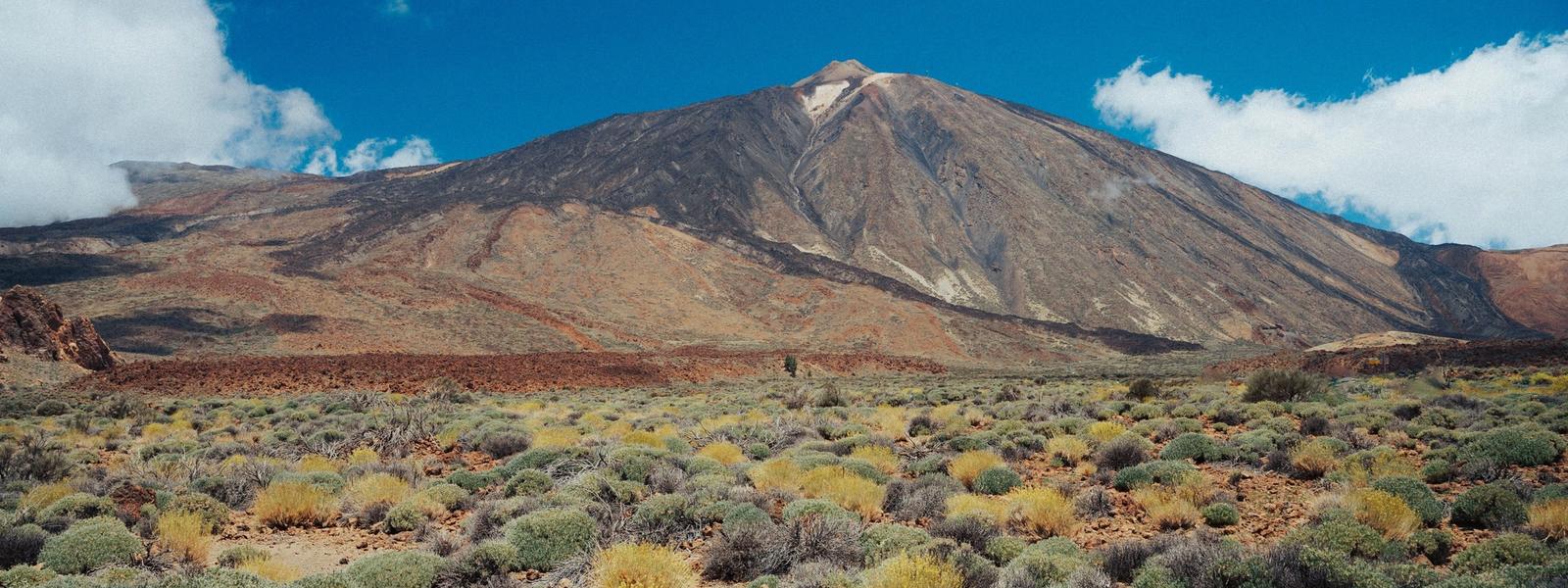
Teide, at 3,718 m the highest mountain in Spain, rises in the centre of Tenerife. In the north-east, laurel forest covers the island's oldest rock in Anaga, and on the west coast the land drops into the sea in sheer cliffs. The eight things to do below take you across that landscape, each with the place to do it and, where needed, what to book before you travel.
Paid links: booking through them supports YowJourney.
In short
- Free: the Anaga trails, Las Teresitas beach, and the view of the Drago tree from the square beside its park.
- Without a car: buses reach every place here; Las Teresitas is 15 minutes from Santa Cruz, and the Masca trail can only be reached by bus.
- On a grey day: the museum in Santa Cruz and the Cueva del Viento lava tube.
- Book ahead: the Teide cable car, the summit permit, the Masca trail and its boat, the Cueva del Viento.
Ride the cable car up Teide
You see much of the national park from the road, which climbs from the coast through pine forest onto bare lava, with viewpoints along the way. The cable car takes you most of the way up the cone. For the last 160 m to the summit crater you need a permit with a booked time slot; as of October 2026 Tenerife residents and children under 14 go free and other visitors pay. Permits sell out months ahead, so get yours before you book flights. For more places to stop on the way up, see our guide to Tenerife's viewpoints.
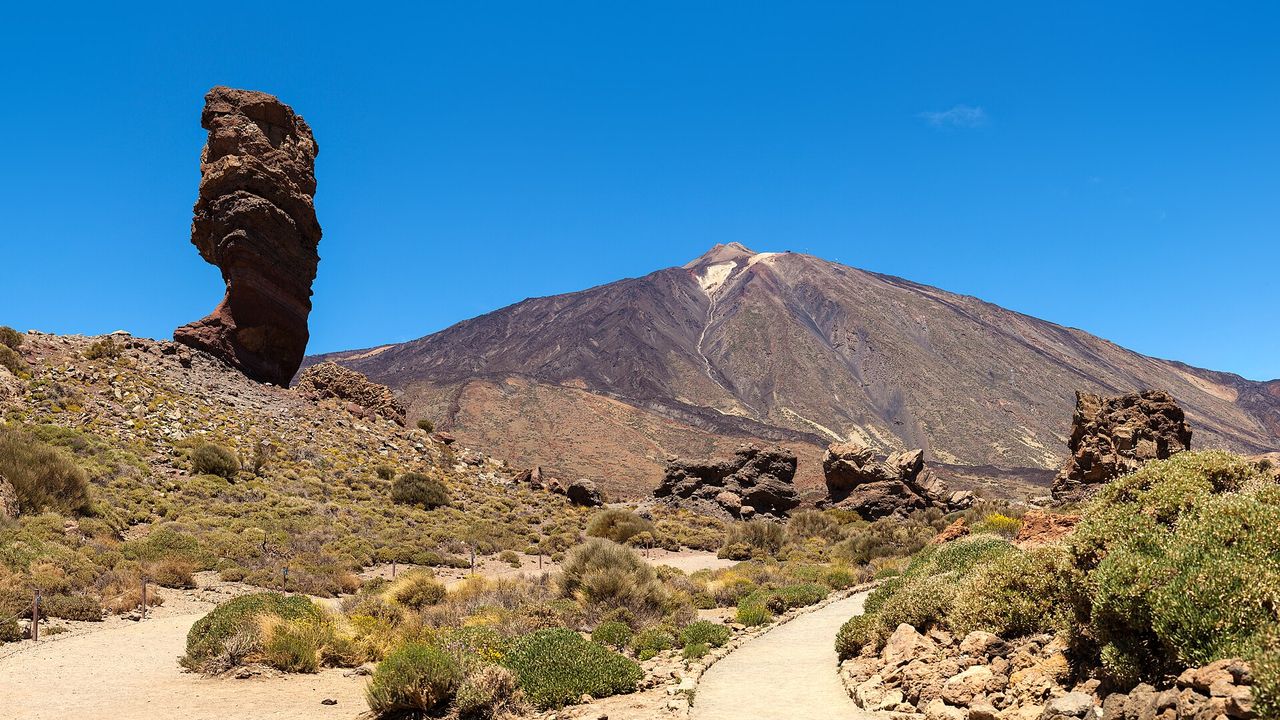
Teide National Park
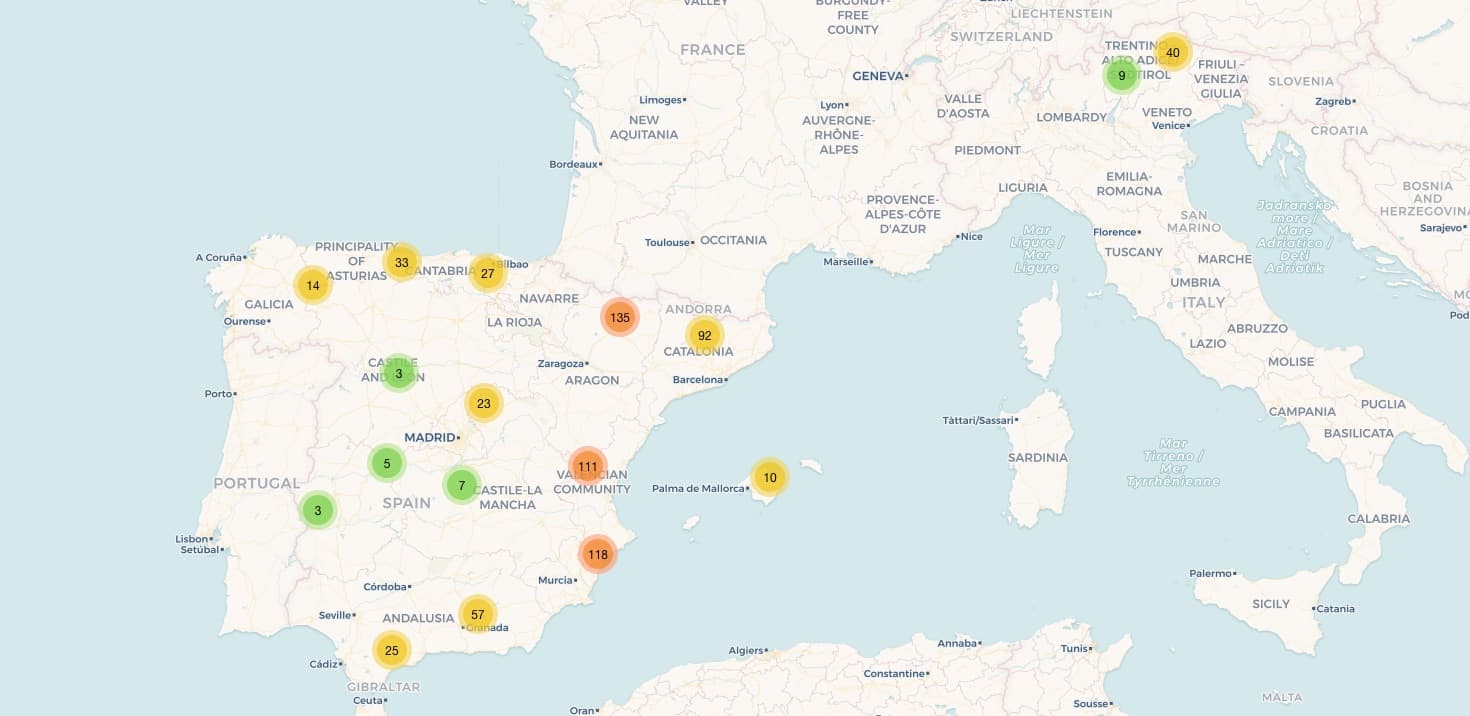
Lava fields in rust, ochre and black run up to the cone of Teide, and the ground looks enough like another planet that ESA has trialled planetary rovers here. In May and June the Teide bugloss puts up spires of red flowers up to 3 m tall. Of the park's 168 plant species, 33 grow only on Tenerife. Tip: fill your water bottle before you drive up; the car parks along the road have no drinking water, and mobile signal drops out at altitude.
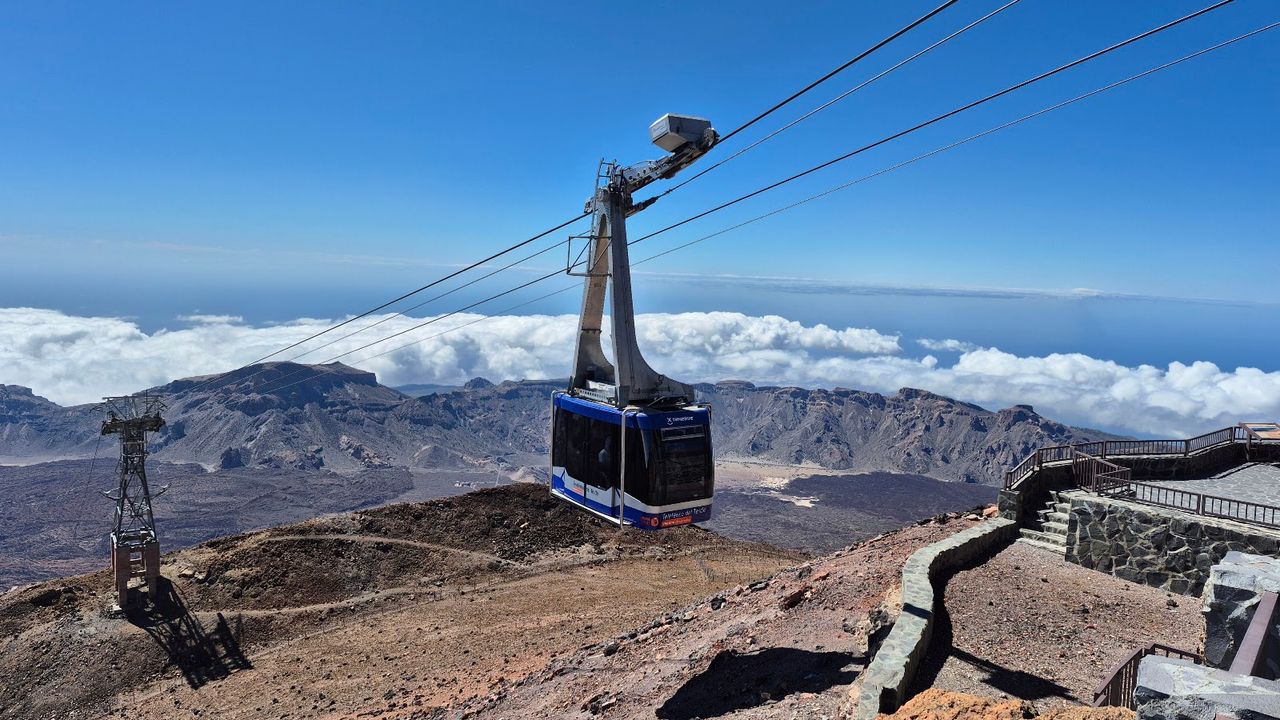
Teide Cable Car
The cabin lifts you about 1,200 m in eight minutes, from the caldera floor at 2,356 m to 3,555 m. You get about an hour at the top, enough to walk to the Pico Viejo viewpoint (10 to 15 minutes each way), which looks down into a crater 800 m across. Whatever the weather on the coast, it's cold and windy up there, and the thin air can make you dizzy. Tip: buy the ticket on the official cable car site; it comes with a departure time.
Walk the laurel forest in Anaga
Anaga, in the north-east, is the oldest part of Tenerife, raised by eruptions 7–9 million years ago. It has been a UNESCO Biosphere Reserve since 2015 and holds the greatest concentration of endemic species in Europe. Most walks start at Cruz del Carmen on the TF-12 road, where the bus stops and several waymarked trails lead straight into the trees. Pick a dry day: after rain, the steps and steep sections get slippery.
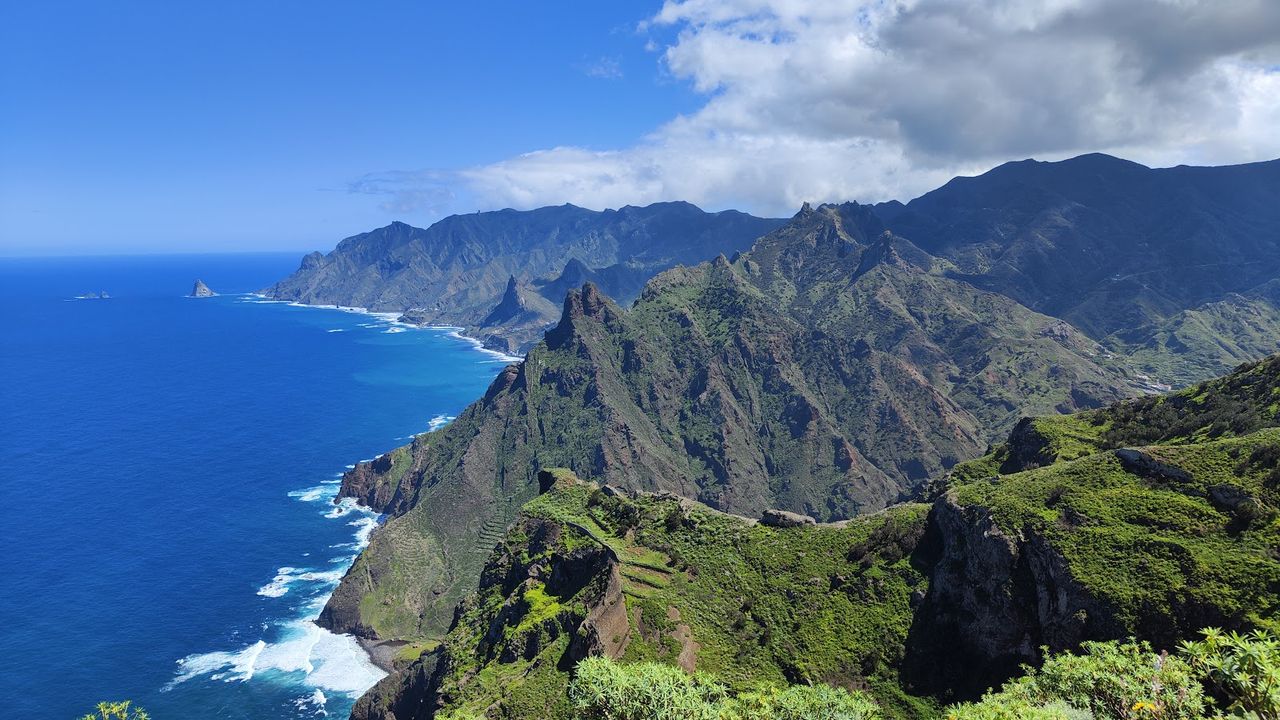
Anaga Rural Park
Mist drifts between the trees at Cruz del Carmen, moss coats the trunks, and the air stays damp and cool, a long way from the beaches of the south. Staff at the visitor centre help you choose a trail. Parking is free, but the car park fills up by mid-morning, so come early or take the bus; the stop is 60 m from the trailheads. Tip: download a map before you set off, because there's often no signal on the trails.
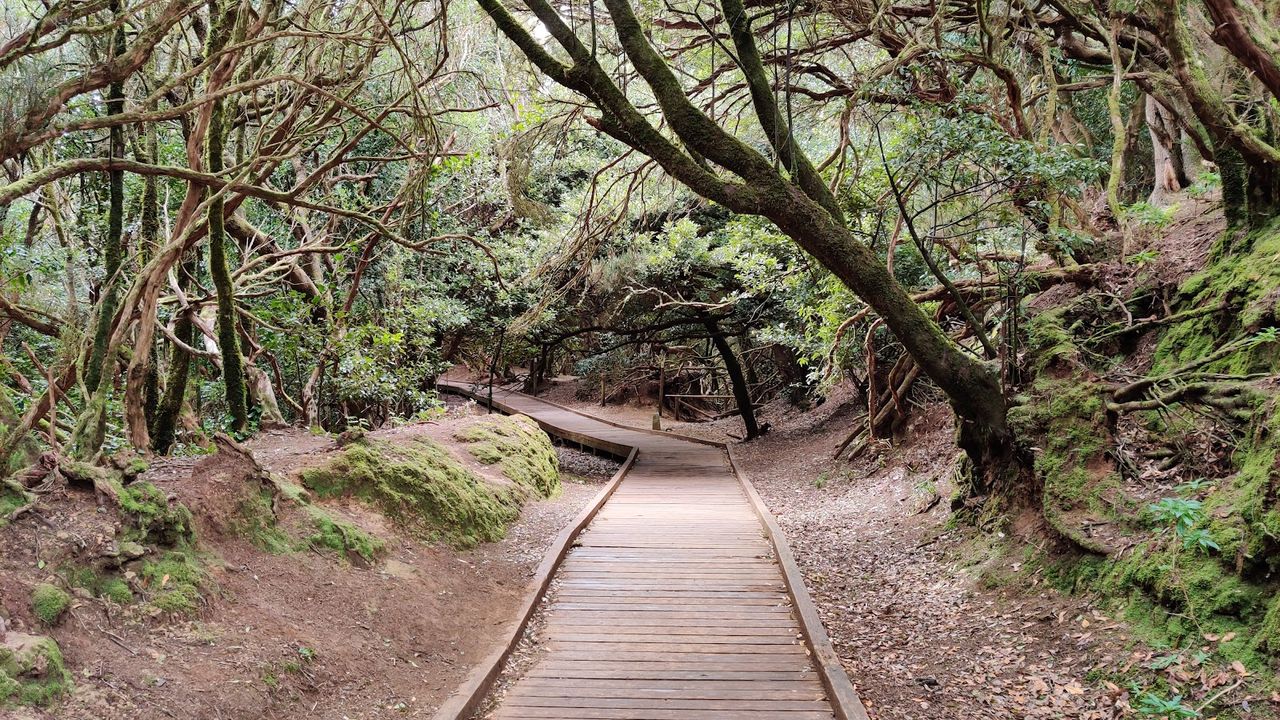
Sendero de los Sentidos Trail
If you want the forest without a proper hike, take one of the three short paths from the same car park. The longest, at 1.5 km, takes 20 to 25 minutes at a brisk pace and ends at a viewpoint looking towards Santa Cruz. The paths have steps, but the viewpoint itself is wheelchair-accessible. Bring a warm layer: under the trees it's cold, and walking only partly warms you up.
Walk down the Masca gorge to the sea
You can only walk down the Masca gorge to the sea with a booking. On the official trail site you book a time slot, and separately a boat to take you out at the bottom, because no road reaches the beach. The only way for walkers to reach the trailhead in Masca village is TITSA bus 355 from Santiago del Teide; if you drive, leave the car by the cemetery in Santiago del Teide and walk to the stop. As of October 2026, staff check for proper hiking boots, lend you a helmet and expect at least 1.5 litres of water per person. The boat lands you in Los Gigantes, and a bus takes you back up.
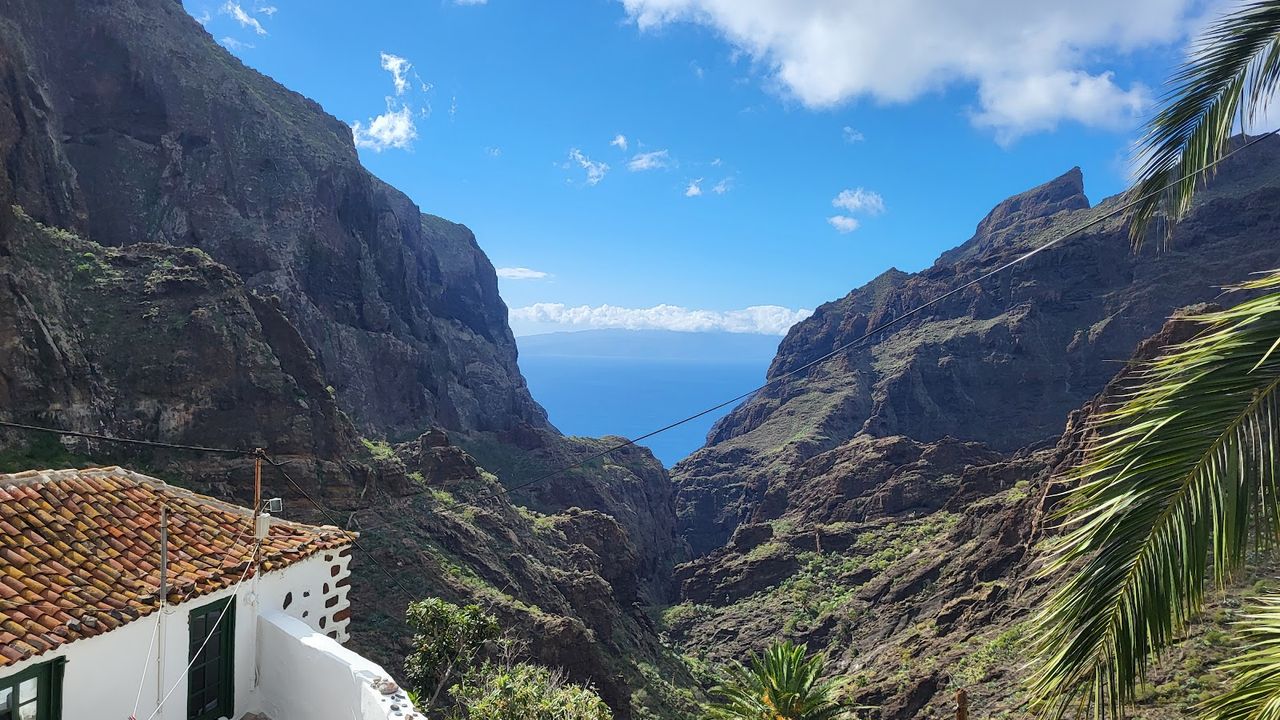
Masca Gorge
Near the start the path winds right round a tree trunk, then follows the gorge all the way down between walls of dark rock, with palms along the floor. The walls are old lava flows stacked and tilted steeply, and in places a band of broken rock reaches 10 to 15 m thick. Allow three to four hours for the 8 km. Tip: there are no toilets or drinking water on the trail; don't walk it in heavy rain, when rock falls from the walls.
See the Los Gigantes cliffs
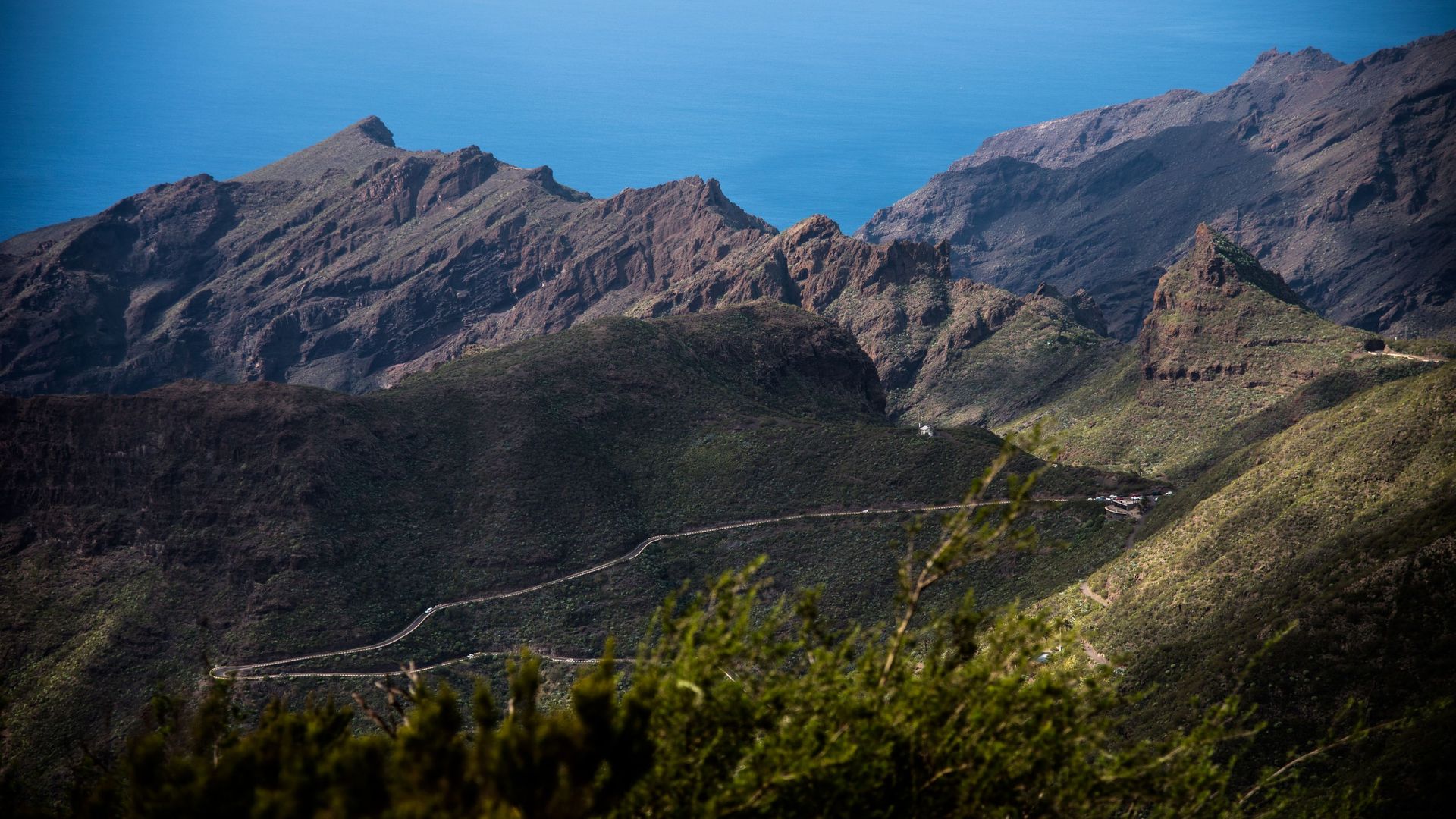
On the west coast the island ends in a wall of rock 500–800 m high, and the village of Los Gigantes takes its name from it. Come in the late afternoon, when the sun swings round to the west and lights the face; in the early morning the wall stands in its own shadow. The same coast can be seen from its northern end at Punta de Teno, where the view from the lighthouse runs south to Los Gigantes. During the day the road there is closed to private cars, so take the bus from Buenavista del Norte.

Los Gigantes Cliffs
Stand by the marina and the cliffs take up the whole view to the north, dark rock dropping straight into the sea with the harbour tucked in at their foot. Three viewpoints in the village frame them: on the main road towards Tamaimo, above the sports club, and on the coastal path around the Hotel Barceló. The full height shows best from the water, on a sailing cruise along the cliffs. Tip: keep away from the base of the cliffs, where rock falls onto the shore.
Things to do in Tenerife
Paid links: booking through them supports YowJourney.
Wander the old towns of the north
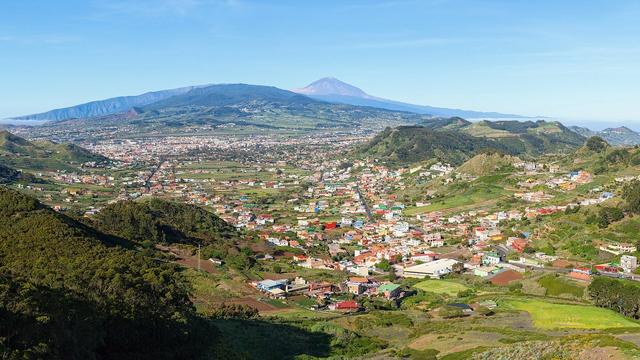
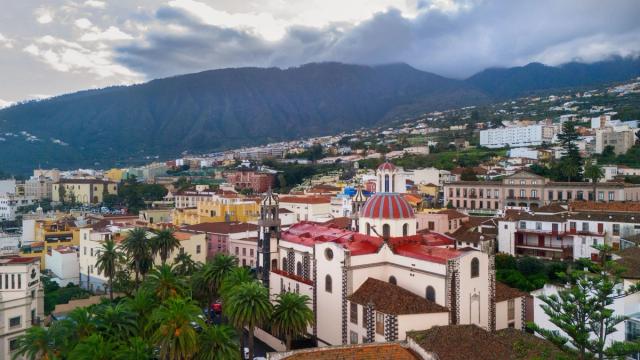
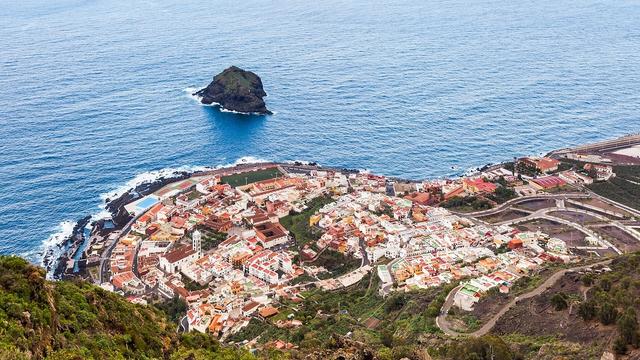
San Cristóbal de La Laguna was founded in 1496 and was the capital of the islands until 1723; its street grid became the model for colonial cities such as Havana and Lima. The old centre is closed to traffic, and the tram from Santa Cruz takes about 20 minutes. La Orotava sits about 400 m up the slopes of its valley, with balconied mansions along steep streets; the House of the Balconies, built in 1632, shows how one of them was lived in. Garachico was the busiest harbour on the north coast until lava from the 1706 eruption filled its bay. If you're still choosing a base, our guide to staying in the north or the south of Tenerife compares the two sides.
Swim in the Atlantic
Most of Tenerife's beaches are black volcanic sand, and the north coast is exposed to the Atlantic swell, heaviest in winter. The two places below show the range: a lava pool in Garachico and a sheltered beach of imported sand near Santa Cruz. For more spots like the first, see our guide to Tenerife's natural pools.
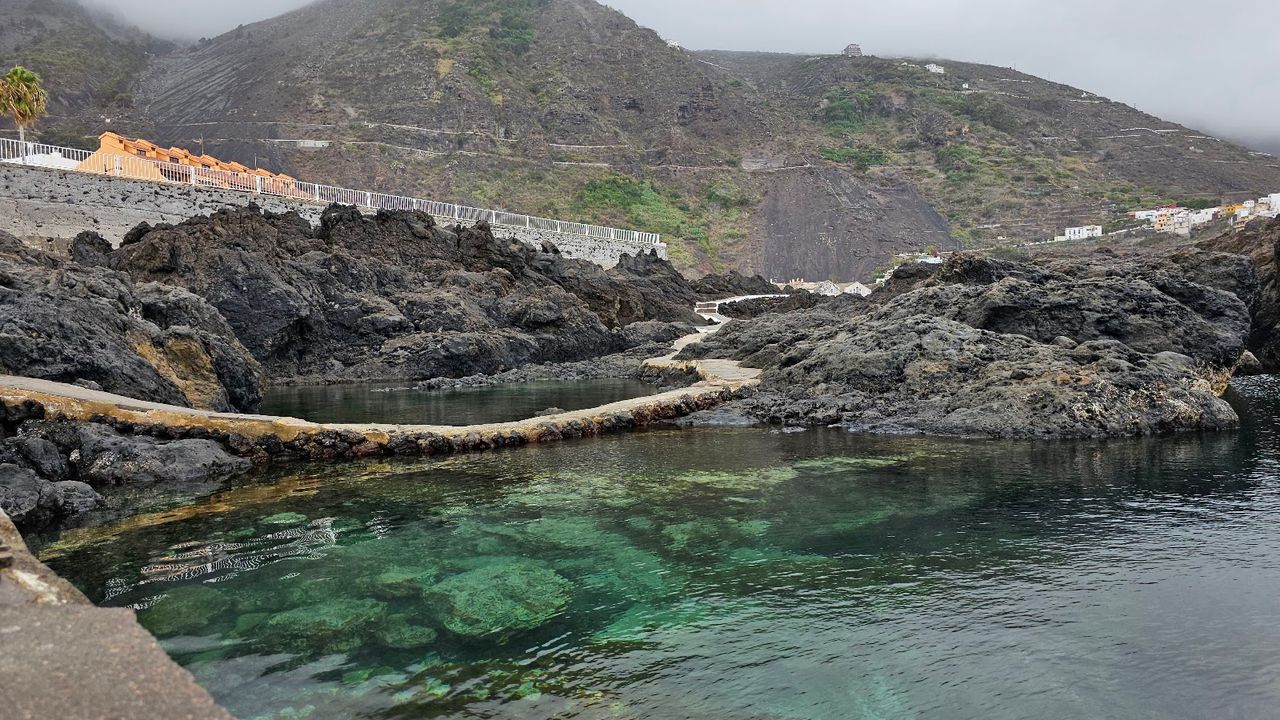
El Caletón Natural Pools
In 1706 lava from the Trevejo volcano buried Garachico's harbour and set hard where it met the sea; the Atlantic has filled the gaps in the black rock ever since. On a calm day you swim in still seawater while the swell breaks white against the outer edge, and some pools are shallow enough for young children. When the waves run high the pools close, but the sea pouring over the lava is still worth the stop. Tip: bring water shoes for the sharp rock.
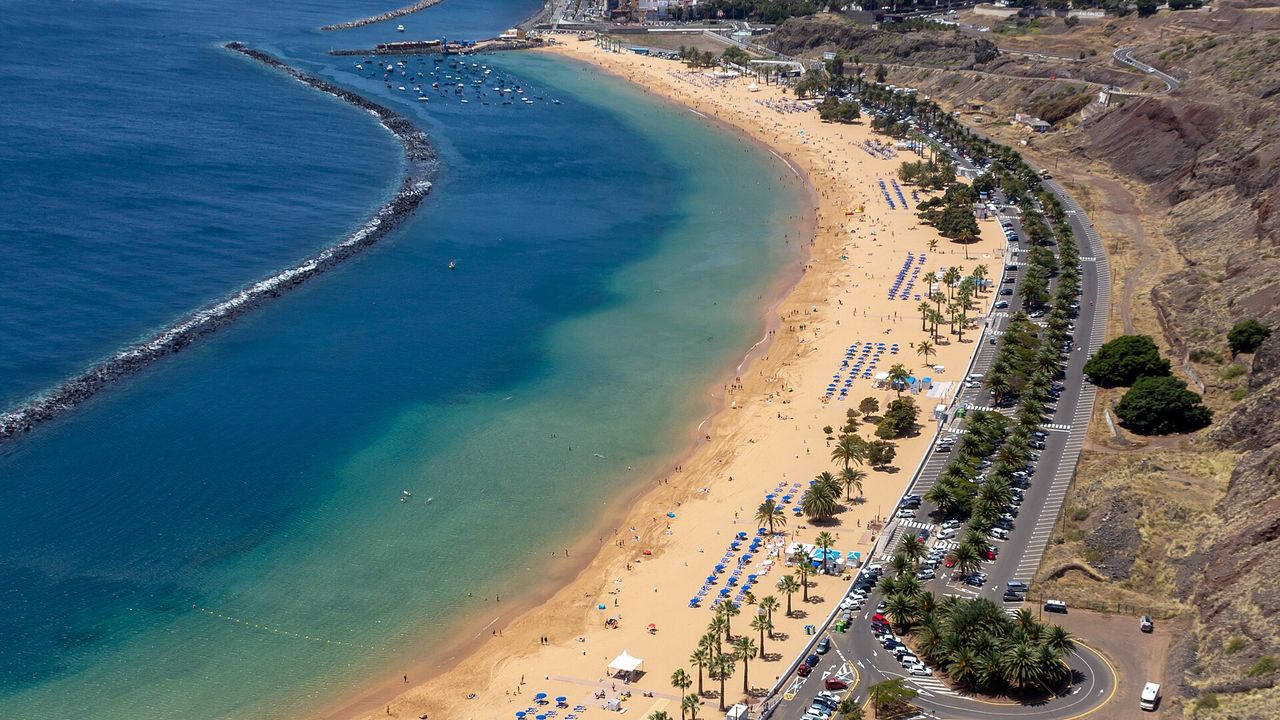
Las Teresitas Beach
Five million bags of Saharan sand, shipped from El Aaiún in 1973, made this broad pale beach under the bare ridges of Anaga. Behind a breakwater a kilometre long, the water barely moves and stays shallow a long way out. The bus from Santa Cruz takes about 15 minutes. Tip: come on a weekday morning; at weekends the locals fill it, and as the day goes on the wind picks up the fine sand.
See the dragon tree and the lava tube in Icod
Both are in Icod de los Vinos, on the north coast: the largest and oldest living dragon tree stands in the middle of town, and a lava tube runs underground nearby. Save the cave for a grey day, since underground the temperature stays the same all year, whatever the weather outside. If you're coming for the tree only, go early: coach tours of the north start arriving from late morning.

Drago Tree of Icod de los Vinos
No one agrees on its age. A 1907 study put it at 2,500 years, a 1975 one at no more than 350, and the figure usually quoted is 800–1,000. The trunk measures about 20 m round, and more than 300 branches fork into a crown 20–21 m high. The park around it charges for entry, but you can see the tree for free from the town square next door and from the Casa del Drago café.
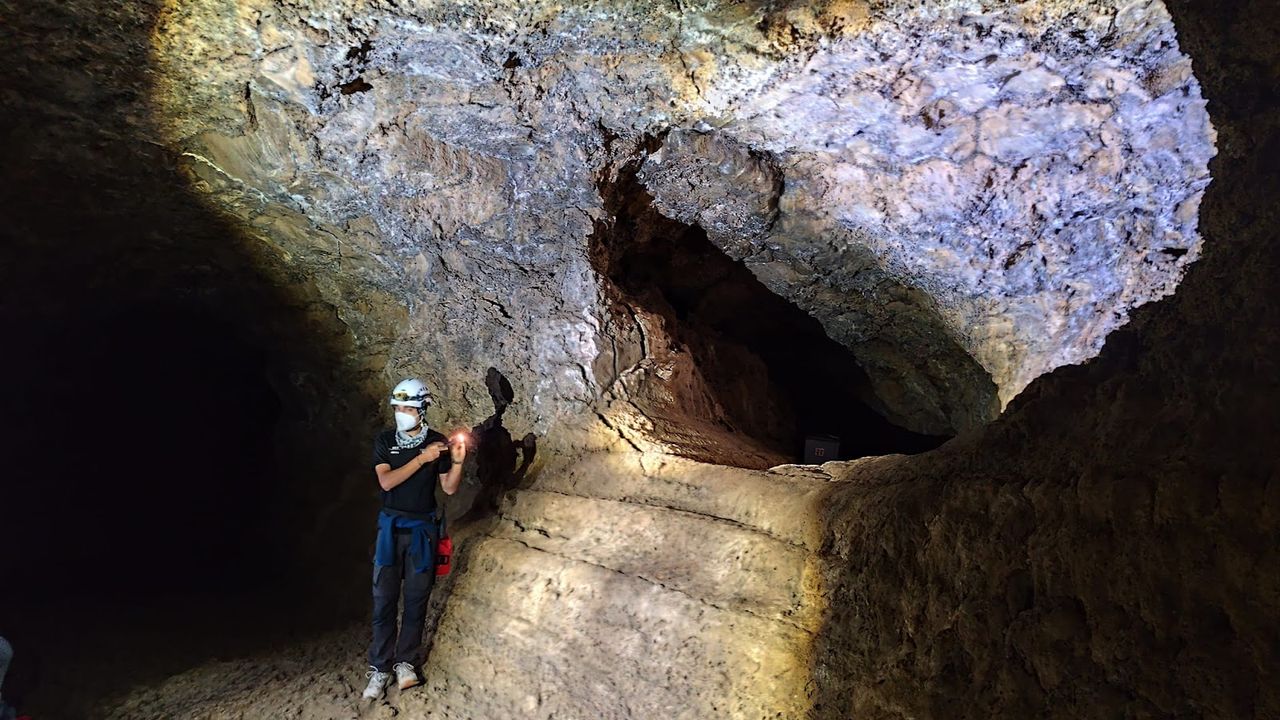
Cueva del Viento Lava Tube
Underground, the first thing you notice is the draught that gave the Wind Cave its name. Lava from Pico Viejo formed Europe's largest lava-tube system, more than 17 km of tunnels on three levels. Bones of a giant lizard and a giant rat have been found inside. A guided tour, in Spanish, German or English, covers a small part of it. Tip: tickets are sold online only, in advance, and the lane up from the main road is narrow and steep.
Learn who lived here before the Spanish
Tenerife's first inhabitants, the Guanches, buried their dead in caves; one of the best-preserved mummies came from a cave in Anaga. The museum in Santa Cruz tells the Guanches' story.

Museum of Nature and Archaeology
Most people come for the mummies, displayed with objects from the tombs of the Guanche kings. Two floors of archaeology go island by island: how the Guanches lived, what they ate and how they treated illness. The natural history half holds fossils of animals the islands have lost: a giant lizard, a giant rat and a giant tortoise. Labels are in Spanish; a QR code opens an audio guide in several languages on your phone, so bring headphones.
On the east coast, the Pyramids of Güímar tell a different story. Thor Heyerdahl believed the stepped lava platforms were ancient, but archaeologists dated them to the 19th century. Go for the controversy and for the full-size replica of his reed boat, Ra II.
Before you go
A car makes it easiest to combine these in a few days, but driving is slow: roads are narrow and winding, so expect to average 30 km/h or less. TITSA buses reach every place in this guide, the Teide cable car included, and a ten+ travel card costs less than paying cash. Four things are best booked before you travel: the cable car, the summit permit, the Masca trail with its boat, and the Cueva del Viento. In winter, snow and ice can close the paths at the top of the cable car; more on that in Tenerife in winter. If you have just one day, our one-day route around the island picks ten stops.
Places and practical details come from our catalogue pages; booking rules come from the official sites linked above and from the Canary Islands government's October 2026 regulations for the summit trail.
With three or four days, stay on one side: the north gives you Anaga, La Laguna, La Orotava, Garachico and Icod, the south its beaches, and Teide is within reach from both. A week or more lets you add the summit and the west coast, with the Masca gorge, the Los Gigantes cliffs and Punta de Teno.
FAQ
How many days do you need in Tenerife?
For a full loop of the island, with Teide, both coasts and the old towns, allow seven to ten days. With three or four days, pick one side: the south for beaches and resort towns, or the greener north, with the old towns and Anaga. Add a day if you're going up to the summit.Do you need a car in Tenerife?
Not for the places in this guide: buses reach all of them, and the Masca trail can only be reached by bus. A car makes the island's remote corners easier to explore and saves time, but mountain roads are narrow and steep, and rock falls are a recurring hazard.What can you do in Tenerife when it rains?
Go indoors or underground. The Museum of Nature and Archaeology in Santa Cruz and the Cueva del Viento lava tube in Icod don't depend on the weather, and neither does the House of the Balconies in La Orotava. Leave the Anaga trails and the Masca gorge for a dry day.Can you walk to the top of Teide?
Only with a permit for the summit trail, which the cable car ticket doesn't include. Permits are issued in your name, tied to a time slot, and sell out months ahead; as of October 2026 Tenerife residents and children under 14 go free and other visitors pay. Snow closes the trail, and your permit is cancelled with it.