Gardur Old Lighthouse is the older of two lighthouses on the shore at Garðskagi, at the end of the Reykjanes Peninsula in Iceland. The Royal Danish Lighthouse Commission built it in 1897 as a square concrete tower at the water's edge. In 1944 a cylindrical tower 28.6 metres tall took over the work, set 215 metres further inland. Both still stand, together with the keeper's house of 1933 and the Garðskagi Heritage and Maritime Museum. The headland is a known spot for sunsets and for the northern lights.
Gardur Old Lighthouse
Local name: Garðskagaviti
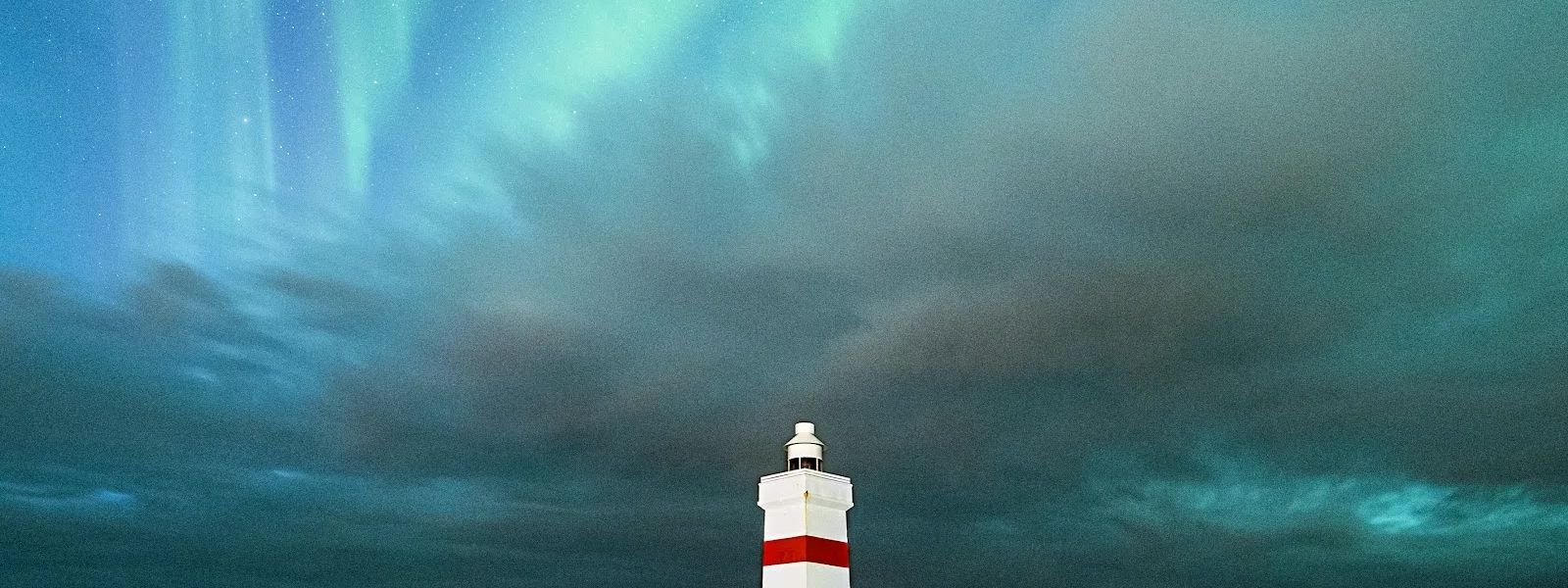
The 1897 tower is only 11.4 metres tall, and it is the second-oldest concrete structure in Iceland.
- Entrance
- Free; no ticket for the lighthouse site.
- Accessibility
- Wheelchair-accessible parking spaces at the site.
- Parking
- Free car park at the lighthouses, plus free street parking.
- Hours
- Open 24 hours, every day.
What makes it special
Two lighthouses stand within sight of each other here, and the small one is the reason to come. The 1897 tower is square, 11.4 metres tall and built of iron-reinforced concrete — lower than most people picture when they picture a lighthouse. It went up after years of argument over money. Denmark agreed to pay for the light fixture but not for the structure, so the Icelandic government put up 11,000 kronur and Denmark matched the sum. Erosion then began to eat the ground beneath it. A footbridge was added in 1912, a concrete platform in 1925, and the tower still shook in storms. That is why the 1944 replacement was set 215 metres inland, away from spray and eroding shore. Since December 2003 the old lighthouse, its outbuildings, stone base, walkway, footbridge and handrails have all been protected heritage.
Good to know
- A detour: the towers sit at the tip of the peninsula, close to Keflavík Airport but off the main routes. Plan them as a stop, not a drive-by.
- Two towers, 215 metres apart: seeing both means walking that distance between them.
- Exposed coast: the 1944 tower was set back from the shore to escape sea spray and erosion. Bring a windproof layer.
- Museum next door: the Garðskagi Heritage and Maritime Museum stands beside the lighthouses and is a separate visit from the site itself.
- Protected heritage: the old lighthouse, its footbridge, handrails and protective platforms have been protected since December 2003.
Getting there
People arrive by car. The lighthouses stand at the end of the peninsula, a short drive from Keflavík Airport, which makes them a workable first stop after landing. There is a car park at the site, and both towers stand in the open beside it: the 1944 lighthouse is 215 metres from the old one, so seeing both is a walk of that distance. It is enough of a detour that it is worth planning rather than counting on passing it.
Best time to visit
Better: evening. The site faces open water and is used for sunsets, and on dark, clear nights the northern lights come out over the same stretch of coast.
Avoid: torches and full headlights in the car park after dark. They blind everyone else standing there waiting for the aurora.
The headland does not draw heavy crowds, so there is room to set up and wait.
Sun & daylight
Nearby Places


Similar Places



Your whole travel map in one place
Get inspired by new places around the world and find the ones worth the journey
Frequently asked questions
How many lighthouses are there at Gardur?
Two. The old tower of 1897 is square and 11.4 metres tall. The cylindrical tower of 1944 is 28.6 metres tall and stands 215 metres to the south-east of it.Why was a second lighthouse built in 1944?
The sea was eroding the ground under the old tower, and spray cut visibility in bad weather. The new tower, designed by the engineer Axel Sveinsson, was built further from the shore. Work began on 11 June 1944 and took three months.What else is there to see besides the towers?
The Garðskagi Heritage and Maritime Museum, open since 1995. It holds 60 engines restored by Guðni Ingimundarson, most of them still working, exhibits on farming and fishing, and a nine-metre six-oared boat built in 1887. The lighthouse keeper's house of 1933 is part of the museum.How far does the light reach?
Moving the 1897 lighting elements into the taller 1944 tower raised the range from 13 to 15.5 nautical miles. The fixture was converted to electricity in 1946, and in 1960 the original lens was replaced with a quadruple rotating one.