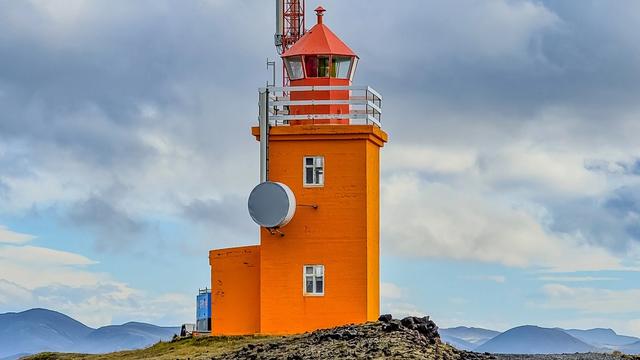
Reykjanes Lighthouse stands at Reykjanestá, on the south-western tip of the Reykjanes Peninsula in Iceland. It is the country's oldest lighthouse. The first tower was built in 1878 and destroyed by an earthquake eight years later, and the present concrete tower was lit in 1929. It is 31 metres tall and works as the landfall light for Reykjavík and Keflavík. People come for the view over the cliffs and lava fields, for the ocean below, and for the geothermal steam beside the tower.
Reykjanes Lighthouse
Local name: Reykjanesviti

The first tower here went up in 1878 and an earthquake brought it down eight years later; the concrete one that replaced it has been lit since 1929.
- Accessibility
- The entrance is not wheelchair accessible.
- Parking
- Car park at the lighthouse. Parking is charged and paid through the Parka app; the same payment covers the parking area down by the shore.
- Transport
- Self-drive (Road 425)
- Hours
- Open 24 hours, every day.
What makes it special
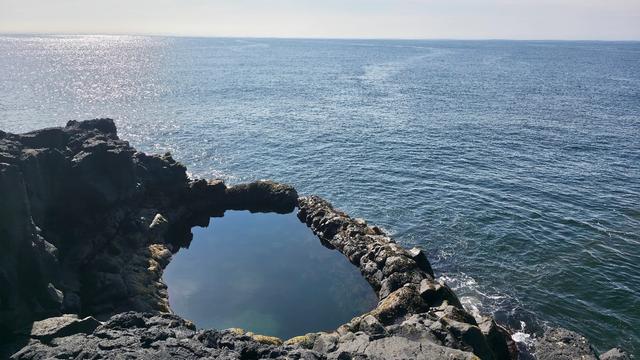
Cliffs fall away below the tower, and the Atlantic breaks on the rocks at the bottom. This is Iceland's oldest lighthouse, standing at Reykjanestá on the south-western edge of the Reykjanes Peninsula. The tower is 31 metres tall and the light sits 73 metres above the sea, which makes it the landfall light for Reykjavík and Keflavík. Its signal is two flashes every 30 seconds. Behind the tower there is black lava. The ground beside it is geothermally active, and the steam drifts into most photographs taken here. A keeper still lives on site, in a two-storey house next to the lighthouse. In June purple lupins flower around the building.
Good to know
- Toilets: free and open all year. Bring your own paper — supplies run out and the bins overflow.
- Visitor centre: closed from November to May.
- Road to the shore: a road runs down to the sea front, but it is very rough. Walking down is the easier option.
- Combine it: an easy add-on if you are already out on Reykjanes for Seltún.
Getting there
Visitors arrive by car, out at the western end of the Reykjanes Peninsula. There is a car park at the lighthouse, and everything after that is on foot: the viewpoint beside the tower, and the sea front below, where you can walk around the rocks and cliffs. A road also runs down towards the shore, but it is very rough.
Best time to visit
Best: June, when the lupins around the lighthouse are in flower and the visitor centre is open.
Avoid: November to May, when the visitor centre is closed.
The headland is exposed and the light changes fast. Sun, storm and the midnight sun each give a completely different view of the same cliffs.
Sun & daylight
Nearby Places


Similar Places



Reykjanes Lighthouse on the map
Cliffs drop away directly below the lighthouse. Stay back from the edges, above all in wind. At the sea front the Atlantic breaks straight onto the rocks, and the safe distance is further back than it looks.
Get directions

Your whole travel map in one place
Get inspired by new places around the world and find the ones worth the journey
Frequently asked questions
Is Reykjanes Lighthouse the oldest in Iceland?
Yes. The first tower was built in 1878 and an earthquake destroyed it eight years later. The present concrete tower was lit in 1929 and is 31 metres tall.What is there to see apart from the tower?
Cliffs, black lava fields and open ocean. The ground next to the lighthouse is geothermally active, and its steam turns up in most photographs of the place.Is the visitor centre open in winter?
No. It is closed from November to May. The lighthouse and the coast around it are open regardless, and the toilets stay open all year.Can you get down to the sea from the lighthouse?
Yes. You can walk down to the sea front and around the rocks and cliffs. A road goes down as well, but it is very rough.