Gunnuhver lies at the southwestern tip of the Reykjanes Peninsula, near the Reykjanesviti lighthouse and inside the Reykjanes UNESCO Global Geopark. Steam vents, boiling springs and mud pots cover the field, which took its present form after earthquakes and crustal movement in 1967. The main mud pool is the largest in Iceland, about twenty metres across, and the water feeding the system is drawn from the sea rather than from fresh groundwater. Wooden walkways and viewing platforms cross the site. The name comes from a folktale about a ghost called Gunna.
Gunnuhver Geothermal Area
Local name: Gunnuhver
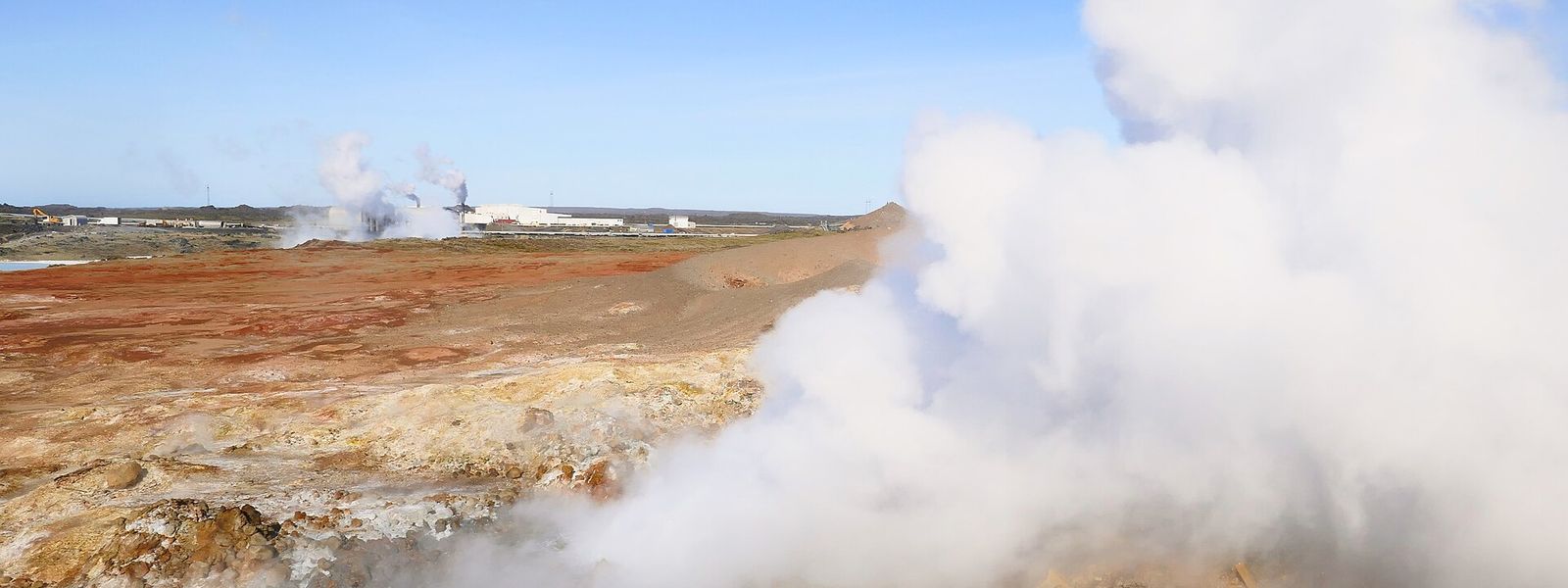
The main mud pool is about twenty metres across, the largest in Iceland, and the water boiling in it comes from the sea rather than from groundwater.
- Accessibility
- Wooden walkways and viewing platforms give controlled access around the vents and mud pools, and the boardwalk is level. The car parks and the approach road are gravel.
- Parking
- Two free car parks at the site, both gravel: Gunnuhver east and Gunnuhver west.
- Difficulty
- Easy: about 130–150 metres of level walking from either car park, on gravel and then wooden boardwalk.
- Transport
- Self-drive — Road 425 at the peninsula's tip
What makes it special
The mud pool at the centre of the field is about twenty metres across, the largest in Iceland. Steam escapes from vents all around it, and the roar is loud. The sulphur smell is intense; if you are sensitive to it, keep the visit short. Minerals have stained the ground orange, yellow and red, and mist drifts across the wooden boardwalks. The water is the unusual part. The hydrothermal fluids here are seawater-derived rather than freshwater, which is rare in Iceland. The field sits on the Reykjanes volcanic system, at the landward end of the Mid-Atlantic Ridge.
Good to know
- Smell: The sulphur smell is intense and carries across the whole site. Keep the visit short if you are sensitive to it.
- Road: The last stretch is a gravel road with a few deep potholes. Drive it slowly.
- Wind: The site stands on an exposed coast and the wind is cold and fierce. Bring a windproof jacket.
- Closures: Rising geothermal activity closes the area at times. It shut in September 2014 after a sharp increase in mud-geyser activity damaged infrastructure.
- Signs: Interpretive boards stand along the walkway, including one on the Gunna folktale.
Getting there
Two car parks serve the site, one about 130 metres east of the springs and the other about 150 metres west. From either, the walk to the viewing platforms is short and level, first on gravel and then on wooden boardwalk. The road to Gunnuhver and the Reykjanesviti lighthouse has been closed at times during seismic unrest on the peninsula.
Sun & daylight
Nearby Places


Similar Places



Gunnuhver Geothermal Area on the map
Stay on the wooden boardwalks and viewing platforms. The springs and mud pots are boiling, and the ground around the vents is not safe to walk on. Geothermal activity here changes: in September 2014 a sharp rise in mud-geyser activity damaged infrastructure and forced the area to close.
Get directions

Your whole travel map in one place
Get inspired by new places around the world and find the ones worth the journey
Frequently asked questions
Where does the name Gunnuhver come from?
It means Gunna's hot spring. In the folktale Guðrún Önundardóttir, known as Gunna, quarrelled with her landlord Vilhjálmur Jónsson over unpaid rent and a seized cooking pot. After her death she was said to haunt the area, until the pastor Eiríkur of Vogsósar lured her spirit to the spring with a ball of yarn.How strong is the sulphur smell?
Strong. The fumaroles push sulphurous steam over the walkways, and the smell reaches the whole site. Anyone with a sensitive nose should keep the visit brief.Can you walk up to the hot springs?
Wooden walkways and viewing platforms lead close to the vents and mud pools. Access is controlled, and the route stays on the boardwalk throughout.Is Gunnuhver ever closed?
Yes. The area closes when geothermal activity rises, as it did in September 2014 after mud-geyser activity damaged infrastructure. Roads on the Reykjanes headland were also adjusted during the increased seismic activity of 2023 and 2024 for civil protection measures.What is unusual about the water here?
The hydrothermal fluids are seawater-derived rather than freshwater, which is unusual in Iceland. The main mud pool they feed is the largest in the country, about twenty metres across.