Krýsuvík is a high-temperature geothermal area on the Reykjanes Peninsula in southwest Iceland, about 35 km from Reykjavík. Steam rises from ground stained yellow, red and green, and hot springs sit beside the path. Wooden walkways run a short loop across the field, with a viewpoint above it. The area belongs to the Krýsuvík volcanic system and is protected as part of Reykjanesfólkvangur. Farms stood here from the Middle Ages until the mid-20th century, and sulphur from these fields was mined and exported.
Krýsuvík Geothermal Area
Local name: Krýsuvík
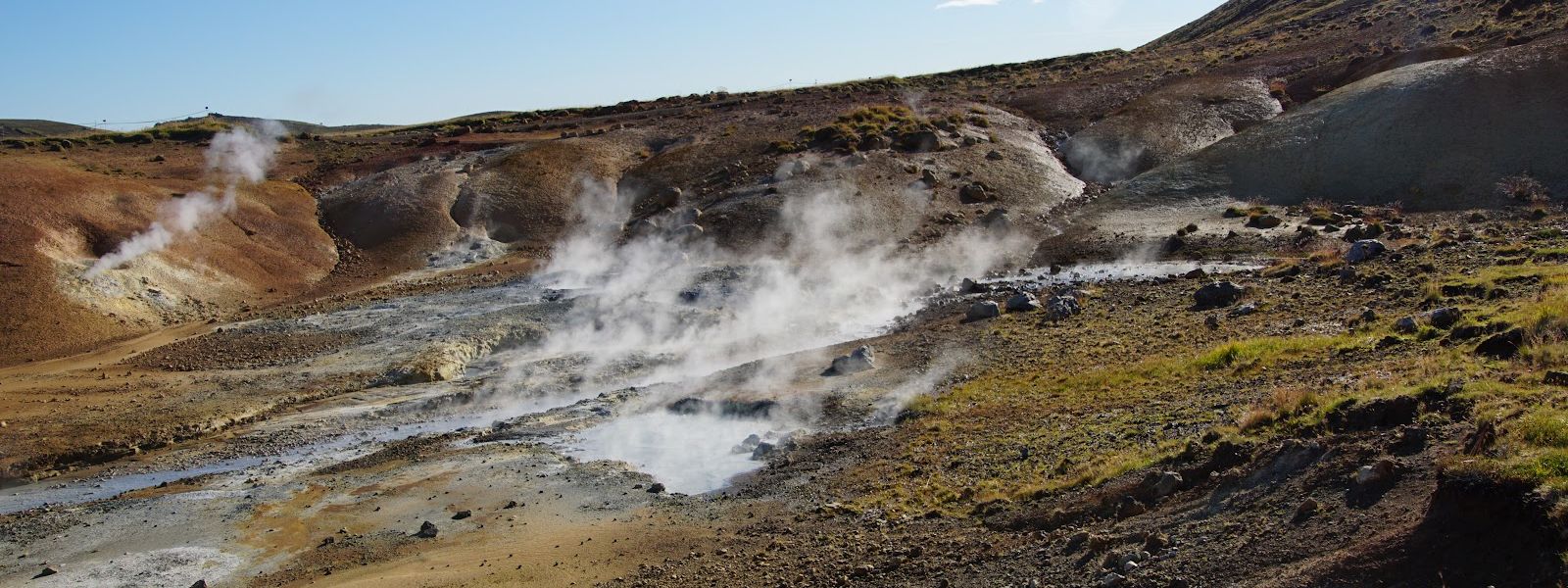
The sulphur steaming out of this ground was once mined here and shipped abroad.
- Accessibility
- Wheelchair-accessible parking spaces at the car park.
- Parking
- Car park at the site, with wheelchair-accessible spaces. Expect a parking charge.
- Difficulty
- Easy. A short loop on wooden walkways over the field, 20 to 30 minutes. A path climbs from it to the viewpoint above.
- Transport
- Self-drive (Road 42)
- Hours
- Open 24 hours, every day.
- Address
- Road 42 (Krýsuvíkurvegur), 241
What makes it special
The pull here is the ground itself. Around the vents the clay is yellow, red and green, and steam comes out of it in the open, a step from the boardwalk. Water boils in the pools. The air smells of sulphur. Wooden walkways cross the field in a loop, and one side carries most of the vents, so the walk starts with the best of it. Above the loop a path climbs to a viewpoint that takes in the whole coloured basin. The sulphur was worked here as well as looked at: it was mined in these fields and exported, in the years when the farm below was known for its wealth.
Good to know
- Smell: the field smells of rotten eggs. It is strong enough that children may not want to leave the car.
- Toilets: there are toilets at the site, and they are not kept clean.
- Time needed: the loop takes 20 to 30 minutes, so treat Krýsuvík as a stop rather than a day out.
- Weather: the viewpoint above the field is only worth the climb on a clear day.
Getting there
Krýsuvík sits on the Reykjanes Peninsula, about 35 km from Reykjavík, between Þorlákshöfn and Grindavík. Two roads reach it, Routes 42 and 427; Route 42 runs along the western shore of the lake Kleifarvatn. Cars stop at the car park beside the geothermal field. Access from there is easy: the walk in is short, and wooden walkways carry the loop over the hot ground. A separate jeep track leaves Route 427 and runs down to the bird cliffs of Krýsuvíkurbjarg, which can also be reached on foot.
Best time to visit
Better: a clear, bright day. Avoid: low cloud and steady rain.
The colours are the reason to come, and they need light to show — in flat grey weather the ground goes dull. Low cloud also takes the view away from the upper viewpoint, which is the one wide outlook on the site. In cold weather the steam stands thicker over the vents and photographs better.
Sun & daylight
Nearby Places



Similar Places



Krýsuvík Geothermal Area on the map
This is a high-temperature field. Hot springs and boiling ground lie right beside the path. Stay on the wooden walkways and keep children within reach.
Get directions

Your whole travel map in one place
Get inspired by new places around the world and find the ones worth the journey
Frequently asked questions
Does Krýsuvík smell of sulphur?
Yes. The field smells of rotten eggs, strongest near the steaming vents. It is noticeable but not overpowering.How long does the walk take?
The loop over the field takes 20 to 30 minutes. One side of it carries most of the vents and pools. Add time if you climb to the viewpoint above.Is it suitable for children?
Yes, on the walkways. The sulphur smell is the usual objection. The ground either side of the boardwalk is hot, so keep children close.What else is worth seeing nearby?
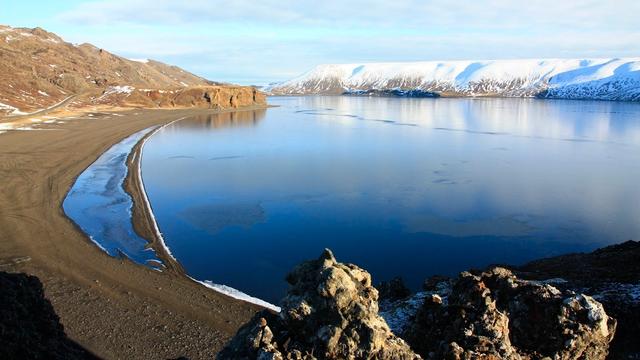
Kleifarvatn, the largest lake in the area, lies along Route 42, with tuff rock formations on its western shore. A jeep track from Route 427 leads down to the bird cliffs of Krýsuvíkurbjarg, where about 63,000 pairs of seabirds were counted shortly before 2014.