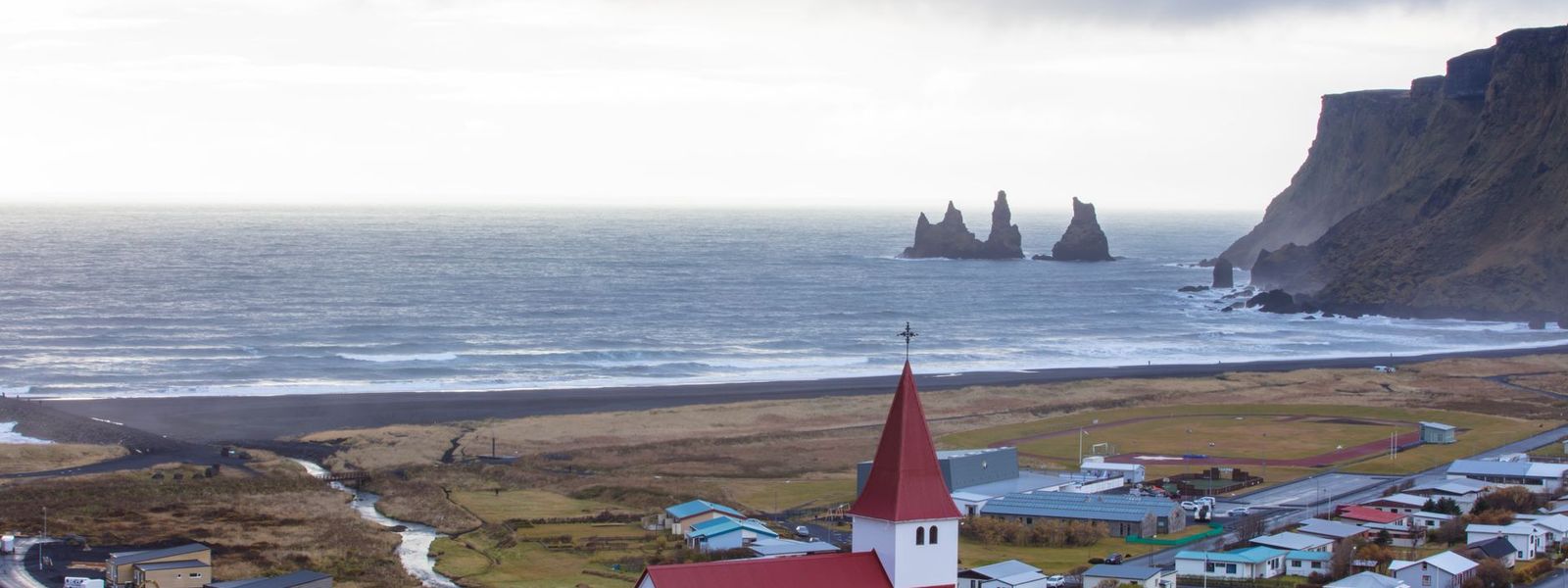
Vík í Mýrdal is the southernmost village in Iceland, set on the Ring Road about 180 km southeast of Reykjavík. Around 300 people live here, and it is the largest settlement for some 70 km around. The coast is the reason to stop: black basalt sand, cliffs west of the beach where puffins burrow to nest, and basalt sea stacks offshore, the remains of the Reynisfjall cliffline. Above the village stands Mýrdalsjökull, the glacier that caps the Katla volcano.
Vík í Mýrdal
- Currency
- Icelandic króna (ISK)
- Language
- Icelandic; nearly all speak English
- Power plug
- Europlug and Schuko sockets, 230 V
- Visa
- Schengen; outside the EU
- Time zone
- UTC±00:00 (Atlantic/Reykjavik)
- Tap water
- Safe; hot water smells of sulphur
- Tipping
- Not customary
- Emergency
- 112
Things to do
All tours in South Iceland on GetYourGuide
Paid links: booking through them supports YowJourney.
When to go
Shoulder
Apr – May
Days lengthen quickly at 63°N. Temperatures stay low all the same: the annual mean here is 5.3 °C, the highest of anywhere in Iceland.
High season
Jun – Aug
Summers are cool and short, with daylight running almost round the clock. The bus from Reykjavík runs via Skógar in this season.
Shoulder
Sep – Oct
Daylight shrinks fast through autumn. Rain is the constant: Vík í Mýrdal takes about 2,250 mm a year, three times the Reykjavík figure.
Low season
Nov – Mar
Winters are among the warmest in Iceland, with an average day peaking near 4 °C. At sea level that means rain rather than deep snow, and the surf offshore is at its wildest.
How long to stay
One or two nights is the realistic stay. The village itself measures 1.5 km across and can be walked in under an hour, so the time goes on what lies around it. Vík í Mýrdal is the largest settlement for some 70 km and the practical base for the coastal strip between Skógar and Mýrdalssandur. Two nights leave a full day for the surrounding sights without driving back the way you came.
Getting around
Vík í Mýrdal sits on the Ring Road, and there are few other roads in the area. The village is tiny, 1.5 km at its widest point, so walking covers all of it. Everything beyond it needs a car. Many of the sights around the village are reached only by gravel tracks, so take a well-equipped vehicle, preferably four-wheel drive. Most hotels can arrange transport to the popular sites for guests without one.
Strætó runs a bus from Reykjavík, generally seven times a week, and weekend and holiday schedules vary. The trip takes about 3 hours 40 minutes, including a 50-minute layover in Selfoss, and in summer the route runs via Skógar. The nearest airport is Keflavík, about a three-hour drive away, with rental cars on site.
Local rules
Stay out of the sea. The waves and the undertow at the black sand beach are far stronger than they look, and tourists have drowned here. The sand is safe as long as you keep well back from the water's edge. Small boats are swallowed easily in these waters.
Know where the church is. Vík í Mýrdal lies directly south of Mýrdalsjökull and the Katla volcano beneath it. An eruption could melt enough ice to flood the village, and residents count on about 15 minutes to reach the church on the hill, the one building expected to survive. Hotels brief guests on this.
What to see

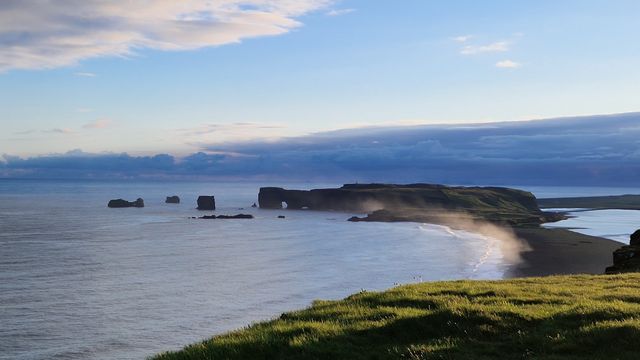

Destinations in Vík í Mýrdal
Frequently asked questions
Can you reach Vík í Mýrdal without a car?
Yes. Strætó operates buses from Reykjavík, generally seven times a week, and the trip takes about 3 hours 40 minutes with a 50-minute layover in Selfoss. Weekend and holiday schedules sometimes vary. A car is still useful once you are there, because the sights nearby are spread along the coast.Is the black sand beach safe?
The sand is safe if you stay on it and keep a distance from the water. The ocean is not. Waves and undertow near Vík í Mýrdal are much more dangerous than they appear, and tourists have died after being caught by them.How risky is the Katla volcano for visitors?
Day to day the village is safe. Katla has not erupted since 1918, which is longer than its usual dormant period, so an eruption is expected at some point. The village has around 1,400 hotel rooms, and scientists and tourists staying in them are briefed on what to do.Where do you buy food and alcohol?
There is a grocery store in the village, and no other supermarket nearby, so stock up before driving on. Alcohol comes from the state-run liquor store; restaurants and hotel bars also serve beer and wine, and a few run happy hours in the late afternoon.