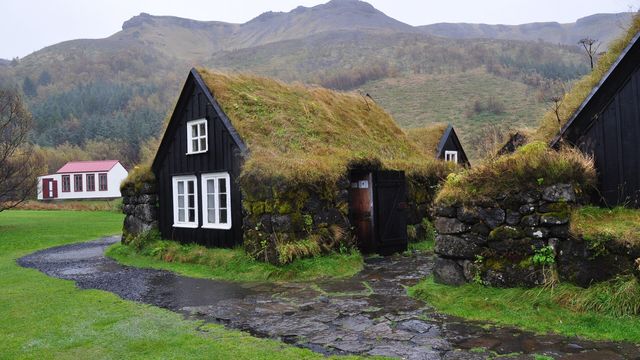
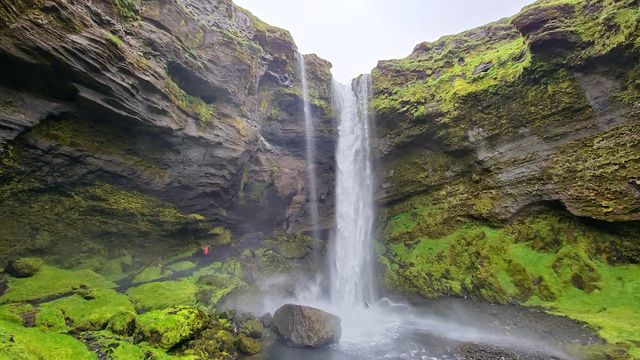
Skógar lies at the south side of the Eyjafjallajökull glacier, in the municipality of Rangárþing eystra in South Iceland. About 25 people live there, and the name means the woods. Skógafoss, on the Skógá river, drops 60 metres from the top of an eroded cliff and is what most people come for. The village also has a folk museum, Skógasafn, and a museum on transport in Iceland. Kvernufoss is close by, and more falls lie further upstream on the Skógá. The 2010 eruption of Eyjafjallajökull hit the settlement hard.
Skógar

- Currency
- Icelandic króna (ISK)
- Language
- Icelandic; nearly all speak English
- Power plug
- Europlug and Schuko sockets, 230 V
- Visa
- Schengen; outside the EU
- Time zone
- UTC±00:00 (Atlantic/Reykjavik)
- Tap water
- Safe; hot water smells of sulphur
- Tipping
- Not customary
- Emergency
- 112
Things to do
All tours in Skógar on GetYourGuide
Paid links: booking through them supports YowJourney.
When to go
High season
Jun – Aug
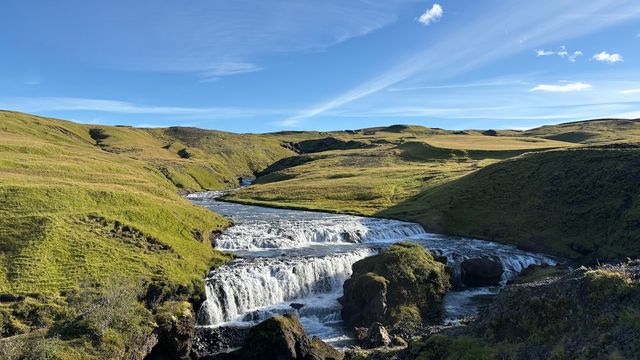
The longest days of the year, with light late into the evening. Walking upstream along the Skógá to the other falls is at its easiest.
Shoulder
Sep – Oct
Daylight shortens quickly. The ground on the upstream stretch of the Skógá turns wet and slippery.
Low season
Nov – Mar
Few hours of light, and spray from Skógafoss freezes onto the ground around the falls. The upstream falls and the wood behind the old school are hard going under snow.
Shoulder
Apr – May
Meltwater off Eyjafjallajökull swells the Skógá and Skógafoss runs full. Days lengthen fast.
How long to stay
Half a day covers Skógafoss and the two museums. Allow a full day to add Kvernufoss, the waterfalls further upstream on the Skógá and the farm ruins behind the old school. With roughly 25 residents, Skógar works as a stop of a day rather than a base for several.
Getting around
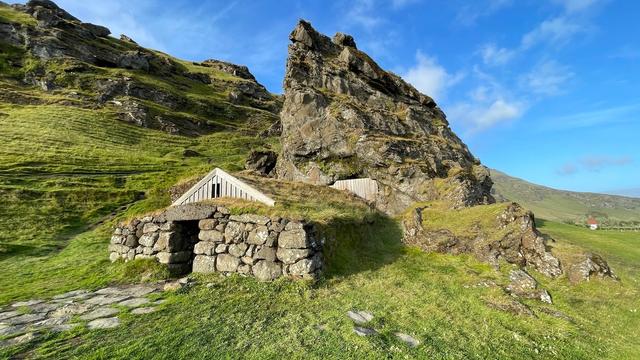
Skógar is small enough to cover on foot. Skógafoss is on the Skógá, and both museums — the folk museum, Skógasafn, and the museum of transport in Iceland — are in the village. Kvernufoss is not far off. More waterfalls lie further upstream on the Skógá, and old farm ruins can be seen by climbing into the small wood behind the old school. A village of about 25 people has no bus or taxi service of its own, so anything beyond walking range needs your own vehicle.
What to see


Destinations in Skógar
Frequently asked questions
What is Skógafoss?
The waterfall on the Skógá river at Skógar. It drops 60 metres from the top of an eroded cliff, and it is what the area is known for.Are there other waterfalls at Skógar?
Yes. Kvernufoss is not far from the village, and a number of other falls lie further upstream on the Skógá.What is there to see besides the waterfalls?
A folk museum, Skógasafn, and a museum on transport in Iceland. The ruins of old farms can be seen in the small forest behind the old school.How many people live in Skógar?
Roughly 25. The village lies in the municipality of Rangárþing eystra, and its name means the woods.Was Skógar affected by the 2010 eruption?
Yes. The settlement sits at the south side of Eyjafjallajökull and was severely affected by the volcano's eruption in 2010.