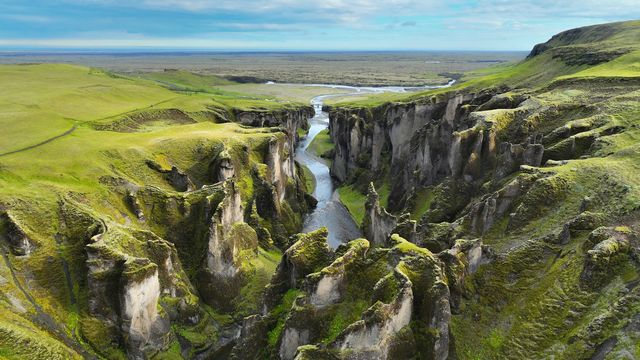
Kirkjubæjarklaustur, known locally as Klaustur, is a village in south Iceland on the Ring Road between Vík and Höfn, about 190 km east of Reykjavík. It is the only proper service centre on that stretch of almost 300 km, with a fuel station, supermarket, bank and post office. The name means "church farm cloister" and refers to the Benedictine convent that stood here from 1186 until the Reformation in 1550. Laki, Eldgjá and Skaftafell, all in Vatnajökull National Park, are within driving range, and the park's visitor centre opened in the village in 2024.
Kirkjubæjarklaustur

- Currency
- Icelandic króna (ISK)
- Language
- Icelandic; nearly all speak English
- Power plug
- Europlug and Schuko sockets, 230 V
- Visa
- Schengen; outside the EU
- Time zone
- UTC±00:00 (Atlantic/Reykjavik)
- Tap water
- Safe; hot water smells of sulphur
- Tipping
- Not customary
- Emergency
- 112
Things to do
All tours in Kirkjubæjarklaustur on GetYourGuide
Paid links: booking through them supports YowJourney.
When to go
High season
Jun – Aug
July averages 11.6 °C and the nights barely darken. The village has few beds for the volume of Ring Road traffic, so book ahead.
Shoulder
Sep – Oct
Daylight shortens fast and traffic on the Ring Road thins. The interior crossing via Sprengisandur is a summer option only.
Low season
Nov – Mar
January averages 0.1 °C, mild for the latitude, but the days are short and the weather decides how far you drive. The village keeps working as a fuel and food stop; the plateaus north of it are out of reach.
Shoulder
Apr – May
Days lengthen quickly and the farmland around the village greens up. The tracks into the highland to the north are still under snow.
How long to stay
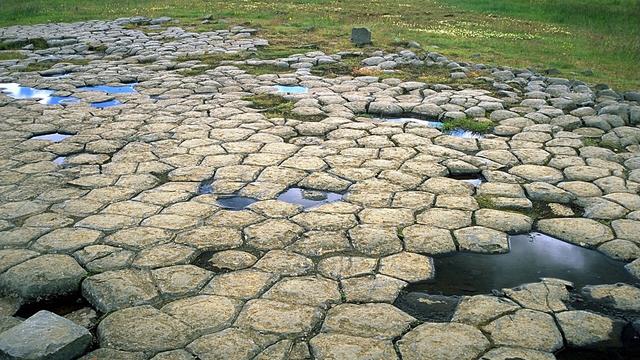
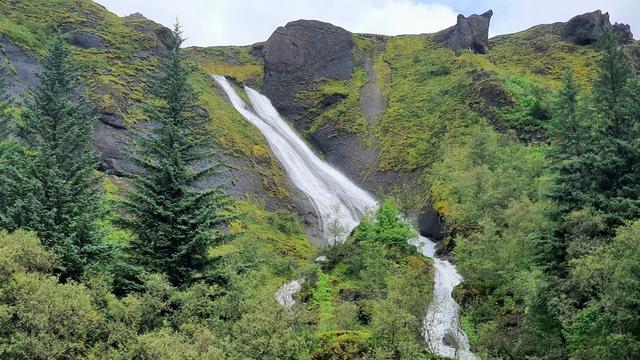
One night covers the village itself. Kirkjugólf, Systrafoss and the 1974 church take a couple of hours between them, and there is little to buy beyond the supermarket. Allow two or three nights if you use Kirkjubæjarklaustur as a base for Laki, Eldgjá and Skaftafell, which are full day trips rather than roadside stops. Most Ring Road travellers stay a single night and drive on.
Getting around
The village is small enough to cross on foot. Klausturvegur runs through most of it, with short streets branching off, so orienting yourself takes no effort. Everything worth the drive lies outside the village, and a car is the practical choice for the surrounding area.
By road, Reykjavík is three to four hours away, Vík about one hour and Höfn two to three. One bus a day runs each way between the BSÍ terminal in Reykjavík and Höfn and stops here; miss it and there is no second departure that day. The other approach, from north Iceland across the interior via Sprengisandur and Skaftártunga, needs a capable 4x4 and a driver who has done that kind of track before.
What to see
Destinations in Kirkjubæjarklaustur
Frequently asked questions
How far is Kirkjubæjarklaustur from Reykjavík?
About 190 km east of the capital, three to four hours by road along the Ring Road. Vík is roughly an hour to the west, Höfn two to three hours to the east.Can you get there without a car?
Yes. One bus a day runs each way between the BSÍ terminal in Reykjavík and Höfn, passing through the village. Without a car, though, the surrounding attractions are hard to reach.What is there to see in the village itself?
Kirkjugólf, a natural pavement of basalt columns whose flat tops look like a laid church floor, formed much as the Giant's Causeway was. Also the waterfall Systrafoss and the rock Systrastapi, both named after the convent's nuns, and the church built in 1974 in memory of Rev. Jón Steingrímsson.What does the name mean?
"Church farm cloister" in Icelandic. A Benedictine convent stood here from 1186 until the Reformation in 1550, and many local place names still refer to its sisters.What services does the village have?
A fuel station, a supermarket, a bank and a post office. Since 2024 there is also a Vatnajökull National Park visitor centre, which doubles as the information centre for the Skaftárhreppur municipality. Beyond the supermarket there are few shops.