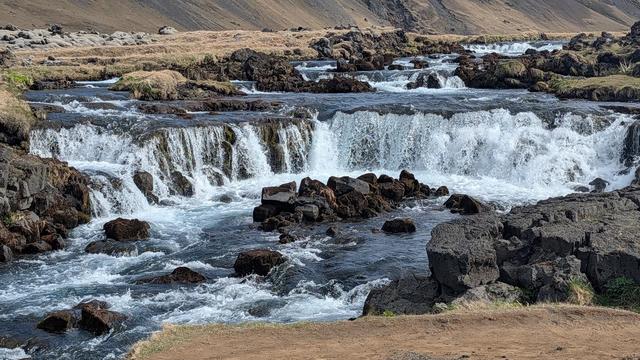
Fosstorfufoss is a waterfall on the Fimmvörðuháls trail above Skógafoss, near Skógar in South Iceland. It is the second fall upstream, after Hestavaðsfoss. The approach is on foot from the Skógafoss car park: a climb of about 475 steps up the slope, then roughly ten minutes along the river. The path is in good condition. For most people the waterfall is a short extension to a Skógafoss visit rather than a trip of its own.
Fosstorfufoss Waterfall
Local name: Fosstorfufoss
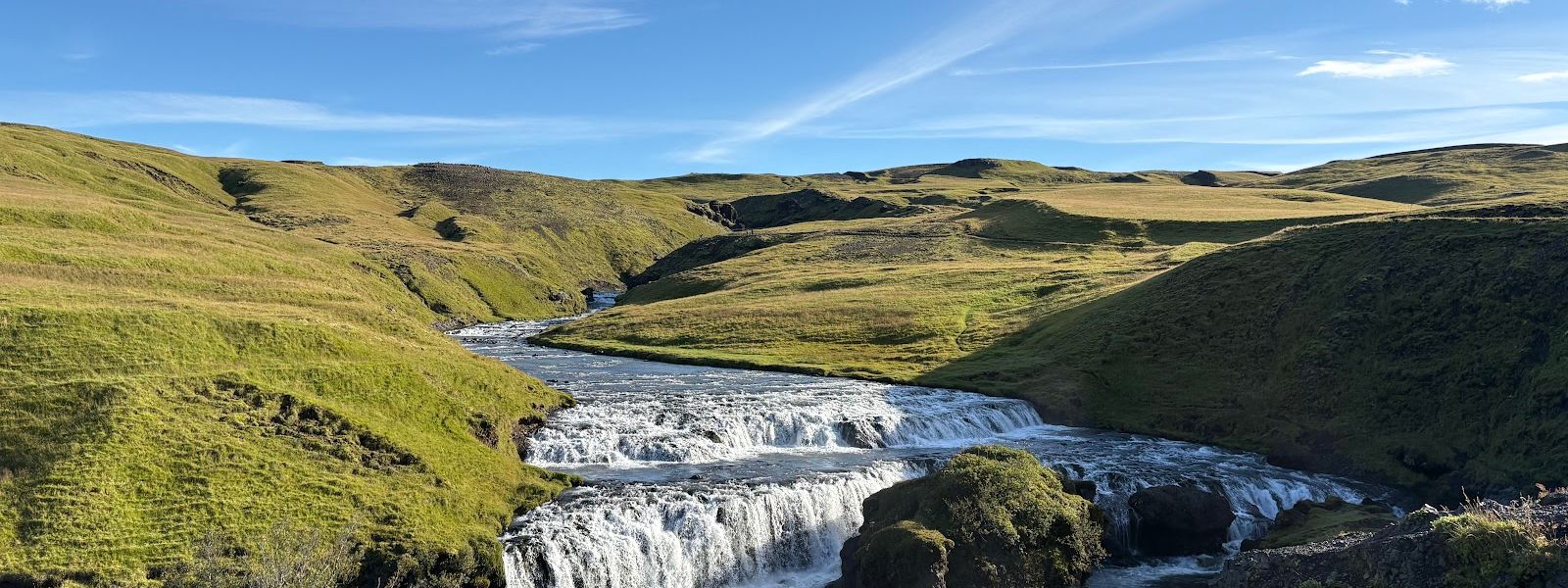
The second waterfall above Skógafoss: about 475 steps up, then ten minutes upstream past Hestavaðsfoss.
- Accessibility
- Not step-free: about 475 steps, then an unsurfaced footpath
- Parking
- Free car park below Skógafoss, at the foot of the steps
- Difficulty
- About 475 steps up, then roughly 10 minutes on a good path; harder beyond the waterfall
- Hours
- Open at all hours
- Address
- Fimmvörðuháls trail, 861 Skógar
What makes it special
Nearly everyone stops at the top of the Skógafoss steps, takes the view down over the big waterfall and turns round. The trail carries on. A few minutes upstream the river drops again at Hestavaðsfoss, and Fosstorfufoss comes next, the second fall above Skógafoss. It is smaller and more broken up than either, and the interest is in the detail of the water rather than the size of the drop. Photographers do best here: the fall suits long exposures, and a tripod and a grey filter are worth carrying up the steps. Past this point the Fimmvörðuháls trail gets harder, which is where most day walkers turn back.
Good to know
- The steps come first. From the car park it is a climb of about 475 steps beside Skógafoss before the walk to the waterfall even begins.
- It is the second fall, not the first. Hestavaðsfoss appears a few minutes upstream; Fosstorfufoss follows shortly after.
- The route gets harder beyond here. Past Fosstorfufoss the Fimmvörðuháls trail becomes more demanding, and most walkers turn back at this point.
- For photography: bring a tripod and a grey filter. The fall is built for long exposures.
- Allow more time than the distance suggests. The waterfall is ten minutes from the top of the steps, but the climb up and back is the bulk of the outing.
Getting there
The walk starts at the car park below Skógafoss. A staircase of roughly 475 steps climbs the slope alongside the falls to the viewpoint at the top, and this is the hard part of the day. From there a footpath follows the river upstream, past the elevated views of Skógafoss and past Hestavaðsfoss, reaching Fosstorfufoss in about ten minutes. The path is good. Most people return the same way rather than continuing up the trail.
Best time to visit
Better: early morning or the long evenings of summer, when the light is low and the car park below Skógafoss has thinned out.
Avoid: the middle of the day in high summer, when coach groups reach Skógafoss and the staircase moves at the pace of the slowest person on it.
Numbers drop away sharply above the top of the steps, so even a busy day at Skógafoss is a quiet one at Fosstorfufoss.
Sun & daylight
Nearby Places


Similar Places


Your whole travel map in one place
Get inspired by new places around the world and find the ones worth the journey
Frequently asked questions
Where is Fosstorfufoss?
On the Skógá above Skógafoss, near Skógar in South Iceland. It is the second waterfall upstream, on the Fimmvörðuháls trail.How do you get to it?
From the car park below Skógafoss, up about 475 steps to the viewpoint, then roughly ten minutes on the footpath upstream, past Hestavaðsfoss.Is the walk difficult?
The staircase is the demanding part; the path beyond it is good and level enough for an easy ten minutes. Beyond Fosstorfufoss the trail becomes harder.Which waterfall comes before it?
Hestavaðsfoss, a few minutes upstream of the top of the Skógafoss steps. Fosstorfufoss is the next one after it.What should photographers bring?
A tripod and a grey filter. The fall is well suited to long exposures.