Akureyri Museum is the local history museum of Akureyri, in northern Iceland. It collects the everyday life of the town and the Eyjafjörður district: maps from the 1500s, clothing, tools and household objects, and a room on the occupation during the Second World War. The grounds hold a garden, a turf house and Minjasafnskirkjan, a wooden church of the 1840s. It is a compact museum, and it works as an indoor stop between the landscapes of the north.
Akureyri Museum
Local name: Minjasafnið á Akureyri
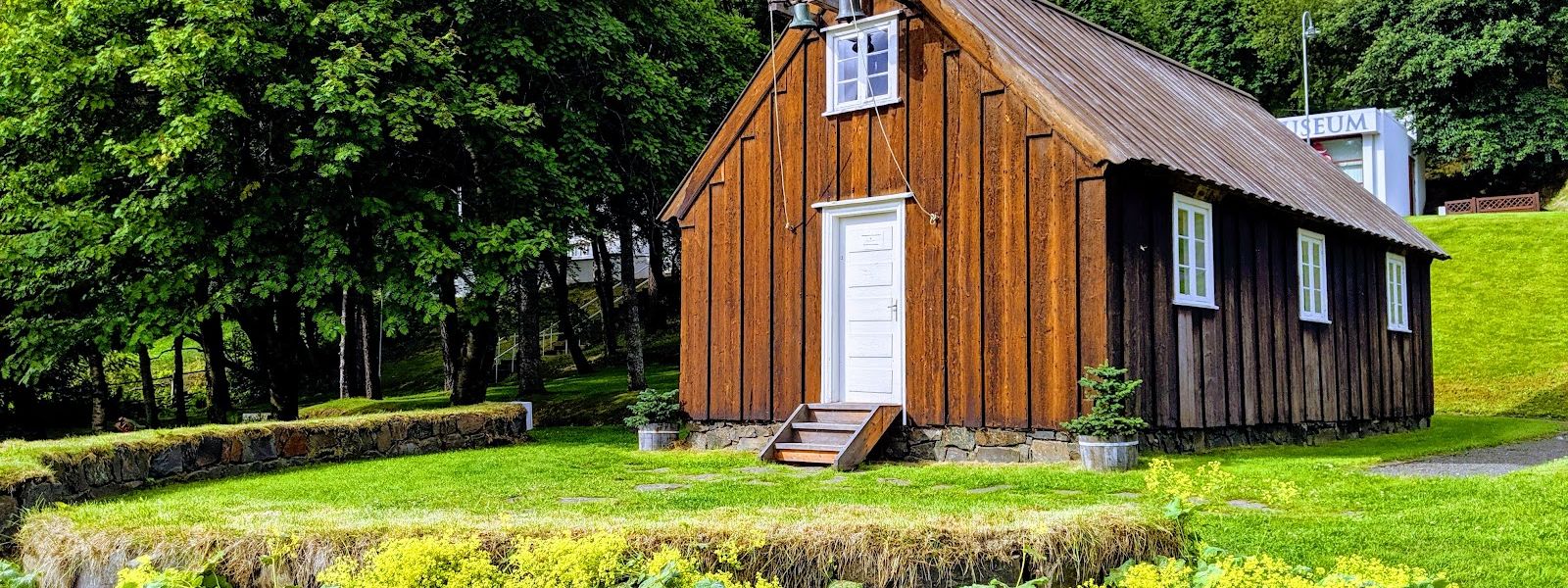
The collection runs from maps of Iceland drawn in the 1500s to a radio room playing recordings from the wartime occupation.
- Entrance
- Adults 2,800 ISK; under 18 free
- Accessibility
- Wheelchair-accessible entrance, parking and toilet.
- Parking
- Free street parking outside the museum.
- Transport
- Town buses in Akureyri, run by SVA, are free to ride.
- Hours
- Open daily, 11:00–17:00.
- Address
- Aðalstræti 58, 600 Akureyri
What makes it special
The collection is everyday life in Eyjafjörður, not its scenery. Maps drawn in the 1500s hang near clothing and kitchen utensils, and thousands of ordinary objects span the whole history of the town. One room is given over to the Second World War: photographs and accounts from townspeople and from the soldiers, and a radio room where the old recordings still play. A turf house stands behind the main building, and the grounds hold Minjasafnskirkjan, a plain wooden church of the 1840s. This is a compact local history museum rather than a national one, and the exhibitions are easy to follow.
Good to know
- Scale: a compact local history museum, not a national collection. Come with that expectation.
- In the grounds: the turf house behind the main building and Minjasafnskirkjan, the wooden church of the 1840s, are part of the visit.
- Nonnahús: the childhood home of the writer Jón Sveinsson is a separate museum nearby.
- With children: the museum is set up for family visits, and there are toilets on site.
Getting there
Akureyri Museum stands in the old part of the town, south of the centre. Street parking outside is free, while the town-centre zones are charged. The garden, the turf house and the church share one plot with the main building, so the whole visit happens on a single site and nothing is left to walk to afterwards.
Best time to visit
Best: a wet or windy day. The exhibitions, the church and the radio room are all indoors, and the museum can be seen without setting aside a whole day.
Avoid: November to February if the grounds matter to you. Akureyri gets barely any sunshine in those months, and snow lies on the ground from late October into April.
Things to do nearby
All tours in Akureyri on GetYourGuide
Paid links: booking through them supports YowJourney.
Sun & daylight
Nearby Places

Similar Places



Your whole travel map in one place
Get inspired by new places around the world and find the ones worth the journey
Frequently asked questions
Is there anything to see besides the main exhibition?
Yes. A turf house stands behind the main building, and the grounds hold a garden and Minjasafnskirkjan, a small wooden church of the 1840s.How much of the museum is about the Second World War?
One room is devoted to it, with photographs and stories from Akureyri residents and from soldiers, plus a radio room where old recordings can be heard.Does a visit take a long time?
No. This is a compact local history museum rather than a national one, and it can be seen without setting aside a whole day.Is the museum suitable for children?
Yes, it is set up for family visits, and there are toilets on site.Is Nonnahús part of the same museum?
Nonnahús, the childhood home of the writer Jón Sveinsson, is a separate museum nearby and is easy to add to the same trip.