The Herring Era Museum stands in Siglufjörður, in northern Iceland, and is the country's largest maritime museum. It occupies four buildings: a Norwegian salting station from 1907, a reconstructed reduction factory, a boathouse, and the Old Slipway down by the harbour. Together they tell how herring built the town. Norwegian crews began fishing here in 1903, and in some years the catch brought in as much as 44 per cent of Iceland's export income. In 1969 the herring failed to appear and the industry ended. The museum opened in 1994 and won the European Museum Award's Micheletti Award in 2004.
The Herring Era Museum
Local name: Síldarminjasafn Íslands
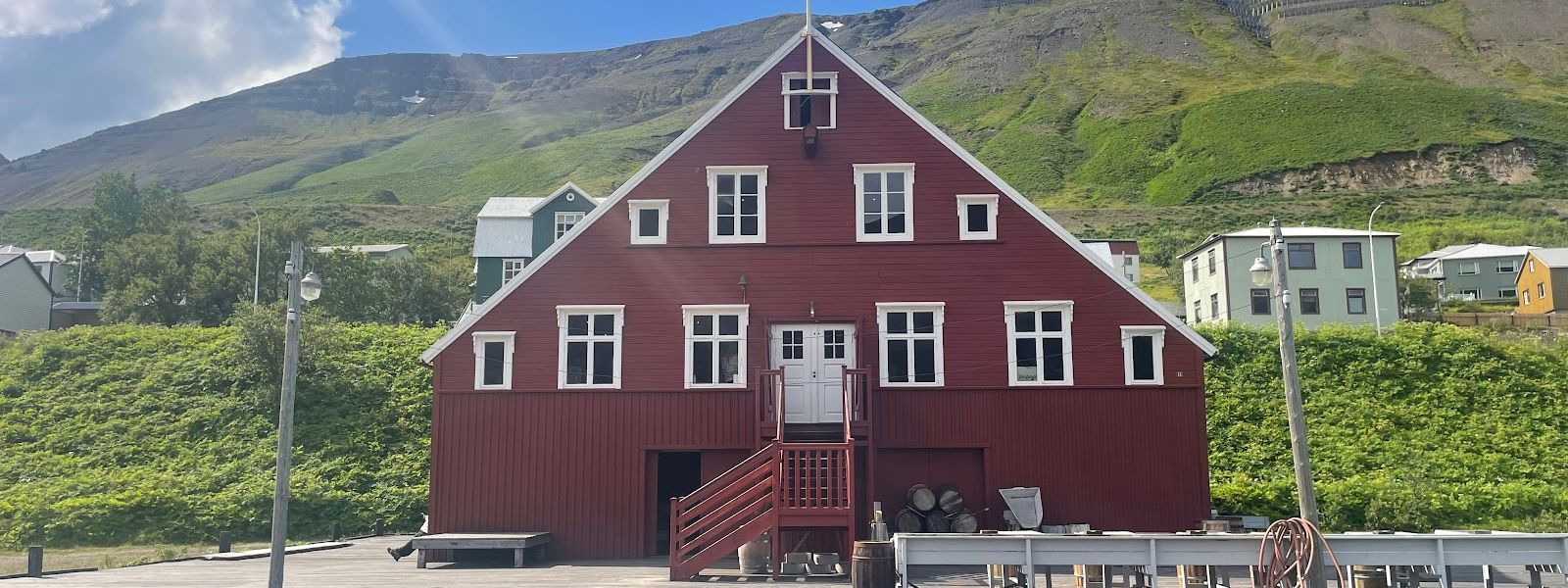
The machinery inside Grána was dismantled piece by piece from two abandoned herring factories at Ingólfsfjörður and Hjalteyri, carried to Siglufjörður and rebuilt here.
- Entrance
- Adults 2,200 ISK, seniors and students 1,200 ISK, children under 16 free with an adult, groups of ten or more 1,800 ISK (2023 prices). One ticket covers all museum buildings and the Folk Music Center nearby.
- Accessibility
- Wheelchair-accessible entrance, parking and toilet.
- Parking
- Free car park at the museum, with wheelchair-accessible spaces.
- Transport
- Walkable — Siglufjörður waterfront
- Advance booking
- No booking needed during the summer season. Winter visits are arranged with the museum in advance, and salting demonstrations run on request or by booking.
- Hours
- Open daily in summer, 10:00–18:00 in June, July and August, with shorter hours in May and September. In winter the museum opens only by arrangement. Check the current hours before travelling.
- Address
- Snorragata 10, 580 Siglufjörður
What makes it special
Róaldsbrakki is a Norwegian salting station from 1907, and the museum began here in 1994. The exhibition floor holds the barrels, tools and paperwork of salting herring for export, along with photographs and film shot in Siglufjörður in the 1940s. Upstairs are the living quarters of the herring girls, hundreds of whom came from across the country each summer to work. The rooms are left as they were.
Grána is a 1930s reduction factory built for the museum and opened in 2003. The heavy machinery inside was collected from abandoned plants elsewhere in Iceland, so the hall reads as a working factory rather than a display of parts.
The Boathouse recreates a stretch of the town's harbour, with ten boats and ships at the piers. You can go aboard the largest herring vessel. The fourth site, the Old Slipway, is both an exhibition on two hundred years of boat building and a working workshop, with tools over a hundred years old still in use.
Good to know
- Four buildings, one ticket. Róaldsbrakki, Grána and the Boathouse, plus the Old Slipway down by the harbour.
- Do not leave it to the end of the day. Arrive close to closing and you will get through part of the museum and miss the café.
- The buildings are separate. You go outside between them, so bring a jacket even though the exhibitions are under cover.
- There is a café on site, in its own building, serving food and drink, including herring.
- Printed guides are available in other languages. Ask at Róaldsbrakki.
Getting there
The museum has its own car park, and the walk from the car to the entrance is the whole of the approach. The Old Slipway is the exception. It stands apart from the three main buildings, down by the harbour, so seeing it means walking there from the rest of the museum.
Best time to visit
Better: June to August, when the museum is open daily and keeps its longest hours.
Avoid: midwinter, when the museum opens only by arrangement.
The exhibitions are indoors, so rain is no reason to change plans. There is enough here that a late arrival means seeing part of the museum and leaving the rest.
Things to do nearby
All tours in Siglufjörður on GetYourGuide
Paid links: booking through them supports YowJourney.
Sun & daylight
Nearby Places


Similar Places



Your whole travel map in one place
Get inspired by new places around the world and find the ones worth the journey
Frequently asked questions
Can you go on board the boats?
Yes. The Boathouse recreates part of the town's harbour, with ten boats and ships at the piers, and visitors are allowed aboard the largest herring vessel.How much of the museum is original?
Róaldsbrakki is a genuine Norwegian salting station from 1907, and the herring girls' quarters on its upper floor are left untouched. Grána was built for the museum and opened in 2003, but the machinery in it came from real herring factories that had been abandoned.What is the Old Slipway?
A boat-building garage by the harbour, in use since the 1930s. It shows two hundred years of boat building in Siglufjörður and still works as a workshop, where boatbuilders and amateurs can bring in old boats to restore or build new ones by old Icelandic methods.Is there anywhere to eat?
There is a café in a separate building on the museum site, serving food and drink, including herring.Why is Siglufjörður tied to herring?
Norwegian crews began fishing herring from here in the summer of 1903. Within forty years the village had grown past three thousand people, with twenty-three salting stations and five reducing factories, and the town was nicknamed the Atlantic Klondike. In 1969 the herring did not come back.