Gljúfrasteinn is the house Halldór Kiljan Laxness built in 1945 with his wife, Auður Sveinsdóttir, in Mosfellsdalur, east of Reykjavík. Laxness won the Nobel Prize for Literature in 1955. The Icelandic state bought the house from Auður in 2002 and opened it to the public in September 2004. The furniture, the books and the paintings stayed in the rooms, and visitors go through the house with an audio guide.
Gljúfrasteinn — Laxness Museum
Local name: Gljúfrasteinn
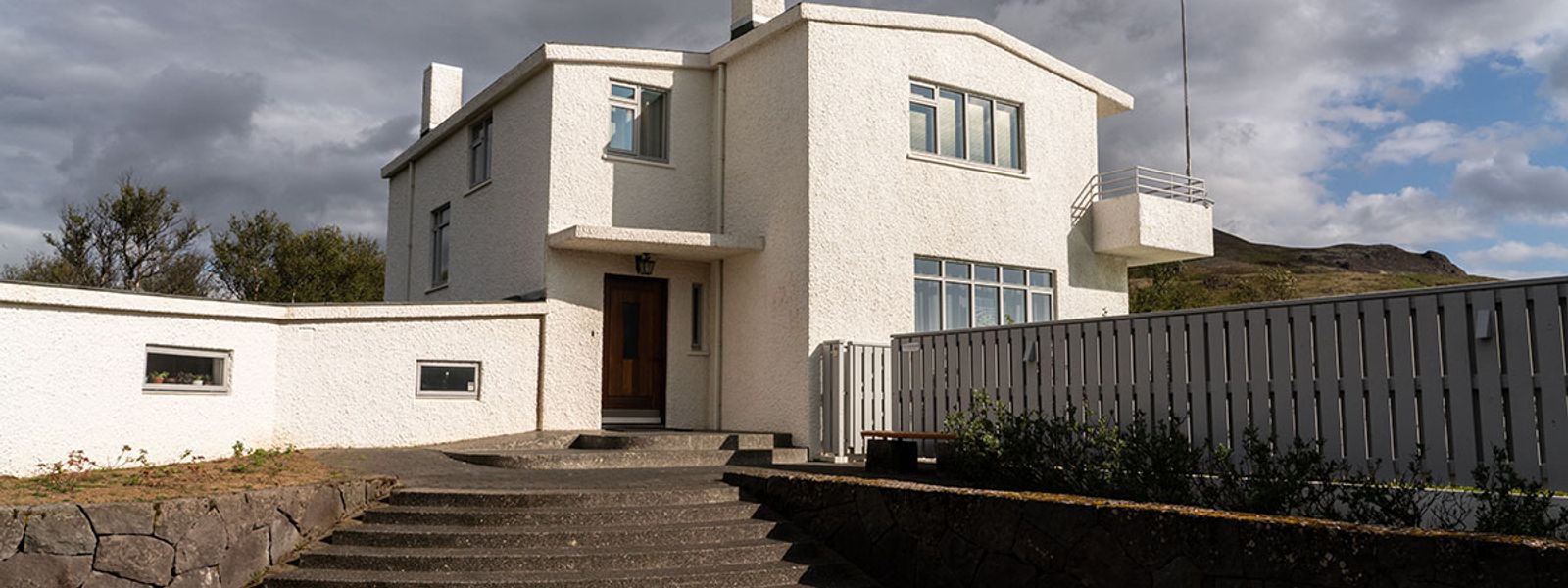
The house is named after a large stone nearby, about which Laxness wrote a short story at the age of 19.
- Entrance
- Paid
- Accessibility
- Wheelchair-accessible parking and a wheelchair-accessible toilet.
- Parking
- Parking at the museum, with wheelchair-accessible spaces.
- Transport
- On the road to Þingvellir, 20 min from Reykjavík
- Advance booking
- Not needed
- Hours
- Tuesday to Sunday 10:00–16:00. Closed on Mondays.
- Address
- Gljúfrasteinn, 270 Mosfellsbær
What makes it special
The house was designed by the architect Ágúst Pálsson and finished in 1945, and it is shown as a home rather than as a set of display cases. The walls carry a serious collection of Icelandic painting: Jóhannes Kjarval, Nína Tryggvadóttir, Svavar Guðnason, Louisa Matthíasdóttir, Karl Kvaran and Ásmundur Sveinsson, alongside the Dane Asger Jorn and the Norwegian Jakob Weidemann. Much of it came from artists Laxness knew.
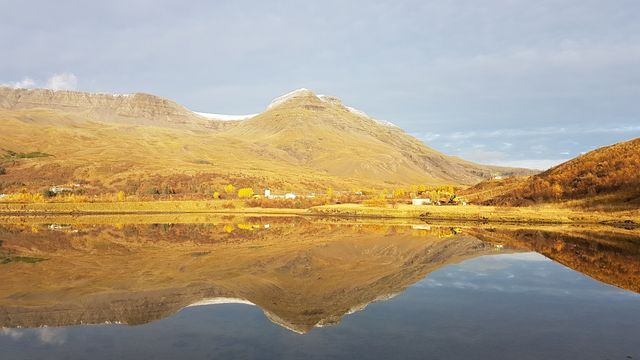
After the Nobel Prize in 1955 the house became a stop for official guests visiting Iceland, and foreign musicians gave concerts in the living room. The windows are part of the point: they look out over the valley, and the river Kaldakvísl runs past the house.
Good to know
- The tour is recorded, not led. A short film at the entrance, then an audio guide through the rooms. Staff at reception answer what it misses.
- The visit is short. The audio tour runs about 20–25 minutes. Do not build half a day around it.
- Concerts are a summer fixture. Outside summer the visit is the house and the guide alone.
- The shop sells Laxness in English translation. Useful if the tour leaves you wanting to read him.
- There are toilets on site, including a wheelchair-accessible one.
Getting there
Gljúfrasteinn stands in Mosfellsdalur, the valley east of Reykjavík, and visitors arrive by car. Parking is at the museum, so there is no approach walk from a lay-by or a trailhead — you leave the car and go in. Laxnes, the farm where Laxness grew up, is close by in the same valley.
Best time to visit
Better: summer, when the museum puts on concerts in the living room where musicians once played for Laxness.
Avoid: midwinter, if the views matter to you. The valley outside the windows gets little daylight then, and the windows are half the pleasure of the house.
Nobody is moved through in groups here. The house is toured with a recorded guide, so you set your own pace and the hour you arrive matters less than at places with fixed tour departures.
Things to do nearby
All tours in Capital Region on GetYourGuide
Paid links: booking through them supports YowJourney.
Sun & daylight
Nearby Places


Similar Places




Your whole travel map in one place
Get inspired by new places around the world and find the ones worth the journey
Frequently asked questions
Whose house is Gljúfrasteinn?
Halldór Kiljan Laxness, winner of the 1955 Nobel Prize for Literature. He and his wife, Auður Sveinsdóttir, built it in 1945. Auður sold it to the Icelandic state in 2002, and it opened as a museum in September 2004.Is there a guided tour?
The house is toured with an audio guide, after a short film at the entrance. Staff at reception take questions and know the books well.How long does a visit take?
The audio tour runs about 20–25 minutes. With the film, the shop and the garden, an hour covers the visit without hurrying.What is there to see inside?
The rooms of the house with their furniture, Laxness's book collection, and paintings by Jóhannes Kjarval, Nína Tryggvadóttir, Svavar Guðnason, Ásmundur Sveinsson, Asger Jorn and Jakob Weidemann.